Key Takeaways

Noticing new redness or flushing while on Accutane can be alarming. After all, you started this medication to clear your skin, not to develop new concerns. If you've been searching for answers about whether Accutane can cause rosacea, you're not alone. This is a common question we hear from patients, and the answer is more nuanced than a simple yes or no.
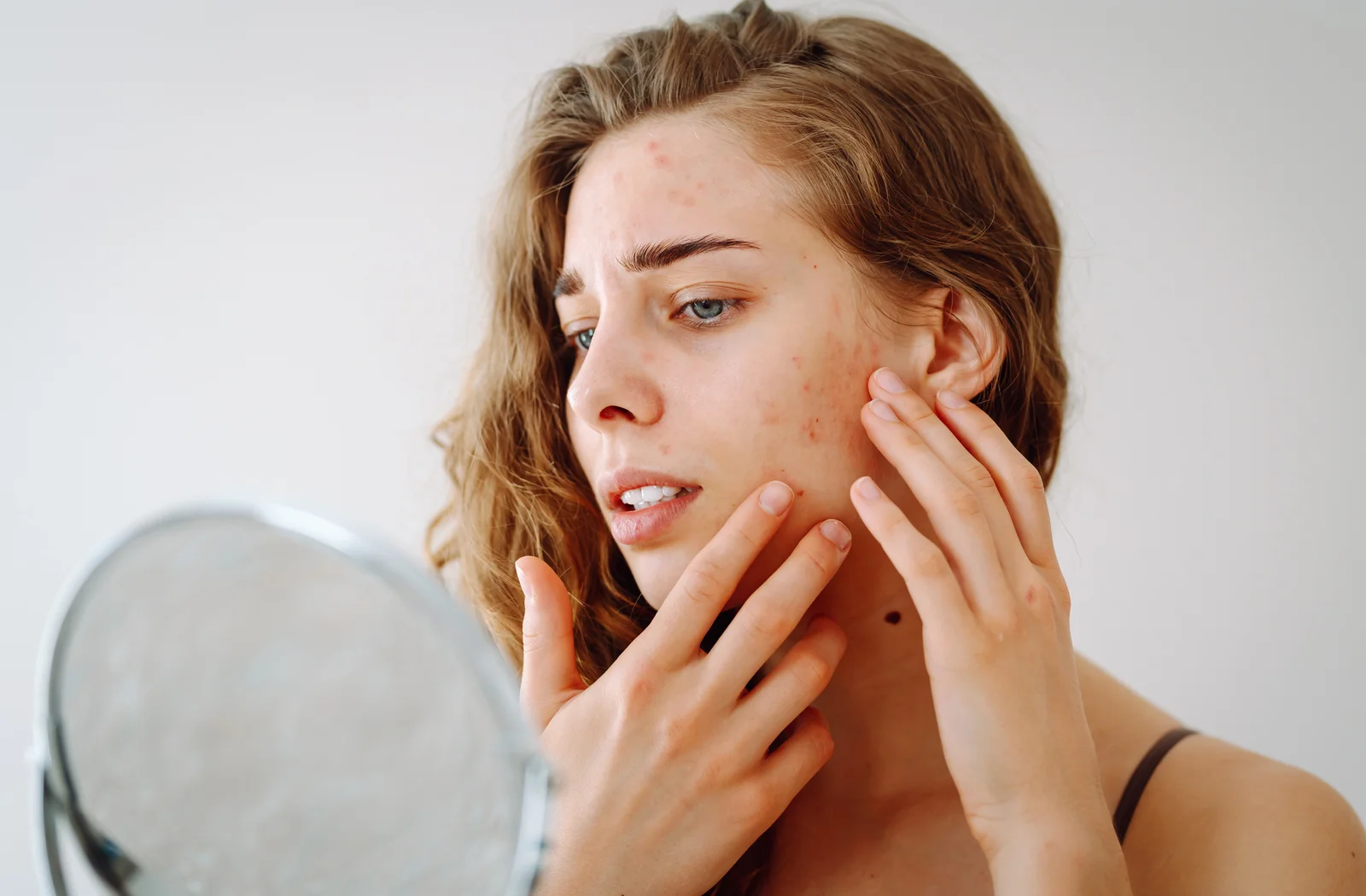
The confusion is understandable. Accutane (isotretinoin) does cause skin changes, including increased sensitivity and sometimes facial redness. These symptoms can look remarkably similar to rosacea. But there's an important distinction between temporary treatment side effects and developing an actual chronic skin condition.
In this article, we'll break down exactly what's happening with your skin during Accutane treatment, explain the difference between medication-related redness and true rosacea, and share what research tells us about isotretinoin's relationship with rosacea, including its surprising use as a treatment for this condition.
Quick Answer: Does Accutane Cause Rosacea?
No, Accutane does not cause rosacea. However, it can cause temporary skin effects that mimic rosacea symptoms:
- Increased skin sensitivity is a normal side effect
- Temporary flushing and redness can occur during treatment
- These effects typically resolve after completing your course
- Low-dose isotretinoin is actually used as a treatment FOR rosacea
If you're experiencing redness during Accutane treatment, talk to your dermatologist. They can help determine whether you're experiencing a normal side effect or something that needs additional attention.
Understanding Rosacea: What It Actually Is
Before we can discuss whether Accutane causes rosacea, it helps to understand what rosacea actually is. Rosacea is a chronic inflammatory skin condition that primarily affects the central face, including the cheeks, nose, chin, and forehead.
Rosacea is characterized by:
- Persistent facial redness: A flushed appearance that doesn't go away
- Visible blood vessels: Small, dilated blood vessels (telangiectasia) on the face
- Papules and pustules: Small red bumps that can resemble acne
- Skin thickening: In some cases, particularly around the nose (rhinophyma)
- Eye involvement: Ocular rosacea can cause dry, irritated, or red eyes
The exact cause of rosacea remains unclear, but research suggests it involves a combination of genetic predisposition, immune system dysfunction, and abnormalities in the skin's blood vessels and inflammatory responses. Common triggers include sun exposure, stress, alcohol, spicy foods, and extreme temperatures.
Rosacea typically develops gradually over time, often first appearing as a tendency to blush or flush easily. It's most common in adults between 30 and 50 years old, particularly those with fair skin, and affects an estimated 5.5% of adults globally.
Accutane Side Effects That Mimic Rosacea
If you're on Accutane and noticing facial redness, here's what's likely happening. Isotretinoin causes significant changes to your skin, many of which can temporarily resemble rosacea symptoms.
Increased Skin Sensitivity
Accutane dramatically reduces oil production in your skin by shrinking sebaceous glands. While this is exactly what makes it effective against acne, it also means your skin loses some of its natural protective barrier. This leaves your skin more vulnerable to environmental factors, including temperature changes, wind, and sun exposure.
The result? Your skin may become more reactive, flushing easily in situations that wouldn't have affected you before treatment. This isn't rosacea developing. It's your skin temporarily operating with less of its natural protection.
Dryness and Irritation
The dryness caused by Accutane can lead to visible irritation, including redness. When your skin barrier is compromised, inflammation becomes more visible. This is particularly noticeable on the face, where the skin is thinner and blood vessels are closer to the surface.
Retinoid Dermatitis
Some people experience a condition called retinoid dermatitis, which is essentially skin irritation caused by retinoid medications like isotretinoin. Symptoms include redness, peeling, burning, and sensitivity. This is a known side effect, not a separate condition like rosacea, and typically improves with proper skincare management and, if needed, dosage adjustments.
What to expect: Some degree of skin sensitivity and dryness is normal during Accutane treatment. These effects typically peak in the first few weeks to months and then stabilize. After completing your treatment course, your skin should return to its normal sensitivity levels within a few weeks to months.
How to Tell the Difference: Accutane Side Effects vs. Rosacea
Understanding whether you're experiencing normal Accutane side effects or actual rosacea can help you and your dermatologist make the right treatment decisions. Here's how to distinguish between them.
| Characteristic | Accutane Side Effects | Rosacea |
|---|---|---|
| Timing | Develops after starting Accutane | Typically develops gradually over years |
| Duration | Resolves after treatment ends | Chronic, long-lasting condition |
| Associated symptoms | Dry skin, chapped lips, dry eyes | Visible blood vessels, papules/pustules |
| Skin texture | Dry, possibly peeling | May be oily in some cases |
| Response to moisturizer | Often improves with hydration | May not respond to basic moisturizing |
| Visible blood vessels | Uncommon | Common feature of the condition |
The most telling factor is timing and duration. If redness appeared after starting Accutane and correlates with other typical side effects like dryness, it's most likely a medication effect. True rosacea is a chronic condition that persists regardless of medication status and typically includes additional features like visible blood vessels or acne-like bumps.
The Surprising Truth: Isotretinoin as a Rosacea Treatment
Here's where the story gets interesting. Not only does Accutane not cause rosacea, but isotretinoin is actually used to treat certain types of rosacea, particularly cases that haven't responded well to other treatments.
How Isotretinoin Helps Rosacea
Low-dose isotretinoin has been shown to be effective for papulopustular rosacea, the subtype characterized by inflammatory bumps and pustules. The medication works through several mechanisms that address rosacea symptoms:
- Reducing inflammation: Isotretinoin has anti-inflammatory properties that help calm the skin
- Decreasing oil production: Less sebum means fewer opportunities for inflammation
- Normalizing skin cell turnover: This can improve overall skin texture and appearance
- Reducing demodex mites: These microscopic organisms have been implicated in rosacea
Research on Isotretinoin for Rosacea
Multiple studies have demonstrated the effectiveness of low-dose isotretinoin for rosacea. A study published in the British Journal of Dermatology found that low-dose isotretinoin (0.25 mg/kg/day) was effective in treating moderate to severe papulopustular rosacea, with patients showing significant improvement in inflammatory lesions.
Research has also shown that isotretinoin can be effective for rosacea fulminans, a rare and severe form of the condition. In these cases, isotretinoin often produces dramatic improvement where other treatments have failed.
The doses used for rosacea are typically lower than those used for acne. While acne treatment might involve doses of 0.5-1 mg/kg/day, rosacea treatment often uses doses in the range of 0.1-0.3 mg/kg/day. This lower dosing helps minimize side effects while still providing therapeutic benefit.
Good to know: If you have both acne and rosacea, isotretinoin may actually help both conditions. Our providers can evaluate your specific situation and determine the best treatment approach.
Managing Skin Sensitivity During Accutane Treatment
If you're experiencing redness or sensitivity during your Accutane treatment, there are several strategies that can help minimize discomfort.
Skincare Tips During Accutane
- Use a gentle, fragrance-free cleanser: Avoid anything with exfoliating ingredients or harsh surfactants
- Moisturize frequently: Apply a thick, barrier-repairing moisturizer multiple times daily
- Protect from the sun: Use broad-spectrum SPF 30+ daily, as your skin is more photosensitive
- Avoid extreme temperatures: Hot showers, saunas, and cold wind can worsen sensitivity
- Skip the exfoliants: No retinol, AHAs, BHAs, or physical scrubs during treatment
- Keep it simple: The fewer products, the fewer chances for irritation
When to Talk to Your Dermatologist
While some redness and sensitivity is expected during Accutane treatment, certain symptoms warrant a conversation with your provider:
- Severe redness that doesn't respond to gentle skincare
- Visible blood vessels appearing on your face
- Persistent burning or stinging sensations
- Eye redness, dryness, or irritation that doesn't improve with lubricating drops
- Symptoms that seem to be getting progressively worse rather than stabilizing
Your dermatologist may recommend adjusting your dose, adding supportive skincare products, or in some cases, taking a brief break from treatment to allow your skin to recover.
Important: Never adjust your Accutane dose on your own. If you're experiencing concerning side effects, contact your dermatologist before making any changes to your treatment. They can help determine the best course of action for your specific situation.
Can Rosacea Develop After Completing Accutane?
Some people wonder whether Accutane might somehow "trigger" rosacea that appears after treatment ends. While it's possible for rosacea to develop at any point in life, there's no evidence that Accutane causes this.
If you develop rosacea symptoms after completing Accutane, it's more likely that:
- The timing is coincidental: Rosacea often develops in the 30s-50s, which overlaps with when people might take Accutane
- It was already developing: Early rosacea might have been masked by acne or overlooked during treatment
- It's a separate condition: Rosacea has its own causes unrelated to prior acne treatment
It's worth noting that some research suggests Accutane might actually have a protective effect against rosacea development in some cases, though more research is needed. One theory is that by reducing sebaceous gland activity and inflammation, isotretinoin may help prevent the conditions that contribute to rosacea development.
Rosacea-Like Symptoms: Other Possible Causes
If you're experiencing persistent facial redness, whether during or after Accutane treatment, there are several other conditions worth considering.
Seborrheic Dermatitis
This common skin condition causes red, scaly, itchy patches, particularly in oily areas of the face. It can sometimes be confused with rosacea but typically involves more scaling and affects areas like the eyebrows, sides of the nose, and behind the ears.
Contact Dermatitis
Facial redness could be a reaction to a skincare product, makeup, or other substance. This is especially worth considering if the redness appeared after introducing a new product.
Perioral Dermatitis
This condition causes red, bumpy rashes around the mouth, nose, and sometimes eyes. It can look similar to rosacea but has different causes and treatments.
Lupus
In rare cases, facial redness in a butterfly pattern across the cheeks could indicate lupus. This is usually accompanied by other systemic symptoms and should be evaluated by a healthcare provider.
If you're unsure what's causing your facial redness, a board-certified dermatologist can provide a proper diagnosis and recommend appropriate treatment.
The Bottom Line
Accutane does not cause rosacea. While the medication can cause temporary skin sensitivity, flushing, and redness during treatment, these are side effects, not the development of a new chronic skin condition. In fact, research shows that isotretinoin can actually be an effective treatment for certain types of rosacea.
If you're experiencing redness during Accutane treatment:
- Understand that this is a common and expected side effect
- Focus on gentle, barrier-supporting skincare
- Protect your skin from sun, wind, and temperature extremes
- Communicate with your dermatologist about any concerns
- Know that these effects typically resolve after completing treatment
If you're considering Accutane for persistent acne or have questions about skin redness during treatment, our board-certified dermatologists at Honeydew can provide personalized guidance. We specialize in Accutane treatment and can help you navigate any concerns that arise during your journey to clearer skin.
.webp)

Medically Reviewed by
Joel Spitz, MD
Co-Founder & Chief Medical Officer, Board Certified Dermatologist