Key Takeaways

If you spend any time on skincare forums or social media, you have probably seen bold claims about Vaseline going in both directions. One camp swears that slugging with petroleum jelly transformed their skin. The other is horrified at the idea of smearing what is essentially a petroleum byproduct over acne-prone pores. The truth, as usual, falls somewhere in between.
The question of whether Vaseline helps acne touches on some genuinely interesting dermatology science: how the skin barrier functions, what actually clogs pores, and why the same product can be miraculous for one person and disastrous for another. It also intersects with one of the biggest skincare trends of the past few years — slugging — which has millions of people reconsidering whether occlusive products belong in their routines.
As dermatology providers who treat acne every day, we get this question constantly. So let us walk through what the evidence actually says, when Vaseline can genuinely support acne-prone skin, and when it is more likely to cause problems.
Quick Answer: Does Vaseline Help Acne?
Vaseline does not treat acne. It is a pure occlusive that seals moisture into the skin — it does not fight bacteria, unclog pores, or reduce inflammation. However, it plays a legitimate supporting role in certain acne-related situations:
- It can help when your skin barrier is destroyed by acne treatments like isotretinoin, tretinoin, or benzoyl peroxide
- It can help with healing cracked, peeling skin that results from drying medications
- It will not help active breakouts and may worsen them by trapping bacteria
- It will not treat the underlying causes of acne (excess oil, clogged pores, bacteria, inflammation)
Bottom line: Vaseline is a barrier protection tool. It is not an acne treatment. If you are dealing with persistent breakouts, you need a personalized treatment plan from a dermatology provider.
What Is Vaseline and How Does It Work on Skin?
Vaseline is a brand name for 100% white petrolatum — a semi-solid mixture of hydrocarbons derived from petroleum. It was first discovered in 1859 by chemist Robert Chesebrough, who noticed that oil workers used the waxy residue from their drilling rigs to heal cuts and burns. Since then, it has become one of the most widely used skin protectants in the world.
Petrolatum works as an occlusive. Rather than adding water or lipids to the skin (like humectants and emollients do), it creates a physical, semi-permeable barrier over the skin surface that prevents transepidermal water loss (TEWL). In simpler terms, it locks in whatever moisture is already there.
This occlusive function is remarkably effective. Research has shown that petrolatum can reduce TEWL by up to 98% — far more than any other moisturizing ingredient. That is why it remains the gold standard for protecting damaged, dehydrated, or healing skin. The American Academy of Dermatology (AAD) consistently recommends petrolatum as one of the most effective moisturizing ingredients available.
But here is the critical distinction for anyone with acne: being excellent at sealing in moisture is not the same thing as treating breakouts. And creating a barrier over skin that is already oily, congested, or harboring bacteria can potentially make things worse.
Does Vaseline Cause Acne? What the Research Says
This is the question at the heart of the debate, and answering it requires understanding what comedogenicity actually means — and why the standard ratings are not as definitive as you might think.
Comedogenicity Ratings: The Standard View
Ingredients are rated on a comedogenicity scale of 0 to 5, where 0 means non-comedogenic and 5 means highly likely to clog pores. White petrolatum — the sole ingredient in Vaseline — scores a 0 to 1 on this scale. That puts it firmly in the non-comedogenic to minimally comedogenic category.
On paper, this means Vaseline should not clog your pores. And for many people, it does not. But the story is more complicated than a single number.
Why Comedogenicity Ratings Have Limits
The comedogenicity testing system has real shortcomings that are worth understanding:
- Animal-based origins: The original comedogenicity ratings were largely derived from rabbit ear assays developed in the 1970s and 1980s by researchers like Kligman and Mills. Rabbit ear skin is significantly more sensitive than human skin, so these tests can both overestimate and underestimate a product's real-world pore-clogging potential.
- Single-ingredient testing: Comedogenicity is tested on individual ingredients in isolation, not in the context of a full skincare routine with cleansers, actives, and other products layered underneath.
- No account for individual variation: Your pore size, oil production, skin turnover rate, and bacterial colonization all affect whether a given product will cause you to break out. A person with naturally dry skin and small pores may tolerate Vaseline with no issues, while someone with oily, congestion-prone skin may find it problematic.
- Mechanism versus rating: Comedogenicity measures whether an ingredient blocks pores directly. But breakouts can also result from trapped bacteria, increased skin temperature, or disrupted skin ecology — mechanisms that comedogenicity scores do not capture.
What Actually Happens When You Put Vaseline on Acne-Prone Skin
Even though petrolatum itself has a low comedogenicity score, applying it to acne-prone skin can create conditions that promote breakouts through indirect mechanisms:
- Bacterial trapping: Vaseline creates a seal over the skin. If Cutibacterium acnes (the primary acne-causing bacterium) is present on the skin surface, that seal can trap it against the skin for hours, giving it a warm, moist environment in which to proliferate.
- Debris occlusion: If the skin is not thoroughly cleansed before application, dead skin cells, environmental pollutants, and residual product can get sealed in under the petrolatum layer.
- Sebum pooling: On skin that is already producing excess oil, an occlusive layer can prevent that sebum from reaching the surface normally, potentially contributing to follicular plugging.
A 2006 study in the Journal of Cosmetic Dermatology noted that while petrolatum itself does not initiate comedones, the occlusive environment it creates can exacerbate existing comedonal conditions in susceptible individuals. In practical terms: Vaseline probably will not give you acne from scratch, but if your skin is already prone to clogged pores, it can make the situation worse.
Red flag: If you start using Vaseline and notice new clusters of small, flesh-colored bumps (closed comedones) or a worsening of existing breakouts within a week or two, your skin is telling you that the occlusion is not compatible with your current skin condition. Stop using it and consult with a dermatology provider.
The Slugging Trend: Where Vaseline Meets Viral Skincare
No discussion of Vaseline and acne would be complete without addressing slugging — the skincare trend that launched a thousand debates.
What Is Slugging?
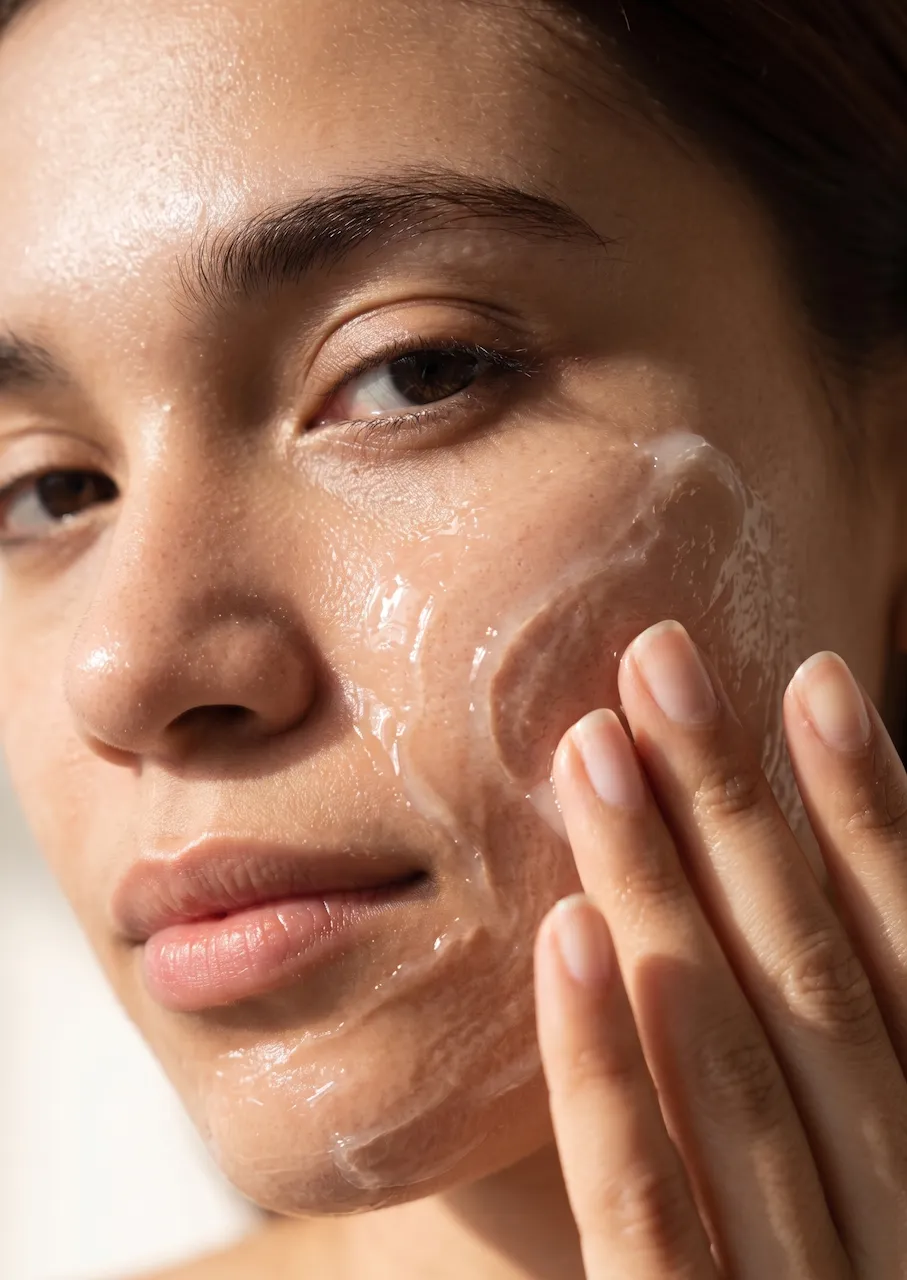
Slugging involves applying a thick layer of an occlusive product — usually Vaseline or Aquaphor — as the final step of your nighttime skincare routine. The name comes from the shiny, slug-like appearance it gives your face. The idea is simple: the occlusive layer seals in all the hydrating serums and moisturizers you have applied, preventing overnight moisture loss and giving you plumper, dewier skin by morning.
The trend has roots in Korean beauty routines, where the emphasis on barrier health and deep hydration has long been central to skincare philosophy. It gained mainstream popularity through platforms like Reddit's r/SkincareAddiction and TikTok, where before-and-after photos showed dramatic improvements in dry, flaky, irritated skin.
The Science Behind Slugging
There is legitimate science supporting the core premise. Research consistently shows that occlusive products reduce TEWL and support skin barrier recovery. A review in the journal Advances in Wound Care confirmed that maintaining a moist environment accelerates wound healing and reduces scarring — principles that apply to compromised, irritated skin as well.
Studies on petrolatum specifically have demonstrated that it can upregulate antimicrobial peptides in the skin and support the recovery of barrier function after disruption. So slugging is not just marketing — there are real mechanisms at play.
The Problem: Slugging and Acne
Here is where it gets complicated. Most of the people who benefit most visibly from slugging have dry, dehydrated, or barrier-damaged skin — not oily, acne-prone skin. When people with active acne adopt slugging, the results are often poor:
- The occlusive layer can trap acne-causing bacteria against the skin overnight
- Sealing in active ingredients like retinoids or acids can intensify irritation rather than buffering it
- The warm, moist, sealed environment can promote bacterial proliferation
- Existing microcomedones (pre-breakout clogged pores) can worsen under occlusion
That said, there is one major exception: people on isotretinoin (Accutane). Because isotretinoin dramatically suppresses sebaceous gland activity, it effectively removes the excess oil that makes occlusion problematic for acne-prone skin. Patients on isotretinoin often have skin so dry and depleted that slugging with Vaseline or Aquaphor is not just safe — it is genuinely necessary for comfort and barrier health.
Slugging Safely: Who Should and Should Not Try It
| Skin Situation | Slugging With Vaseline? | Why |
|---|---|---|
| On isotretinoin (Accutane) | Often recommended | Oil production is dramatically reduced; barrier support is critical |
| Dry skin, no active acne | Generally safe | Low breakout risk; significant hydration benefit |
| Retinoid-irritated skin (peeling, flaking) | Proceed with caution | Can help barrier recovery but may intensify retinoid penetration |
| Oily skin with active breakouts | Not recommended | High risk of trapping bacteria and worsening congestion |
| Comedonal acne (blackheads, whiteheads) | Not recommended | Occlusion over already-clogged pores is counterproductive |
What to expect: If you want to try slugging with Vaseline despite having acne-prone skin, start with targeted application. Apply a thin layer only to your driest areas — typically the cheeks and the skin around your mouth — and avoid the forehead, nose, and chin. Do this for two or three nights, then evaluate whether your skin is tolerating it before expanding the coverage area. Always slug over thoroughly cleansed skin.
When Vaseline Can Help Acne-Prone Skin
Despite the legitimate concerns about occlusion and acne, there are specific scenarios where Vaseline can genuinely support people dealing with breakouts. In every case, the benefit comes from protecting and healing a compromised skin barrier — not from treating the acne itself.
During Isotretinoin (Accutane) Treatment
This is the strongest use case for Vaseline in the acne world. Isotretinoin shrinks sebaceous glands and dramatically reduces oil production, leaving skin severely dry, tight, and often cracked. The lips are usually the worst-affected area, with isotretinoin-induced cheilitis (severely chapped, cracked lips) affecting the vast majority of patients.
Because oil production is essentially shut down during isotretinoin treatment, the usual concerns about occlusion and acne-prone skin largely do not apply. Your skin is not producing the excess sebum that makes Vaseline problematic for oily skin types. In fact, many dermatologists specifically recommend petroleum jelly as a lip treatment and targeted moisturizer during Accutane courses.
Vaseline can be applied to the lips throughout the day, inside the nostrils (with a cotton swab) to prevent dryness-related nosebleeds, and to any areas of extreme facial dryness or peeling.
Managing Tretinoin and Retinoid Dryness
Topical retinoids like tretinoin are among the most effective acne treatments available, but they come with a well-documented adjustment period. During the first several weeks, peeling, flaking, redness, and tightness are common as the skin adapts to increased cell turnover.
For patches of extreme dryness or cracking caused by retinoid use, a targeted application of Vaseline can help the skin recover. Some dermatologists recommend what is sometimes called "the sandwich method" — applying a thin layer of moisturizer, then the retinoid, then a thin occlusive layer — to buffer the irritation. However, this should be discussed with your provider first, as sealing in a retinoid can also increase its penetration and potentially intensify side effects.
Post-Inflammatory Healing
After a deep acne lesion has resolved or been treated, the skin needs to heal. The principle of moist wound healing is well-established in dermatology: wounds that are kept in a moist environment heal faster and with less scarring than those left to dry out. A thin layer of Vaseline over a healing post-acne lesion (once it is no longer actively inflamed or infected) can support this process and may reduce the risk of post-inflammatory hyperpigmentation.
Protecting Compromised Barriers in Harsh Conditions
Extreme cold, wind, and low humidity can strip moisture from already-stressed skin. If you are using drying acne treatments and also dealing with harsh environmental conditions, a targeted layer of Vaseline on the most exposed and vulnerable areas (cheeks, nose, around the mouth) can provide an additional layer of protection.
When Vaseline Can Make Acne Worse
Understanding when to avoid Vaseline on acne-prone skin is just as important as knowing when it can help. If any of the following situations apply to you, petroleum jelly is more likely to create problems than solve them.
- Active inflammatory acne: Applying an occlusive over red, inflamed papules and pustules can trap bacteria against the skin and worsen the infection. Vaseline creates the warm, sealed environment that C. acnes thrives in.
- Naturally oily skin without drying treatments: If your skin is producing plenty of oil on its own and you are not using medications that cause dryness, an occlusive layer is unnecessary and may contribute to congestion and clogged pores.
- Comedonal acne: If your acne primarily presents as blackheads and whiteheads (non-inflammatory comedones), adding an occlusive layer over already-plugged follicles is counterproductive.
- Hot, humid environments: Heavy occlusives in warm weather can increase skin temperature and moisture retention, potentially exacerbating breakouts — especially acne mechanica (breakouts from friction and occlusion) under masks, hats, or helmets.
- Over unwashed skin: This seems obvious, but it is worth stating: never apply Vaseline over skin that has not been thoroughly cleansed. The occlusive barrier will trap whatever is on the skin surface — including bacteria, dead cells, and pollutants.
Red flag: Do not use Vaseline as a replacement for acne treatment. If you are dealing with persistent breakouts, the solution is not a thicker moisturizer — it is identifying and treating the root cause. Vaseline cannot address the four key drivers of acne: excess sebum production, abnormal follicular keratinization, bacterial overgrowth, and inflammation. You need a dermatology provider who can build a treatment plan that targets those factors directly.
Vaseline vs. Other Occlusive Products for Acne-Prone Skin
Vaseline is not the only occlusive option, and depending on your skin, a different product may be a better fit. Here is how the major options compare. For a deeper dive into one of the most popular alternatives, see our guide to Aquaphor and acne.
| Product | Key Ingredients | Occlusive Strength | Acne-Prone Skin Notes |
|---|---|---|---|
| Vaseline (Petroleum Jelly) | 100% white petrolatum | Very high | Purest option; no added ingredients that could cause reactions; greasiest texture |
| Aquaphor Healing Ointment | 41% petrolatum, lanolin alcohol, panthenol, glycerin | High | Added humectants; contains lanolin (potential sensitivity concern) |
| CeraVe Healing Ointment | 46.5% petrolatum, ceramides, hyaluronic acid | High | Lanolin-free; ceramides support barrier repair; often preferred for acne-prone skin |
| La Roche-Posay Cicaplast Balm B5 | Shea butter, panthenol, madecassoside | Moderate | Lightest option; less greasy; may be best for daily use on breakout-prone skin |
One advantage Vaseline has over Aquaphor for acne-prone skin: it contains no lanolin. Lanolin alcohol, present in Aquaphor, can cause contact dermatitis or folliculitis in sensitive individuals — reactions that can mimic acne. If you have ever reacted to wool-based products or Aquaphor specifically, Vaseline's single-ingredient simplicity may actually make it the safer occlusive choice.
How to Use Vaseline Safely With Acne-Prone Skin
If your skin situation calls for an occlusive — whether from isotretinoin dryness, retinoid irritation, or barrier compromise — here is how to use Vaseline without maximizing your breakout risk.
Safe Vaseline Usage Checklist
- Cleanse your face thoroughly before applying — a gentle, non-stripping cleanser is ideal
- Apply your hydrating serums and moisturizer first, then seal with Vaseline
- Use a thin layer — you do not need a thick, goopy coating for the occlusive effect to work
- Target dry areas only and avoid active breakouts, papules, and pustules
- Avoid applying over strong actives (retinoids, acids) unless your provider has approved it
- Use a clean pillowcase — Vaseline will transfer, and you do not want to reintroduce old bacteria
- Monitor for new breakouts for the first week and adjust accordingly
What to expect: If Vaseline is right for your skin situation, you should notice softer, less flaky skin within a day or two of starting. If you are using it during isotretinoin treatment, the relief from lip dryness is usually immediate. If you are seeing new bumps or increased congestion within the first week, that is a sign to stop and consult your provider.
What Actually Works for Acne
If you are searching "does Vaseline help with acne," there is a good chance your skin needs more than barrier support. While Vaseline has its place as a protective tool, persistent acne requires treatments that target its root causes: excess sebum, clogged follicles, bacterial overgrowth, and inflammation.
Proven acne treatments backed by strong clinical evidence include:
- Tretinoin: A topical retinoid that normalizes cell turnover, prevents pore clogging, and reduces acne lesions. It is one of the most well-studied acne treatments available.
- Benzoyl peroxide: Kills C. acnes bacteria on contact and has anti-inflammatory properties. Available in prescription and over-the-counter strengths.
- Doxycycline: An oral antibiotic with both antibacterial and anti-inflammatory effects, commonly used for moderate inflammatory acne.
- Spironolactone: Addresses hormonal drivers of acne by reducing androgen activity, making it particularly effective for hormonal breakouts.
- Isotretinoin (Accutane): The most effective treatment for persistent acne that has not responded to other therapies. Studies show up to 97.4% improvement rates in patients who complete a full course.
A dermatology provider can evaluate your skin, determine what is driving your breakouts, and build a treatment plan tailored to your specific acne type and severity. Vaseline might be part of the plan for managing side effects — but it is never the plan itself.
The Bottom Line
Does Vaseline help acne? Not as a treatment. Vaseline is a powerful occlusive that excels at one specific job: sealing moisture into the skin and protecting a compromised barrier. It does not kill bacteria, unclog pores, regulate oil production, or reduce inflammation.
But in the right context — during isotretinoin treatment, while managing retinoid irritation, or when healing severely compromised skin — Vaseline is a legitimate and inexpensive support tool. The key is understanding when your skin needs barrier protection (which Vaseline provides) versus when it needs acne treatment (which Vaseline does not).
The slugging debate ultimately comes down to context. For dry, depleted, treatment-ravaged skin, slugging can be genuinely helpful. For oily, actively breaking-out skin, it is more likely to backfire. And for everyone, it is no substitute for a proper acne treatment plan built by a dermatology provider who understands your skin.
If your acne is persistent and you are looking for real solutions, our team of board-certified dermatologists, nurse practitioners, and physician assistants can evaluate your skin and prescribe a personalized treatment plan — one that addresses the root causes of your breakouts, not just the surface symptoms.
.webp)

Medically Reviewed by
Joel Spitz, MD
Co-Founder & Chief Medical Officer, Board Certified Dermatologist