Key Takeaways

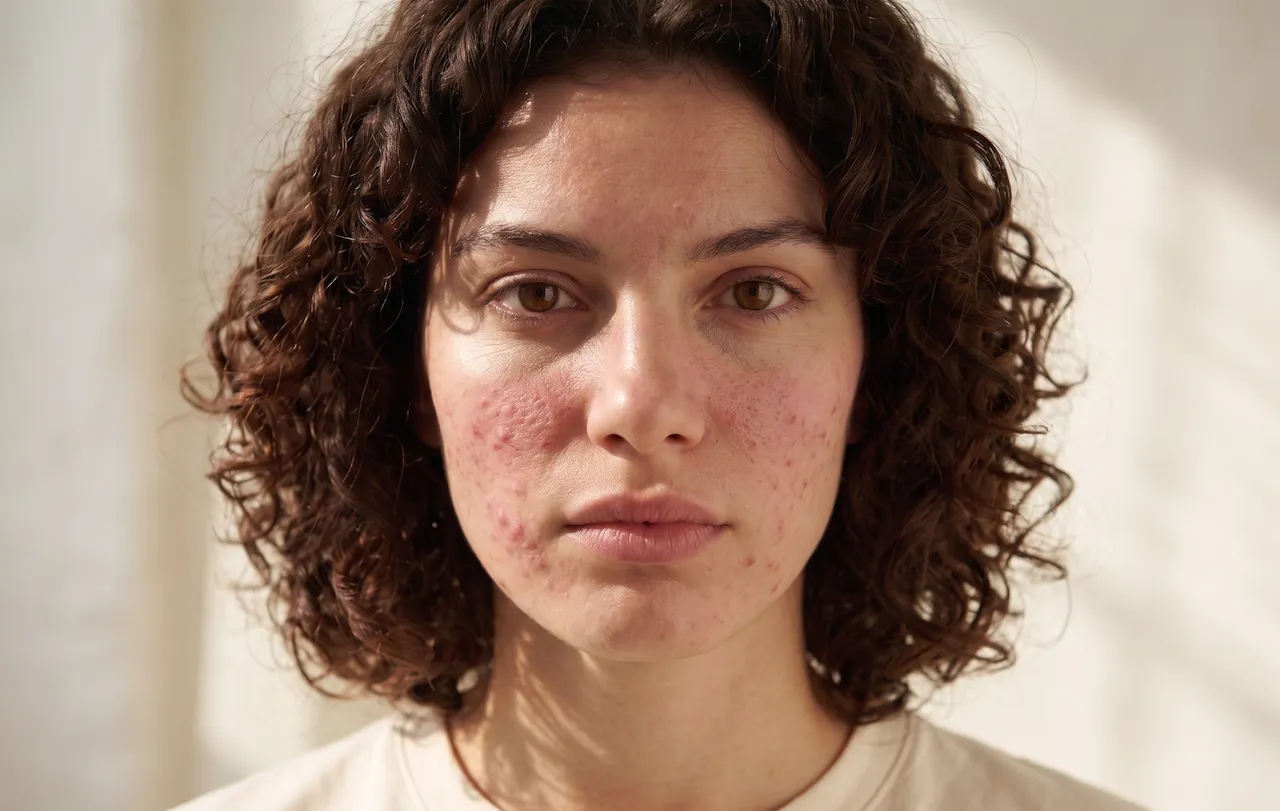
If you've been dealing with persistent facial redness, visible blood vessels, or bumps that look like breakouts but don't behave like typical pimples, you've probably gone down a research rabbit hole. And somewhere along the way, you likely came across the term "acne rosacea" and started wondering: is acne rosacea an autoimmune disease?
It's a fair question. Rosacea involves chronic inflammation and an immune system that seems to overreact. Autoimmune diseases also involve an overactive immune system. The overlap in symptoms and mechanisms makes the confusion understandable. But the distinction matters, because understanding what's actually driving your skin condition is the first step toward getting the right treatment.
In this article, we'll unpack the term "acne rosacea," explain why rosacea is not the same as acne, walk through the current scientific understanding of rosacea's pathophysiology, and clarify why rosacea is considered an inflammatory condition rather than a true autoimmune disease.
Quick Answer: Is Acne Rosacea an Autoimmune Disease?
No. Rosacea is a chronic inflammatory skin condition, not an autoimmune disease. While it involves immune system dysregulation, it does not meet the criteria for autoimmune classification. Additionally, "acne rosacea" is an outdated term — rosacea and acne are two entirely different conditions with different causes, triggers, and treatments.
- Rosacea is driven by neurovascular dysfunction and innate immune overactivation
- Acne is driven by excess sebum, clogged pores, and bacterial overgrowth
- Autoimmune diseases involve the immune system attacking the body's own healthy tissue — rosacea does not
- The two conditions can coexist, which adds to the confusion
Why "Acne Rosacea" Is a Misleading Term
The phrase "acne rosacea" has been floating around for decades, and it's still widely searched online. Historically, dermatologists used the term to describe a subtype of rosacea — papulopustular rosacea — that produces small red bumps and pus-filled lesions resembling acne. Because these bumps look so much like traditional pimples, people understandably assumed the two conditions were related.
But modern dermatology has moved away from this terminology. The American Academy of Dermatology (AAD) is clear: rosacea and acne are separate conditions with fundamentally different underlying mechanisms. Calling rosacea "acne rosacea" confuses the picture, because it implies a shared cause that doesn't exist.
Here's why the distinction is so important: acne treatments like benzoyl peroxide or salicylic acid can actually make rosacea worse. If you're treating what you think is "acne" on your cheeks and nose, but it's actually rosacea, you could be irritating your skin and driving more inflammation. Getting the right diagnosis is essential for getting the right treatment.
Acne vs. Rosacea: How to Tell the Difference
Acne and rosacea can both cause facial redness and bumps, which is why they're so frequently confused. But when you look more closely, the two conditions have distinct patterns, causes, and characteristics.
| Feature | Acne (Acne Vulgaris) | Rosacea |
|---|---|---|
| Age of onset | Teens and 20s (though it can persist into adulthood) | Typically 30s-50s |
| Location | Face, back, chest, shoulders | Central face — cheeks, nose, chin, forehead |
| Comedones (blackheads/whiteheads) | Yes — a hallmark of acne | No — rosacea does not produce comedones |
| Persistent background redness | Not typically (redness is around individual lesions) | Yes — diffuse, persistent flushing is a core feature |
| Visible blood vessels | No | Yes — telangiectasia is common |
| Triggers | Hormones, bacteria, excess oil, pore blockage | Sun, heat, stress, alcohol, spicy food, temperature extremes |
| Eye involvement | No | Yes — ocular rosacea causes dry, gritty, irritated eyes |
| Skin texture | Often oily, especially in the T-zone | Often sensitive, may feel dry or stinging |
The single most reliable distinguishing feature is the presence (or absence) of comedones. Acne almost always involves blackheads and whiteheads. Rosacea never does. If you're seeing papules and pustules on your cheeks and nose but no comedones anywhere, rosacea is much more likely than acne.
What to expect: It's entirely possible to have both acne and rosacea at the same time. This is one reason the two get confused so often. If you're dealing with a mix of breakouts and persistent redness, a board-certified dermatologist can identify which condition is contributing to which symptoms and create a targeted treatment plan. Our providers at Honeydew can help you sort this out during a virtual consultation.
Is Rosacea an Autoimmune Disease?
This is the central question, and the answer is no. Rosacea is not currently classified as an autoimmune disease. But the reasoning behind that answer is worth understanding, because the immune system is clearly involved in rosacea — just not in the way it's involved in conditions like lupus, rheumatoid arthritis, or psoriasis.
What makes a disease "autoimmune"?
In a true autoimmune disease, the adaptive immune system — your body's highly targeted defense force — mistakenly identifies normal, healthy tissue as a threat. It produces specific antibodies or immune cells that attack your own cells. The result is chronic inflammation driven by the immune system's inability to distinguish "self" from "non-self."
Examples include:
- Lupus: Antibodies attack multiple organs, including skin, joints, and kidneys
- Rheumatoid arthritis: The immune system targets joint lining
- Type 1 diabetes: Immune cells destroy insulin-producing cells in the pancreas
- Psoriasis: T-cells drive excessive skin cell production (this one sits on the autoimmune spectrum)
These conditions share key hallmarks: specific autoantibodies, targeting of specific tissues, and involvement of the adaptive immune system.
How rosacea differs from autoimmune conditions
Rosacea involves the innate immune system — the body's first-line, non-specific inflammatory response — rather than the adaptive immune system that drives autoimmune diseases. In rosacea, there's no evidence that the body is producing antibodies against its own tissue. Instead, the problem is an exaggerated inflammatory response to external triggers that wouldn't normally provoke such a reaction.
A landmark 2007 study in Nature Medicine by Yamasaki et al. identified that people with rosacea have abnormally high levels of cathelicidin, an antimicrobial peptide processed by the enzyme kallikrein 5 (KLK5). In healthy skin, cathelicidin helps fight infection. In rosacea-affected skin, it's overproduced and abnormally processed into pro-inflammatory fragments that trigger vasodilation, immune cell recruitment, and the hallmark redness and bumps of rosacea.
This is a dysfunction of the innate immune system — an overreaction, not a misdirected attack on self-tissue. That's the fundamental difference between rosacea and an autoimmune disease.
Important distinction: While rosacea is not autoimmune, research has found that people with rosacea may have a higher risk of developing certain autoimmune conditions, including type 1 diabetes, celiac disease, multiple sclerosis, and rheumatoid arthritis. This association doesn't mean rosacea is autoimmune — it suggests that the underlying immune dysregulation in rosacea may overlap with pathways involved in autoimmune disease. If you have rosacea and are experiencing other unexplained symptoms, mention them to your provider.
What Actually Causes Rosacea? The Current Understanding
Rosacea's pathophysiology is complex and still not fully understood. But decades of research have revealed several interconnected mechanisms that drive the condition. Here's what we know.
1. Neurovascular dysfunction
People with rosacea have blood vessels in the face that dilate more easily and stay dilated longer than normal. This neurovascular hyperreactivity is why triggers like heat, sun, alcohol, and emotional stress cause flushing episodes. Over time, repeated dilation can lead to permanently visible blood vessels — the telangiectasia characteristic of rosacea.
The nervous system also plays a role. Transient receptor potential (TRP) channels — sensory receptors in skin nerve endings — appear to be hyperactive in rosacea, making the skin more sensitive to stimuli that wouldn't bother most people. A 2015 study in the Journal of Investigative Dermatology found that TRPV channels contribute to neurogenic inflammation in rosacea through the release of neuropeptides that promote vasodilation and immune activation.
2. Innate immune overactivation
As mentioned above, the innate immune system in rosacea-affected skin is on a hair trigger. Key players include:
- Cathelicidin LL-37: This antimicrobial peptide is overproduced and abnormally cleaved, generating pro-inflammatory fragments
- Kallikrein 5 (KLK5): The enzyme responsible for processing cathelicidin is overexpressed in rosacea skin
- Toll-like receptor 2 (TLR2): This pattern-recognition receptor, which helps detect pathogens, is upregulated in rosacea, potentially amplifying the inflammatory response to normal skin flora
- Matrix metalloproteinases (MMPs): These enzymes contribute to tissue remodeling and inflammation in rosacea
3. Demodex mites
Demodex folliculorum mites live in the hair follicles of nearly all adults. They're usually harmless. But people with rosacea tend to have significantly higher Demodex populations than those without the condition. Whether the mites cause the inflammation or simply thrive in already-inflamed skin is still debated, but they likely contribute to a cycle of immune activation. The bacteria they carry (Bacillus oleronius) can trigger TLR2-mediated inflammation, which feeds back into the cathelicidin pathway.
4. Genetic predisposition
Rosacea runs in families. A large twin study published in 2015 found that genetics account for approximately 46% of rosacea risk, with the remainder attributed to environmental factors. Several genetic variants associated with the immune system and inflammation have been identified in rosacea patients, including variants near genes involved in the HLA (human leukocyte antigen) complex — a system that also plays a role in many autoimmune diseases.
This genetic overlap with autoimmune-related pathways is another reason people sometimes assume rosacea is autoimmune. But having shared genetic risk factors does not make rosacea an autoimmune disease — it simply means the immune system is involved in both types of conditions, which is not surprising given how central the immune system is to most chronic inflammatory diseases.
5. Skin barrier impairment
The skin barrier in rosacea-affected areas is often compromised, with increased transepidermal water loss and heightened sensitivity to topical products. This impaired barrier allows environmental irritants easier access to the skin, which can further activate the innate immune system and worsen inflammation.
What Causes Acne? A Brief Comparison
Understanding acne's mechanisms highlights just how different it is from rosacea. Acne vulgaris develops through a well-characterized sequence of events:
- Excess sebum production: Androgens (hormones) stimulate the sebaceous glands to produce too much oil
- Follicular hyperkeratinization: Dead skin cells accumulate inside the pore, forming a plug (comedone)
- Bacterial colonization: Cutibacterium acnes (formerly Propionibacterium acnes) proliferates in the clogged, oxygen-poor environment
- Inflammation: The immune system responds to bacterial byproducts, producing the red, swollen lesions you see on the skin
Notice the key difference: in acne, inflammation is a downstream consequence of clogged pores and bacterial overgrowth. In rosacea, inflammation is the primary driver from the start, with no clogged pores involved at all. The two conditions may look similar on the surface, but what's happening underneath the skin is fundamentally different.
How Rosacea Is Treated Differently from Acne
Because acne and rosacea have different underlying mechanisms, they require different treatment approaches. Using acne treatments on rosacea — or vice versa — can make things worse.
| Treatment | Acne | Rosacea |
|---|---|---|
| Topical retinoids | First-line treatment (tretinoin, adapalene) | Often too irritating; used cautiously if at all |
| Benzoyl peroxide | Effective antibacterial treatment | Can cause significant irritation and worsen redness |
| Metronidazole (topical) | Not used for acne | First-line topical for rosacea |
| Azelaic acid | Used for mild acne and post-inflammatory hyperpigmentation | FDA-approved for rosacea; anti-inflammatory and well-tolerated |
| Ivermectin (topical) | Not used for acne | Targets Demodex mites and reduces inflammation |
| Oral antibiotics | Doxycycline at antibacterial doses | Sub-antimicrobial dose doxycycline (anti-inflammatory) |
| Isotretinoin (Accutane) | Highly effective for persistent acne | Low-dose isotretinoin used for refractory rosacea |
| Brimonidine/oxymetazoline | Not used for acne | Topical vasoconstrictors to reduce facial redness |
One notable overlap: doxycycline is used in both conditions, but at different doses and for different reasons. In acne, it's given at standard antibiotic doses to reduce C. acnes bacteria. In rosacea, sub-antimicrobial-dose doxycycline (40 mg modified-release) is used purely for its anti-inflammatory properties, not to kill bacteria.
What to expect: If you've been self-treating what you thought was acne but aren't seeing improvement — especially if your skin is mostly red and irritated without blackheads or whiteheads — it's worth getting a professional evaluation. Our dermatologists at Honeydew can assess your skin through a virtual consultation, determine whether you're dealing with acne, rosacea, or both, and prescribe the right treatment for your specific condition.
The Autoimmune Connection: What Research Actually Shows
While rosacea itself is not autoimmune, the relationship between rosacea and the broader immune system is an active area of research. Several large population-based studies have found associations worth knowing about.
A 2016 systematic review and meta-analysis in the Journal of the American Academy of Dermatology examined the comorbidities associated with rosacea and found statistically significant associations between rosacea and several systemic conditions, including cardiovascular disease, gastrointestinal disorders, and neurological conditions.
A 2017 review in the British Journal of Dermatology proposed that rosacea should be understood as a systemic inflammatory condition rather than just a skin disease, noting shared inflammatory pathways between rosacea and other chronic inflammatory and autoimmune conditions.
What does this mean for you? It doesn't mean rosacea is autoimmune. It means rosacea exists on a broader spectrum of inflammatory conditions, and the same genetic and immunological factors that predispose someone to rosacea may also predispose them to other immune-related conditions. If you have rosacea and are experiencing symptoms beyond your skin — joint pain, digestive issues, or unusual fatigue, for example — it's worth mentioning to your provider, not because rosacea caused them, but because a pattern of immune dysregulation may warrant further evaluation.
Managing Rosacea: Practical Tips
Whether or not rosacea is autoimmune (it's not), managing it effectively requires a combination of trigger avoidance, gentle skincare, and often prescription treatment.
Rosacea Management Checklist
- Identify your triggers: Keep a diary of flare-ups and what preceded them (food, weather, stress, products)
- Use mineral sunscreen daily: UV exposure is the most common rosacea trigger; zinc oxide or titanium dioxide formulas are less irritating than chemical sunscreens
- Choose fragrance-free, gentle products: Avoid alcohol-based toners, harsh cleansers, and heavily fragranced moisturizers
- Skip harsh exfoliants: Physical scrubs and strong AHA/BHA products can worsen rosacea
- Support your skin barrier: Look for moisturizers with ceramides, niacinamide, or hyaluronic acid
- Seek prescription treatment: Many effective rosacea treatments require a prescription — don't try to manage moderate or severe rosacea with over-the-counter products alone
Red flag: If you're experiencing sudden, severe facial redness accompanied by a butterfly-shaped rash across your cheeks and nose, joint pain, fatigue, or fever, see a healthcare provider promptly. These symptoms could indicate lupus or another systemic condition that requires different workup and treatment than rosacea.
The Bottom Line
Rosacea is not an autoimmune disease, and it's not the same as acne — despite the confusing term "acne rosacea" that has lingered in common usage. Rosacea is a chronic inflammatory condition driven by neurovascular dysfunction and innate immune overactivation. It shares some superficial features with both acne and autoimmune diseases, but its underlying mechanisms are distinct.
Understanding this distinction matters because it directly affects treatment. What works for acne can irritate rosacea, and autoimmune treatments aren't appropriate for rosacea either. Getting an accurate diagnosis from a board-certified dermatologist is the fastest path to effective management.
If you're dealing with persistent facial redness, bumps that won't respond to typical acne treatments, or uncertainty about whether your skin condition is acne, rosacea, or something else entirely, we're here to help. Our providers can evaluate your skin, provide a clear diagnosis, and build a treatment plan tailored to what's actually going on beneath the surface.