Key Takeaways

If you are dealing with forehead acne, you already know how frustrating it is. Unlike breakouts that you can hide under clothing, forehead pimples sit right in the center of your face. They are the first thing you notice in the mirror, and they can make you self-conscious in conversations, meetings, and photos.
You are far from alone. The forehead is part of the "T-zone" — the oiliest region of the face — and it is one of the most acne-prone areas on the body. According to the American Academy of Dermatology, acne affects up to 50 million Americans each year, and the forehead is among the most frequently involved sites. A study in the Archives of Dermatological Research confirmed that sebum production is highest in the T-zone, which helps explain why forehead breakouts are so persistent.
The good news is that forehead acne is very treatable once you understand what is causing it. Below, we will walk through the most common triggers, how to get rid of forehead acne with both over-the-counter and prescription options, and how to keep it from coming back.
Quick Answer: How to Get Rid of Forehead Acne
For mild forehead acne: Use a gentle cleanser with salicylic acid (2%) or benzoyl peroxide (2.5-5%), stop using heavy hair products near your hairline, and keep hats and headbands clean.
For persistent forehead acne: See a dermatologist for prescription treatments like tretinoin, topical antibiotics, or oral medications such as doxycycline or spironolactone.
Key point: Forehead acne often has an external trigger — hair products, hats, or sweat — that makes it worse. Identifying and removing that trigger can dramatically speed up your results.
What Causes Forehead Acne?
At a basic level, all acne forms the same way: pores become clogged with a mix of excess oil (sebum), dead skin cells, and bacteria, which triggers inflammation. But the forehead has some unique characteristics that make it especially breakout-prone, and it is exposed to external triggers that other parts of the face are not.
Hair Products (Pomade Acne)
This is one of the most overlooked causes of forehead acne, and it is one of the most common. Styling products — gels, pomades, waxes, leave-in conditioners, hair oils, and even certain shampoos — can migrate from your hair onto your forehead, where they clog pores and cause breakouts. Dermatologists call this "pomade acne" or acne cosmetica, and it typically appears as clusters of small, uniform bumps along the hairline.
If your forehead acne concentrates near your hairline and you use styling products regularly, your hair products are a prime suspect. Switching to non-comedogenic or water-based formulas — and keeping products away from your forehead — can make a noticeable difference within weeks.
Hats, Headbands, and Helmets
Anything that presses against your forehead can trigger a specific type of breakout called acne mechanica. This occurs when friction, pressure, and heat trap sweat and oil against the skin, leading to clogged pores and inflammation. Baseball caps, beanies, athletic headbands, hard hats, and helmets are all common culprits.
If you notice that your forehead acne worsens after wearing a hat or working out with a headband, acne mechanica is likely a contributing factor.
Sweat
Sweat itself is not comedogenic, but when it sits on the skin and mixes with oil and bacteria, it can aggravate clogged pores — especially on the forehead, where sebum production is already high. This is why people who exercise frequently, work outdoors, or live in humid climates often notice their forehead acne flaring during warmer months or after workouts.
The fix is straightforward: cleanse your forehead (or your entire face) as soon as possible after sweating. If an immediate shower is not realistic, a gentle micellar water or cleansing wipe can help until you can wash properly.
Hormonal Fluctuations
Hormones play a major role in how much oil your skin produces. Androgens — the group of hormones that includes testosterone — stimulate the sebaceous glands to produce more sebum. During puberty, menstrual cycles, periods of stress, or conditions like polycystic ovary syndrome (PCOS), androgen levels can spike and drive excess oil production on the forehead and throughout the T-zone.
Hormonal forehead acne can be particularly stubborn because it is driven from the inside out. If you suspect your breakouts are hormonally driven, our guide on how to tell if your acne is hormonal or bacterial can help you figure out the root cause.
Excess Oil Production
The forehead sits in the T-zone, the region of the face with the highest density of sebaceous glands. Some people naturally produce more sebum than others, and this is largely genetic. A twin study published in the Journal of Investigative Dermatology found that genetics account for a significant portion of acne susceptibility, including how much oil your skin produces.
Excess oil on its own does not guarantee breakouts, but when combined with dead skin cell buildup, bacteria, and external triggers, it creates the conditions for forehead acne to thrive.
Stress
Stress does not directly cause acne, but it absolutely makes it worse. When you are stressed, your body produces more cortisol, a hormone that can stimulate sebum production and increase inflammation. A study published in Clinical, Cosmetic and Investigational Dermatology found a significant correlation between stress levels and acne severity in adult patients, with the forehead being one of the most commonly affected areas.
Comedogenic Skincare and Makeup Products
Heavy foundations, primers, and moisturizers that are not formulated for acne-prone skin can clog the pores on your forehead. This is especially true for products that sit on the skin for extended periods. If you apply makeup daily and notice that your forehead is consistently breaking out, your products may be contributing.
What to expect: Most people with forehead acne have more than one cause at play. You might have naturally oily skin (genetics), use a pomade that migrates to your hairline (hair products), and work out in a headband (friction). Treating forehead acne effectively usually means addressing multiple triggers at the same time.
Types of Forehead Acne
Understanding what type of forehead acne you have helps determine the right treatment approach. Here is a quick breakdown.
| Type | Appearance | Common Causes | Typical Treatment |
|---|---|---|---|
| Comedonal acne | Small blackheads and whiteheads, bumpy texture | Excess oil, dead skin buildup, hair products | Salicylic acid, retinoids |
| Inflammatory acne | Red, swollen papules and pustules | Bacteria, hormones, irritation | Benzoyl peroxide, topical antibiotics |
| Acne mechanica | Bumps concentrated where hats or headbands touch | Friction, pressure, trapped sweat | Remove trigger, benzoyl peroxide wash |
| Pomade acne | Clusters of small bumps along the hairline | Hair styling products | Switch products, salicylic acid cleanser |
| Cystic acne | Deep, painful lumps under the skin | Hormones, genetics | Prescription oral medications, Accutane |
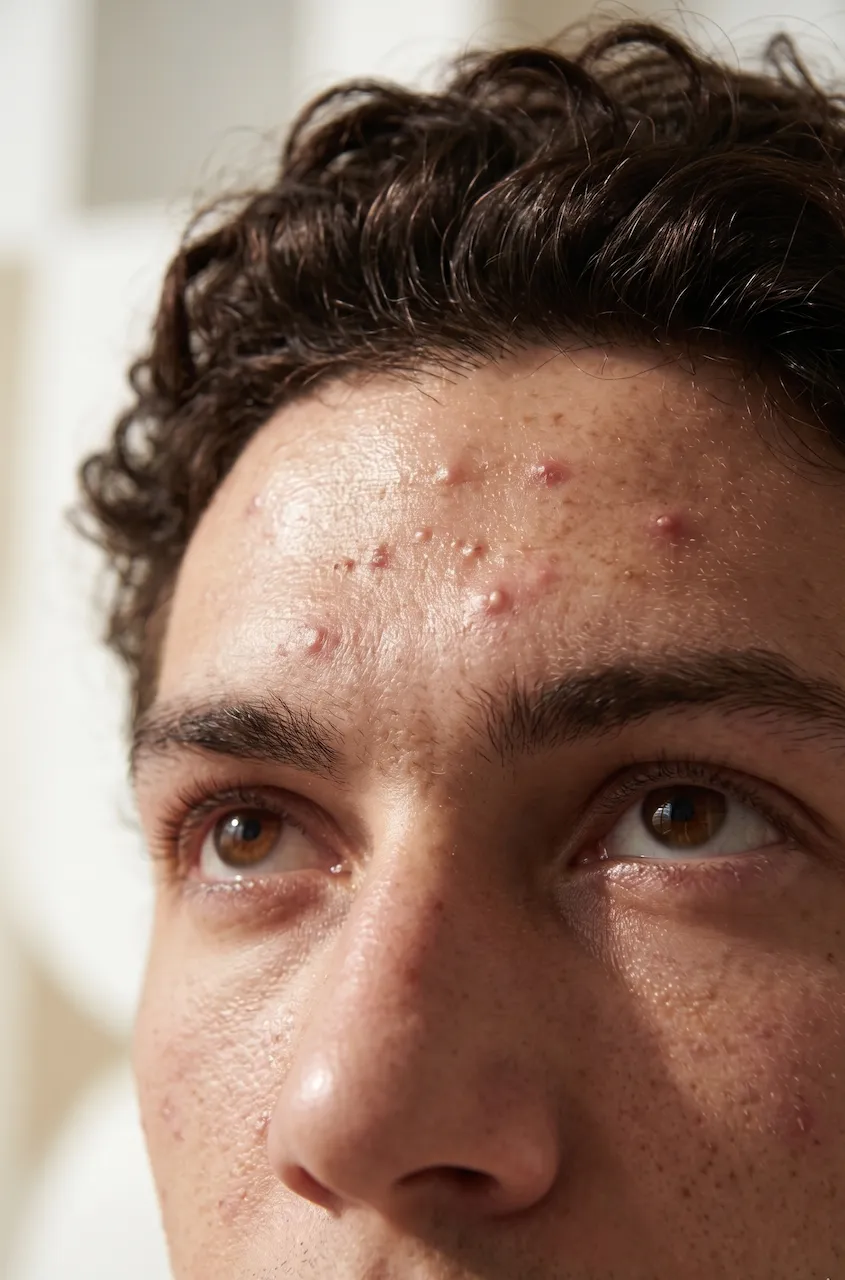
Mild comedonal forehead acne — the small bumps and blackheads that give the forehead a rough, uneven texture — is the most common type and usually responds well to over-the-counter treatments and habit changes. Inflammatory, cystic, or persistent acne on the forehead typically requires prescription-strength treatment.
How to Get Rid of Forehead Acne: Over-the-Counter Treatments
If your forehead acne is mild to moderate, the right over-the-counter products combined with some simple lifestyle changes can make a real difference. Here are the ingredients with the strongest evidence behind them.
Salicylic Acid
Salicylic acid is a beta-hydroxy acid (BHA) that penetrates into pores and dissolves the mix of oil and dead skin cells causing blockages. It is especially effective for comedonal forehead acne — the small bumps, blackheads, and whiteheads that create a rough texture across the forehead. Look for a 2% salicylic acid cleanser or treatment and use it once or twice daily.
Benzoyl Peroxide
Benzoyl peroxide kills Cutibacterium acnes, the bacteria that drive inflammatory acne, and helps unclog pores. For the face, start with a 2.5-5% concentration — studies have shown that lower concentrations are just as effective as 10% with significantly less irritation. Apply a thin layer to your forehead after cleansing, and be aware that benzoyl peroxide can bleach pillowcases and towels.
Adapalene (Differin)
Adapalene is a retinoid that is now available over the counter at 0.1% strength. It works by speeding up skin cell turnover, preventing the dead cell buildup that clogs pores. It is one of the most effective over-the-counter treatments for forehead acne, especially comedonal breakouts. Apply a pea-sized amount to your entire forehead at night after cleansing.
Important: Retinoids can cause dryness and a temporary "purging" phase during the first 4-6 weeks. This is normal and does not mean the product is making your acne worse. Stick with it.
Niacinamide
Niacinamide (vitamin B3) helps regulate oil production, reduce inflammation, and strengthen the skin barrier. A study published in the International Journal of Dermatology found that a 4% niacinamide gel was comparable to 1% clindamycin (a prescription topical antibiotic) for treating inflammatory acne. It is a good supporting ingredient to use alongside salicylic acid or benzoyl peroxide, particularly if you have oily, sensitive skin.
What to expect: Over-the-counter treatments typically take 6-8 weeks of consistent daily use to show meaningful results. If your forehead acne has not improved after 2-3 months, or if it is inflammatory or cystic, it is time to see a dermatologist for prescription-strength options.
Prescription Treatments for Forehead Acne
When over-the-counter products are not enough, prescription treatments can target the underlying causes of your forehead acne more aggressively. A dermatologist will recommend a plan based on your acne type, severity, and medical history. Here are the most effective prescription options.
Topical Retinoids (Tretinoin)
Prescription-strength retinoids like tretinoin are significantly more potent than over-the-counter adapalene. They accelerate cell turnover, prevent pore clogging, and can also improve post-acne marks and skin texture over time. According to the American Academy of Dermatology's clinical guidelines, topical retinoids are a first-line treatment for nearly all types of acne, including comedonal and inflammatory breakouts on the forehead.
Topical Antibiotics
Topical antibiotics like clindamycin reduce the bacteria contributing to inflammatory forehead acne. They are almost always prescribed in combination with benzoyl peroxide — using them alone increases the risk of antibiotic resistance. Combination products (clindamycin + benzoyl peroxide) simplify your routine and improve effectiveness.
Oral Antibiotics
For moderate to severe inflammatory forehead acne, oral antibiotics like doxycycline or minocycline can reduce bacteria and inflammation from the inside out. The AAD recommends using oral antibiotics for the shortest duration possible — typically 3-6 months — and pairing them with a topical retinoid to reduce the risk of resistance.
Spironolactone
If your forehead acne is hormonally driven — meaning it tends to flare with your menstrual cycle, is accompanied by excess oil, or has not responded well to topical treatments — spironolactone may be a good option. It works by blocking androgen receptors, reducing the hormonal signals that drive oil production. A systematic review in the Journal of the American Academy of Dermatology found it effective for adult acne at doses of 50-100 mg daily.
Accutane (Isotretinoin)
For forehead acne that has not responded to other treatments — or for acne that is widespread, cystic, or scarring — Accutane (isotretinoin) is often the most effective option available. It dramatically reduces oil production, shrinks sebaceous glands, kills acne-causing bacteria, and normalizes skin cell turnover. A 2013 JAMA Dermatology study found that 97.4% of patients showed improvement at 12 months.
A typical course of Accutane lasts 4-6 months, and the results are often long-lasting. It is not reserved only for severe cases — it is an effective option for anyone with persistent acne that has not cleared with other approaches.
Important: Accutane requires medical supervision, including regular blood tests and, for people who may become pregnant, enrollment in the iPLEDGE program. Our team at Honeydew includes board-certified dermatologists who specialize in Accutane management and will monitor you closely throughout treatment.
Treatment Comparison at a Glance
| Treatment | Best For | How It Works | Prescription? |
|---|---|---|---|
| Salicylic acid (2%) | Blackheads, whiteheads, bumpy texture | Dissolves pore blockages | No |
| Benzoyl peroxide (2.5-5%) | Inflammatory pimples | Kills bacteria, unclogs pores | No |
| Adapalene (0.1%) | Comedonal and mild inflammatory acne | Speeds cell turnover | No (OTC) |
| Tretinoin | All types of forehead acne | Accelerates cell turnover, prevents clogging | Yes |
| Oral antibiotics (doxycycline) | Moderate inflammatory acne | Reduces bacteria and inflammation | Yes |
| Spironolactone | Hormonal acne | Blocks androgen hormones | Yes |
| Accutane (isotretinoin) | Persistent, cystic, or treatment-resistant acne | Shrinks oil glands, addresses all acne causes | Yes |
How to Prevent Forehead Acne
Treatment is important, but so is eliminating the habits and triggers that keep forehead breakouts coming back. These daily changes work alongside your acne products and medications to give you the best possible results.
Rethink Your Hair Routine
If you use styling products, keep them away from your hairline. Apply gels and pomades to the mid-lengths and ends of your hair, not the roots. Switch to non-comedogenic or water-based hair products. When washing and conditioning your hair in the shower, rinse your face and forehead last to remove any residue that may have dripped down.
Keep Hats and Headbands Clean
If you regularly wear hats, headbands, or helmets, wash or wipe them down frequently. Sweat, oil, and bacteria build up on these surfaces and get pressed directly against your forehead every time you put them on. Choose breathable fabrics when possible, and take breaks from wearing them to let your skin breathe.
Wash Your Face After Sweating
Whether you have just finished a workout, been outside in the heat, or simply had a stressful day, wash your face as soon as you can. A gentle, non-comedogenic cleanser is all you need — you do not have to use your medicated wash every time. The goal is simply to remove sweat, oil, and debris before they can settle into your pores.
Hands Off Your Forehead
It is a harder habit to break than you might think. Resting your chin on your hands, wiping sweat off your forehead, pushing your hair back — all of these transfer oil, bacteria, and dirt from your hands onto your forehead. Try to be mindful of how often you touch your face throughout the day.
Use Non-Comedogenic Products
Every product that touches your forehead — moisturizer, sunscreen, primer, foundation — should be labeled "non-comedogenic" or "oil-free." Heavy, occlusive products sit on the skin and trap oil inside pores. Lightweight, gel-based moisturizers and mineral sunscreens are generally safer choices for acne-prone foreheads.
Do Not Over-Wash
Washing your face more than twice a day (plus post-workout washes) can strip your skin barrier, trigger rebound oil production, and actually make forehead acne worse. Stick to washing morning and night, and use a gentle touch — no scrubbing.
Daily Forehead Acne Prevention Checklist
- Wash your face morning and night with a gentle cleanser
- Cleanse after sweating
- Keep hair products away from your hairline
- Wash hats and headbands regularly
- Use only non-comedogenic skincare and makeup
- Avoid touching your forehead throughout the day
- Apply treatment products consistently
- Change your pillowcase at least once a week
When to See a Dermatologist for Forehead Acne
Many cases of mild forehead acne can be managed with over-the-counter products and lifestyle changes. But there are clear signs that it is time to get professional help.
See a dermatologist if:
- Your forehead acne has not improved after 2-3 months of consistent over-the-counter treatment
- You have deep, painful bumps or cysts on your forehead
- Your breakouts are leaving dark spots or scars
- Your forehead acne is spreading to other areas of your face
- You are unsure whether your bumps are acne or another condition (such as fungal acne)
- Your acne is affecting your confidence or mental health
At Honeydew, our board-certified dermatologists, nurse practitioners, and physician assistants have treated over 100,000 acne cases, including countless patients dealing with stubborn forehead breakouts. We offer same-day or next-day video appointments, so you do not have to wait weeks to see a specialist. Whether you need a prescription retinoid, an oral antibiotic, spironolactone, or a more comprehensive approach with Accutane, our providers will build a personalized treatment plan based on your skin, your history, and what you have already tried.
What to expect with Honeydew: During your video consultation, your provider will review photos of your forehead acne, ask about your skincare routine and lifestyle, and recommend a targeted treatment plan. Most patients begin seeing improvement within 4-8 weeks of starting prescription treatment. Our membership starts at $25/month with an annual plan, and you can message your care team anytime with questions or concerns.
Forehead Acne vs. Other Conditions
Not every bump on your forehead is acne. A few other conditions can look similar but require different treatment. If you are not sure what you are dealing with, a dermatologist can give you an accurate diagnosis.
| Condition | What It Looks Like | Key Difference From Acne |
|---|---|---|
| Fungal acne (Pityrosporum folliculitis) | Uniform, small, itchy bumps across the forehead | Caused by yeast overgrowth, not bacteria; itchy rather than painful; does not respond to typical acne treatments and can worsen with antibiotics |
| Seborrheic dermatitis | Flaky, red, scaly patches along the hairline | Related to yeast on the skin; causes flaking and scaling rather than individual pimples; often involves the eyebrows and scalp too |
| Contact dermatitis | Red, irritated patches, sometimes with small blisters | Triggered by an allergen or irritant (hair product, headband material); localized to the contact area; more itchy and rashy than typical acne |
| Milia | Tiny, hard, white bumps that do not pop | Trapped keratin under the skin, not clogged pores; not inflamed or red; usually requires professional extraction |
Fungal acne on the forehead is particularly easy to confuse with regular acne. If your forehead bumps are uniformly sized, intensely itchy, and have not improved with salicylic acid or benzoyl peroxide, it is worth asking a dermatologist whether you might be dealing with a fungal infection instead. Our guide on how to get rid of fungal acne covers this in detail.
.webp)

Medically Reviewed by
Joel Spitz, MD
Co-Founder & Chief Medical Officer, Board Certified Dermatologist