Key Takeaways

Microdosing is having a moment that extends well beyond Silicon Valley executives nibbling on magic mushrooms on Tuesday mornings. The principle that smaller, sustained doses of a potent substance can deliver the benefits without the punishing side effects has gone mainstream. Ozempic patients are splitting pens and tapering to the lowest effective dose to manage weight with fewer gastrointestinal complications. Psychiatrists are prescribing subhallucinogenic doses of ketamine for treatment-resistant depression. The cultural instinct has shifted: more isn't better. Enough is better.
The same logic is reshaping one of dermatology's most effective drugs. But, unlike most microdosing trends, this one has a 20,000-patient study backing it up.
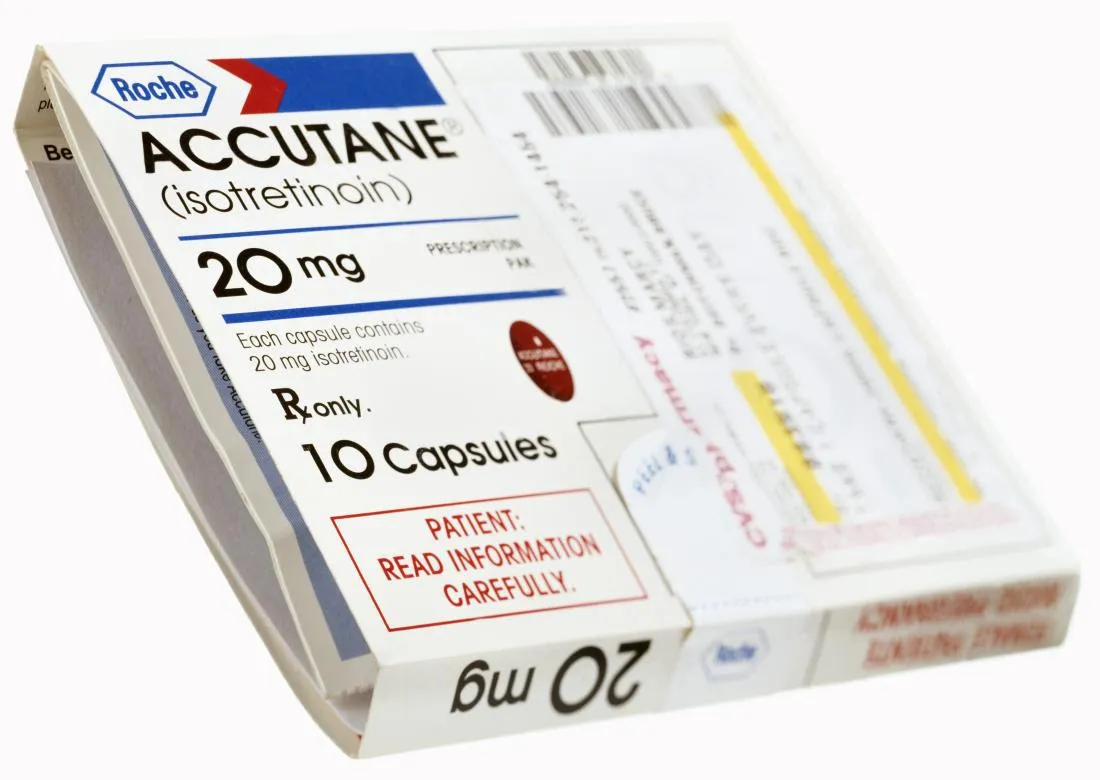
Isotretinoin, sold for years under the brand name Accutane, has been FDA approved since 1982. It is the only acne treatment that addresses all four pathogenic mechanisms simultaneously. It shrinks sebaceous glands, normalizes the way skin cells shed, suppresses acne-causing bacteria, and reduces inflammation. Clinical data shows long-term remission in roughly 80% of patients after a single course, and above 90% after a second. Unlike most pharmaceutical interventions for chronic conditions, isotretinoin doesn't require indefinite use. Patients complete a course, stop taking the drug, and, for the majority, the acne doesn't return.
By almost any clinical measure, it is the most effective acne drug ever developed. It also has a reputation.
The belief that isotretinoin causes depression became entrenched in public consciousness after a U.S. congressman's son, who was taking the medication, died by suicide in 2000. The ensuing national campaign linking the drug to psychiatric harm was, in the assessment of many dermatologists who have spent careers prescribing it, misinformed.
"In my clinical experience, most patients tolerate Accutane far better than its reputation suggests," says Dr. George Skandamis, a dermatologist at Honeydew and Medical Director at Universal Dermatology & Vein Care. "The internet tends to amplify the worst-case stories, but the average patient's experience is usually much more manageable. By the end of therapy, the vast majority of my patients are very happy they did it."
A 2023 meta-analysis of more than 1 million isotretinoin patients found no association between the drug and increased rates of any psychiatric disorder. Patients who completed treatment showed a lower risk of suicide than those on alternative therapies, a finding consistent with research on the psychological burden of severe, persistent acne. Similarly, the reported link to inflammatory bowel disease is more nuanced than it looks. The genetic factors that predispose someone to severe acne appear to independently elevate IBD risk, making it difficult to isolate the drug as a cause.
Although science has moved on, Accutane’s reputation hasn't. For decades, that reputation was compounded by the fact that isotretinoin, prescribed at standard doses, produces side effects that some patients find difficult to tolerate. Dr. Skandamis is direct about what patients should actually expect: "Virtually every patient on isotretinoin experiences some degree of dryness. Dry, chapped lips are by far the most universal side effect, to the point that if a patient has no lip dryness at all, I usually question whether they're actually taking or adequately absorbing the medication."
Dry skin, dry eyes, nasal dryness, and increased sun sensitivity are extremely common and should be anticipated rather than viewed as complications. Most patients will need to adjust their skincare routine to include heavier moisturizers, lip balm throughout the day, gentle cleansers, and sometimes lubricating eye drops. The side effects that dominate the conversation online, including serious liver abnormalities, major triglyceride elevations, and severe mood changes, are, in Dr. Skandamis' experience, relatively uncommon in healthy patients being appropriately monitored.
Traditional isotretinoin protocols involved a standard daily dose based on body weight. Patients only had to receive treatment for five or six months of treatment, but the speed led to too many side effects for some. A 70-kilogram patient might take 40 to 80 milligrams daily. At those concentrations, the drug saturates the body quickly but increases the chance of experiencing side effects like lip cracking, dryness, and joint pain.
The assumption behind these protocols was that a higher daily dose meant faster, more durable results. A study published in JAMA Dermatology, led by Harvard dermatologist John Barbieri and analyzing data from nearly 20,000 isotretinoin patients, challenged that assumption directly.
In Dr. Barbieri’s study, the variable that predicted long-term success in treating acne wasn't the daily dose. It was the cumulative dose: the total amount of isotretinoin a patient's body received over the full course of treatment. Patients who reached a cumulative target in the range of 150 to 220 mg/kg showed a continuous inverse relationship with relapse. But the path to that target, high dose over five months or low dose over 12, didn't significantly change outcomes.
"The latest research shows that it does not matter whether a patient reaches the cumulative target quickly or slowly," says Dr. Skandamis. "What matters more is that the acne is adequately controlled and the patient can stay on treatment consistently. A slower, lower-dose approach can actually improve adherence and quality of life for many patients while still producing excellent long-term outcomes."
What that means is a patient taking 20 milligrams daily for a year can reach the same cumulative target as a patient taking 60 milligrams daily for five months. Same destination. The difference is that the patient on a microdose protocol experiences fewer and less intense side effects while still reaping the full skin-clearing benefits of the drug.
In practice, microdosing isotretinoin means taking a lower daily dose sustained over a longer course to reach the same evidence-based cumulative target. Ten to twenty milligrams a day instead of sixty. Twelve to fourteen months instead of five.
Patients on low-dose protocols report dryness that's manageable and few to no additional side effects. They exercise normally. They don't structure their lives around the drug's side effects. The long-term efficacy remains the same.
But not every patient is chasing a cure. There is a useful distinction between two different low-dose approaches that are easy to conflate. The first is microdosing with the intent to reach the cumulative target, the same destination as a full-dose course but, just traveled more slowly and more comfortably. The second is maintenance dosing: a very low, ongoing dose, around 5 milligrams per day, for patients whose goal isn't remission but management. As Dr. Skandamis explains: "If the goal is durable remission — even at a slower pace — cumulative low-dose treatment makes sense. If the goal is long-term suppression of chronic relapsing acne without seeking a cure, maintenance low-dose isotretinoin may be appropriate for those patients."
For this patient, maintenance dosing functions less like a finite treatment and more like a long-term calibration tool, one that keeps symptoms in check without the commitment of a full course. It won't cure the underlying condition, but for someone whose acne is persistent rather than severe, that trade-off may be exactly what they're looking for. The result is a spectrum of low-dose options that can be tailored to what a patient actually wants from treatment: a cure, a controlled reduction, or something in between.
The consumer skincare industry operates on a different paradigm from dermatology: clear skin is a matter of finding the right combination of topical products. The right cleanser, the right serum, the right retinol. For mild or occasional breakouts, this works. But for the tens of millions with persistent acne driven by genetics and hormonal signaling that no topical can reach, the "find the right routine" approach doesn't address the underlying biology.
Isotretinoin does. And Dr. Barbieri's research has effectively removed the side-effect barrier that kept it from broader adoption. What remains is largely an access problem.
The United States graduates roughly 500 new dermatologists per year, and more than half go into cosmetic practice. Wait times for medical dermatology appointments stretch for months. Most traditional practices don't offer low-dose protocols because the economics of managing a patient over 12 to 14 months don't align with a high-volume office model. Telehealth platforms specializing in isotretinoin have emerged in part to address this bottleneck — though the full picture still includes patients for whom low-dose treatment was never the right fit. Patients with severe cystic acne — deep, disfiguring cysts with real scarring potential — remain candidates for full-dose Accutane, and for that population, which numbers in the millions, the standard protocol remains the appropriate one.
There is a familiar pattern in how pharmaceutical narratives shift. A drug has existed for decades, effective but poorly understood or culturally stigmatized. New research clarifies how it works, or reveals that the way it's been prescribed is unnecessarily harsh. Access expands. The conversation changes.
Ozempic followed this arc. Semaglutide existed in diabetes treatment long before it became a cultural phenomenon. Ketamine was an anesthetic for decades before it became a depression treatment. Isotretinoin may be the next drug to undergo this kind of public reevaluation, not because anything about the molecule has changed, but because the evidence on how to use it has caught up with the fear surrounding it.
The drug that could have ended the skincare search for millions of people has been on the shelf since 1982. What's changed is that we finally have the data to use it gently enough that there's no good clinical reason not to.


Medically Reviewed by
Tyler Haugbro
Physician Assistant