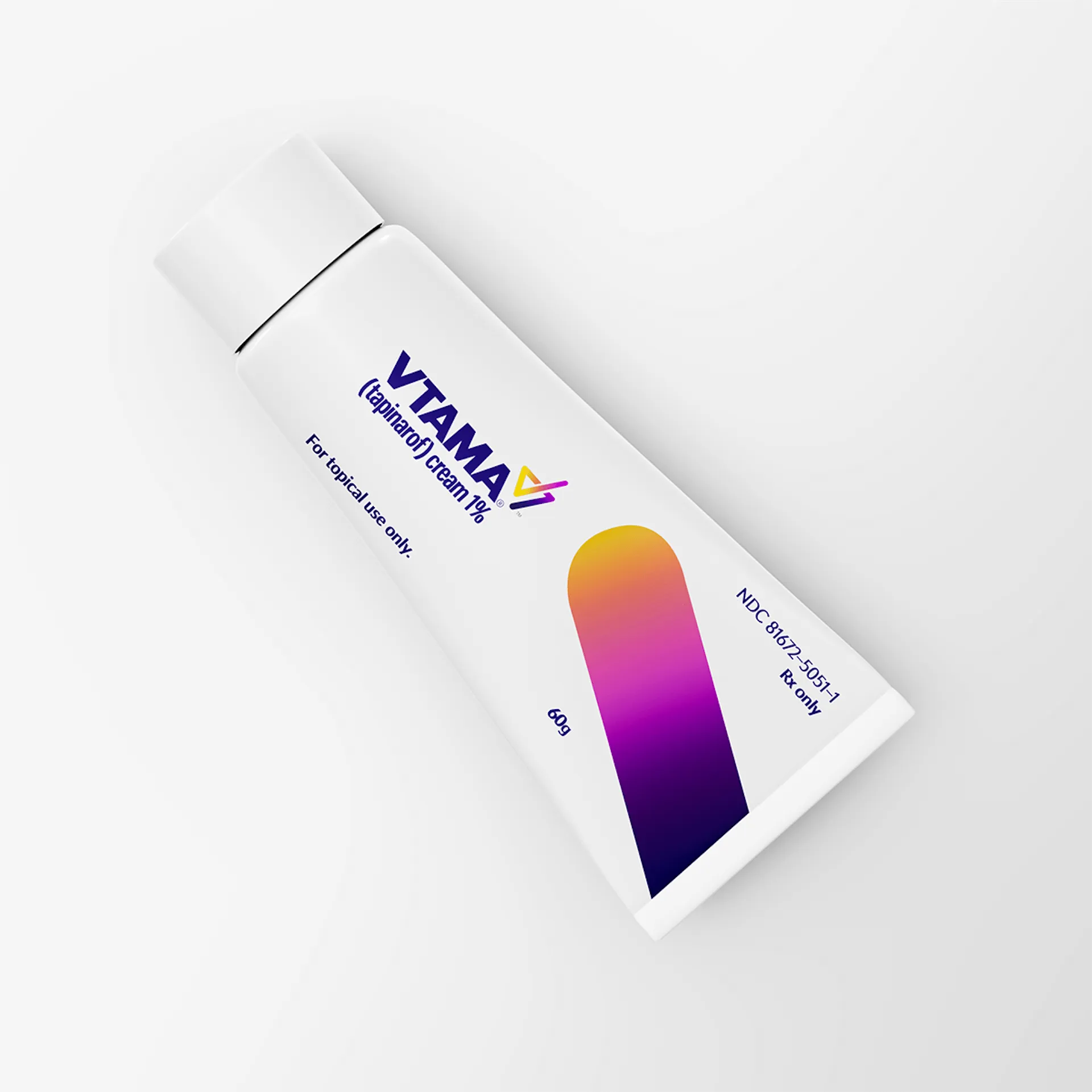
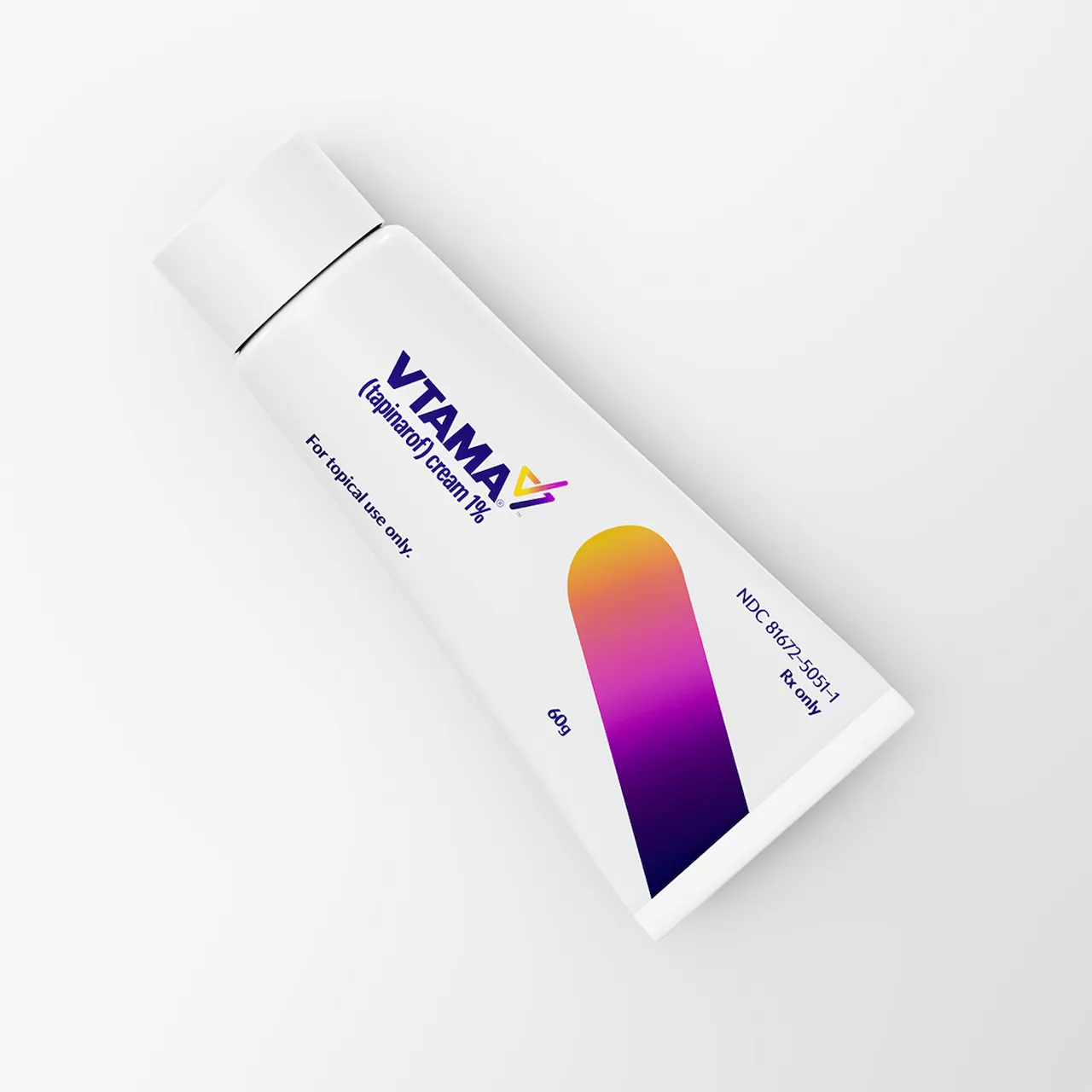
Tapinarof cream, 1%
VTAMA cream is a once-daily, steroid-free topical treatment for patients with eczema (atopic dermatitis) down to 2 years of age and adult patients with plaque psoriasis. With the MyVTAMATM Savings Card, commercially insured patients may pay as little as $0 and no more than $35.*



*Eligibility required. This offer is invalid for patients whose prescription claims are eligible to be reimbursed, in whole or in part, by any governmental program.

Fill out a quick medical questionnaire and upload photos of your skin. In many cases, treatment can begin right away without a video consult.

If a visit is needed, you can book a quick video consult within 48 hours. Your provider takes the time to understand your skin and your goals.

Your provider creates a personalized plan, then your treatment is delivered to your door or sent to your local pharmacy.

Track your progress with photos and message your Care Team anytime for questions, refills, and guidance. We'll respond, 7 days a week.
VTAMA's active ingredient, tapinarof, is a first-in-class aryl hydrocarbon receptor (AhR) agonist. Rather than broadly suppressing immune activity the way steroids do, it works by activating AhR — a naturally occurring protein in skin cells that regulates immune response and helps maintain the skin barrier. This normalizes the overactive immune signaling that drives psoriasis plaques and eczema flares, reducing inflammation, redness, and itching without the skin-thinning risks associated with long-term steroid use.
One of VTAMA's most clinically distinctive features is what happens after you stop using it. In psoriasis clinical trials, some patients maintained clear or nearly clear skin for months after discontinuing treatment — a sustained remission effect that's unusual for a topical medication and not seen with topical steroids.


"Your dermatology provider will review your skin and confirm whether VTAMA is the right fit before prescribing."
Yes, Honeydew's board-certified dermatologists prescribe VTAMA entirely online. No in-person office visit is required. You complete a short medical questionnaire and upload photos of your skin, and a licensed dermatology provider reviews your case and determines whether VTAMA is appropriate for your condition, including confirming your diagnosis, assessing severity, and checking age eligibility.
If prescribed, your provider manages prior authorization with your insurance, enrolls you in the MyVTAMA Savings Program if eligible, and coordinates with the pharmacy for delivery. Your Honeydew care team is available seven days a week for any questions during treatment, and your provider will check in regularly to monitor your response and manage any side effects like folliculitis that may arise.
No, as of 2026, there is no FDA-approved generic version of VTAMA available in the United States. Tapinarof cream is currently only available as the brand-name product VTAMA, manufactured by Organon.
This is why the MyVTAMA Savings Program and the Organon Patient Assistance Program exist: to make the brand-name medication accessible while no lower-cost generic alternative is on the market. Honeydew will help you access whichever cost assistance program you qualify for to minimize your out-of-pocket expense.
Yes and this is a practical advantage over topical steroids. Because VTAMA is steroid-free and doesn't cause skin thinning, it can be applied to the face for both eczema and psoriasis without the duration restrictions that apply to corticosteroids. Facial skin is thinner and more sensitive than body skin, which is why dermatologists generally avoid potent or prolonged steroid use in this area. VTAMA doesn't carry that concern.
Avoid contact with the eyes, inside the nostrils, and mouth when applying to the face. Your Honeydew provider will give specific guidance on facial application based on your affected areas and condition.
Both, though the age eligibility differs between the two indications.
Plaque psoriasis: VTAMA is FDA-approved for adults with plaque psoriasis. It can be used for mild, moderate, and severe plaque psoriasis on the body, and has also been studied in psoriasis affecting sensitive areas including skin folds.
Atopic dermatitis (eczema): VTAMA is FDA-approved for mild to moderate eczema in adults and children ages 2 and older. It is not indicated for severe atopic dermatitis. Patients with severe, widespread eczema typically require systemic therapy such as a biologic or JAK inhibitor.
If you have psoriasis and eczema simultaneously, or if you're unsure which condition you have, your Honeydew dermatologist will assess your skin and confirm the appropriate diagnosis and treatment approach before prescribing.
For eczema, most patients begin to notice a reduction in itching within the first few weeks of daily use. More significant skin improvement (reduction in redness, dryness, and active flares) typically becomes visible between weeks 4 and 8 of consistent treatment.
For psoriasis, approximately 40% of patients achieved clear or almost clear skin by week 12 in pivotal clinical trials. Meaningful improvement in plaque thickness, scaling, and redness is typically visible before that milestone.
VTAMA is applied once daily and results build progressively with consistent use. If you haven't noticed meaningful improvement after 8 weeks of consistent daily use, contact your Honeydew care team. Your provider may assess whether continuing at the current frequency, adjusting your routine, or considering a different treatment approach is more appropriate for your situation.
Folliculitis (red, raised bumps around hair follicles) is the most commonly reported and most distinctive side effect of VTAMA, particularly in psoriasis patients. In clinical trials, it affected approximately one in ten patients treated for psoriasis. For eczema patients, the incidence was lower.
Folliculitis associated with VTAMA is typically mild to moderate in severity. In most cases it resolves on its own without stopping treatment, and dermatologists are experienced at managing it. If folliculitis becomes uncomfortable, your Honeydew provider may recommend a short course of topical or oral antibiotic treatment to address it while continuing VTAMA. Stopping VTAMA is generally not necessary for mild folliculitis.
The bumps typically appear on areas where VTAMA is being applied, particularly in hair-bearing areas. If you notice new or worsening bumps during treatment, contact your Honeydew care team promptly rather than stopping treatment on your own. Your provider will assess whether the folliculitis needs treatment or whether it's likely to resolve without intervention.
Yes, VTAMA is FDA-approved for atopic dermatitis (eczema) in adults and children ages 2 and older. This makes it one of the few steroid-free prescription topicals available for young children with eczema, and the only AhR agonist approved in this age group.
For parents of young children with eczema who have been told to limit steroid use on the face or other sensitive areas, VTAMA offers a meaningful alternative. It can be applied to any area affected by eczema without the skin-thinning concerns associated with topical corticosteroids.
The dosing and application approach for children is the same as for adults: a thin layer applied once daily to affected areas. Because children's skin is more permeable than adult skin, your Honeydew provider will give guidance on appropriate amounts and areas to treat based on your child's age, weight, and severity of eczema.
For patients under 18, a parent or guardian must be present for the initial Honeydew consultation. If your child's situation requires special accommodations, contact info@honeydewcare.com and the care team will assist.
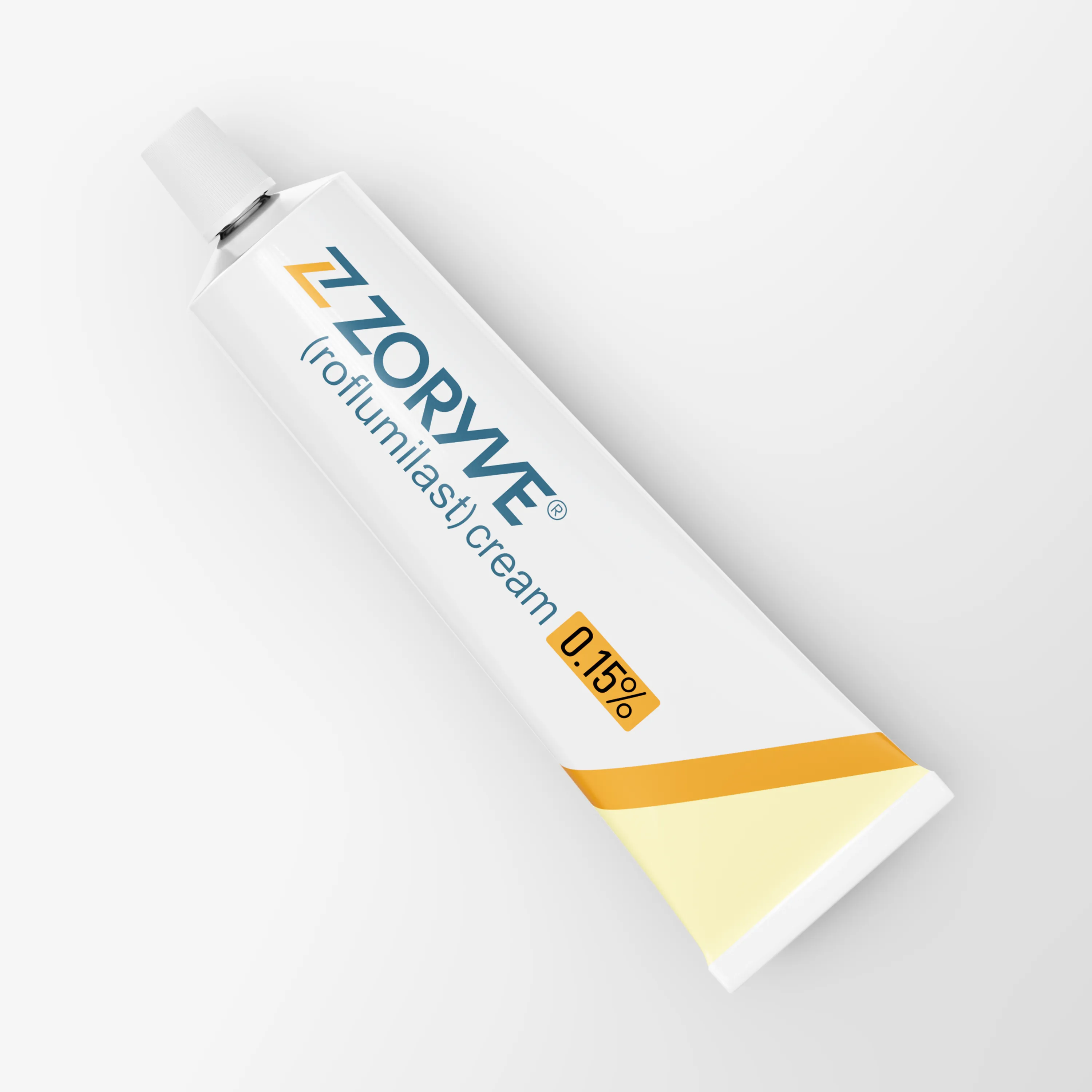
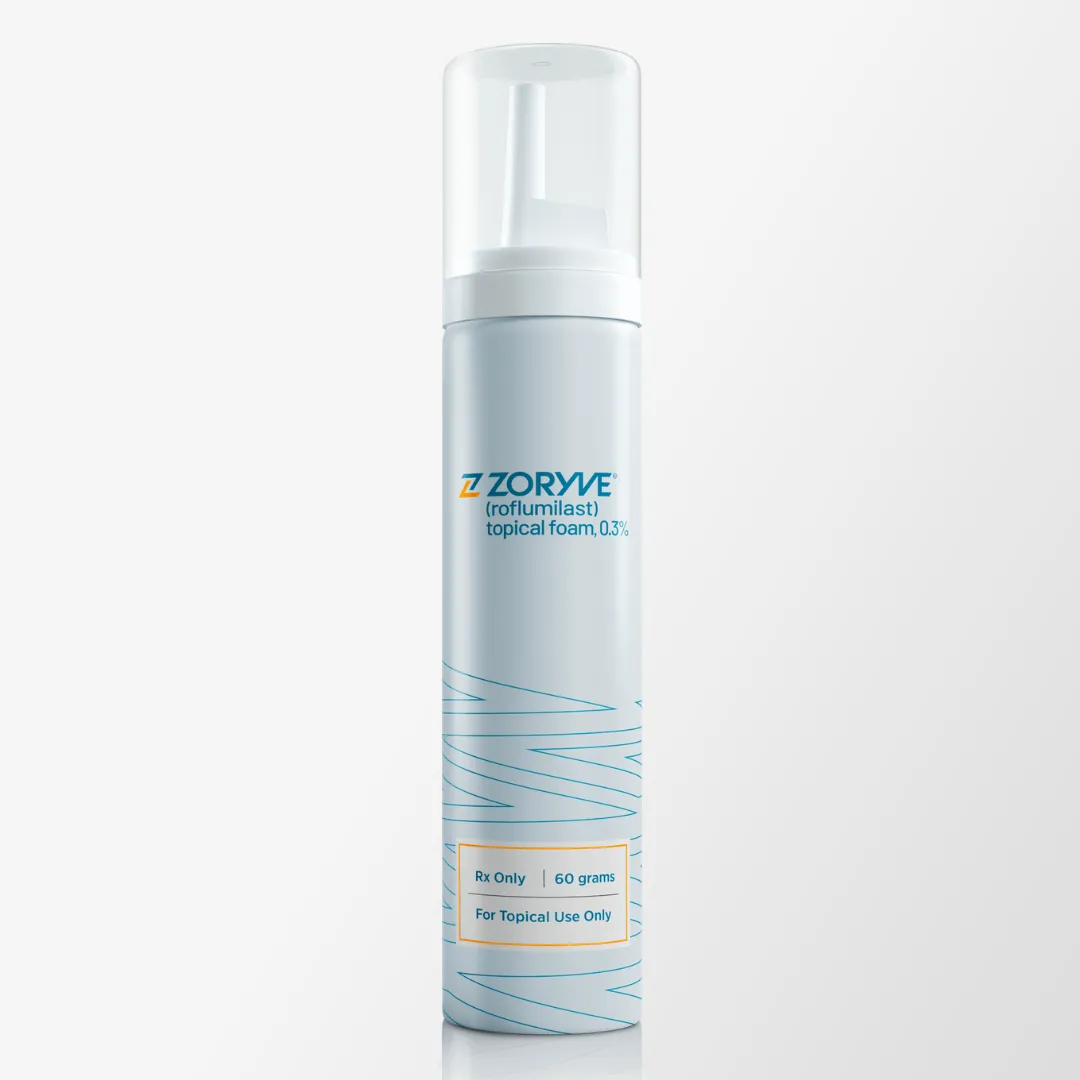
VTAMA (tapinarof) and ZORYVE (roflumilast) are the two most-compared steroid-free topical prescription creams for eczema and psoriasis, and both are prescribed by Honeydew's dermatologists. They work through entirely different mechanisms and differ in a few clinically meaningful ways.
Mechanism: VTAMA is an AhR agonist: it activates a natural regulatory pathway in skin cells to normalize immune response and restore the skin barrier. ZORYVE is a PDE4 inhibitor: it blocks an enzyme that drives pro-inflammatory signaling. Both reduce inflammation through non-steroidal pathways, but through different biological routes.
Conditions treated: Both treat plaque psoriasis and atopic dermatitis (eczema). ZORYVE is also available as a foam for seborrheic dermatitis, which VTAMA does not treat. For psoriasis in skin folds (intertriginous areas), ZORYVE Cream 0.3% has specific FDA approval; VTAMA has been studied in these areas but its labeling doesn't specifically highlight this.
Remission effect: VTAMA's ability to maintain results after stopping treatment is a clinical differentiator that ZORYVE does not have comparable published data for. This makes VTAMA an appealing option for patients who want to use medication intermittently or minimize long-term daily application.
Side effects: VTAMA's most distinctive side effect is folliculitis (red, raised bumps around hair follicles) affecting approximately one in ten psoriasis patients. ZORYVE's most common side effects are systemic (diarrhea, headache, insomnia) rather than local. For patients with sensitive or reactive skin, ZORYVE may cause less local irritation; for patients who want to avoid GI side effects, VTAMA may be preferable.
Age eligibility: VTAMA for eczema is approved from age 2. ZORYVE Cream for eczema is approved from age 6. For children aged 2 to 5 with eczema who need a non-steroidal option, VTAMA is the only one of the two currently approved.
Since Honeydew prescribes both, your dermatologist will recommend whichever is better suited to your specific diagnosis, affected areas, age, and insurance coverage.
Yes, most insurance plans require prior authorization before covering VTAMA given its list price. Many plans also require step therapy documentation, meaning evidence that other treatments, typically topical steroids or other topical prescription options, were tried first before approving a newer branded topical.
Honeydew handles the prior authorization process entirely on your behalf. Your provider prepares and submits all required documentation, follows up with your insurer, and coordinates with the pharmacy so treatment isn't delayed by paperwork. If your initial authorization is denied, we guide you through the appeals process and help you access the MyVTAMA Savings Program in the interim so you're not waiting without treatment while coverage is being resolved.
No, and this is one of the most important things to understand about it. VTAMA is a completely steroid-free prescription topical that works through an entirely different mechanism than corticosteroids.
Topical steroids reduce inflammation by broadly suppressing immune activity in the skin, which is effective short-term but carries risks with prolonged use including skin thinning, stretch marks, broken capillaries, and systemic absorption in sensitive areas. VTAMA works by activating the aryl hydrocarbon receptor (AhR), a naturally occurring protein that helps normalize immune response and restore skin barrier function. It doesn't suppress the immune system broadly and doesn't cause skin thinning.
Because VTAMA is steroid-free, it can be used on sensitive areas including the face and skin folds without the duration limits and location restrictions that apply to topical steroids. It's also suitable for longer-term use without the concern for steroid-related side effects that accumulate over time.
Yes and this is one of VTAMA's most clinically distinctive features. Unlike topical steroids, which typically require continuous use to maintain results, VTAMA has demonstrated a sustained remission effect in clinical trials. In psoriasis studies, some patients maintained clear or nearly clear skin for months after discontinuing treatment; an off-treatment benefit that is unusual for any topical medication.
This remission effect is thought to be related to tapinarof's mechanism: by activating the AhR pathway, VTAMA helps restore the skin's natural immune regulation and barrier function rather than simply suppressing inflammation while in use. When treatment stops, some of that restored function persists.
Not every patient experiences sustained remission (individual responses vary) but the possibility of extended benefit after stopping is a meaningful advantage over most topical options, particularly for patients who want to minimize long-term medication use. Your Honeydew provider will discuss realistic expectations based on your condition and treatment response.
VTAMA's retail list price is approximately $1,586 to $2,100 per tube, one of the higher-priced topical medications on the market. Most patients pay significantly less through available savings programs.
With commercial insurance: The MyVTAMA Savings Program from Organon reduces your out-of-pocket cost to as little as $0, with a maximum of $35 per prescription for eligible commercially insured patients. This program alone can save $1,400 or more per fill compared to the retail price. Honeydew handles insurance verification and prior authorization on your behalf before you start, so coverage is confirmed upfront.
Without commercial insurance: The Organon Patient Assistance Program provides VTAMA at no cost for eligible uninsured or underinsured patients who meet income and eligibility requirements. You can reach the program at 1-844-674-3200.
Note that the MyVTAMA Savings Program is not available to patients covered by Medicare, Medicaid, VA, or other government-funded programs. If you have government coverage, ask your Honeydew provider about alternative options.
Honeydew's membership fee (starting at $25/month on an annual plan) is separate from medication costs and is HSA/FSA eligible. We handle prior authorization, pharmacy coordination, and insurance navigation on your behalf.
Tapinarof is the generic (scientific) name for VTAMA. You may see "tapinarof" on your prescription label, insurance paperwork, or pharmacy receipt. It is the same medication. VTAMA is the brand name manufactured by Organon.
Tapinarof is classified as an aryl hydrocarbon receptor (AhR) agonist: a first-in-class mechanism that works differently from every other topical skin treatment currently available. There is currently no FDA-approved generic version of tapinarof available in the United States.
We will run the prescriptions through your insurance and help you find the lowest costs out there. The membership fee and any products are also eligible for HSA or FSA reimbursement.
We offer comprehensive support for our patients, including access to experienced providers, assistance with lab orders and the iPledge program (when needed), unlimited support, and progress tracking.
.webp)
Monthly check-ins help your provider monitor side effects, tolerance, and overall progress throughout treatment.
.webp)
If needed, your provider may request baseline or follow-up labs to ensure treatment stays safe and effective.
.webp)
Patients who can become pregnant complete required monthly pregnancy testing and iPLEDGE steps, with support at every stage.
.webp)
Mood changes are rare but taken seriously. Your provider checks in regularly and adjusts care if needed.

Zero waiting rooms, zero co-pays. Get expert care, personalized treatments, and ongoing support, all online for one transparent price.

Licensed dermatology providers who understand acne beyond the surface and guide your treatment from day one.
We handle prior authorizations, pharmacy communication, and refills so you don't have to.
Upload photos directly to your patient dashboard so you and your provider can monitor how your skin is responding to treatment over time.
Message your provider anytime your skin changes, your prescription needs adjusting, or for anything else.
Honeydew membership is eligible for HSA/FSA spending.
Get expert dermatology care from anywhere in the U.S., with no in-person visits required.
Find more answers in our FAQ or Contact us.


.webp)