Key Takeaways

You have probably tried everything at the drugstore. New cleansers, spot treatments, pore strips, masks. And yet those deep, throbbing bumps under your skin keep coming back — on your chin, along your jawline, across your cheeks. They do not look like the pimples your friends get. They do not come to a head, they hurt, and they linger for weeks. If this sounds familiar, you may be dealing with cystic acne.
Cystic acne is not just "bad acne." It is a distinct form of inflammatory skin disease that behaves differently from surface-level breakouts, forms through different mechanisms, and — critically — requires a different treatment approach. Yet most of the information online lumps all acne together, leaving people with cystic breakouts cycling through products that were never designed for their condition.
We are here to change that. We will walk you through exactly what cystic acne is, what causes it (including why it tends to show up in specific areas like the chin, forehead, and cheeks), how to tell it apart from regular acne, and the risk factors that determine who is most likely to develop it. If you are looking for treatment options, we have a detailed companion guide on how to get rid of cystic acne that covers prescription options in depth.
Quick Answer: What Is Cystic Acne?
Cystic acne is a severe form of acne where large, pus-filled lesions form deep within the dermis — the thick lower layer of skin. Unlike whiteheads or blackheads, cysts develop when a combination of excess oil, dead skin cells, and bacteria triggers an intense inflammatory reaction far beneath the surface.
Key facts:
- Cystic acne is classified as severe (Grade IV) acne by dermatologists
- It is primarily driven by hormones, genetics, and an overactive inflammatory response
- Location on the face can offer clues about the cause — chin and jawline breakouts are often hormonal, while forehead cysts may relate to excess oil and comedogenic products
- It carries a high risk of permanent scarring if left untreated
- Over-the-counter products cannot reach the depth at which cystic acne forms — prescription treatment is almost always necessary
What Is Cystic Acne?
Cystic acne — known clinically as nodulocystic acne — is the most severe form of acne vulgaris. It occurs when pores become deeply clogged with a combination of sebum (oil), dead skin cells, and Cutibacterium acnes bacteria, and the resulting infection triggers an outsized inflammatory response deep within the dermis.
The word "cyst" in cystic acne is not used loosely. These are true inflammatory cysts — enclosed pockets of pus, cellular debris, and inflammatory material embedded in the deeper layers of skin. According to a classification system published in the Journal of the American Academy of Dermatology, nodulocystic acne falls under Grade IV (severe) acne, the most advanced stage, which typically requires systemic (oral) treatment rather than topical therapy alone.
What makes cystic acne fundamentally different from milder forms is where it forms and how the body responds to it. A regular whitehead or papule develops near the surface of the skin, where topical treatments can reach it. A cyst forms deep in the dermis, surrounded by tissue that amplifies the inflammatory response. The immune system treats the clogged, infected follicle almost like a foreign invader — flooding the area with white blood cells and inflammatory mediators that create swelling, pain, redness, and tissue damage.
This is why cystic acne hurts. It is not just a cosmetic issue. The pressure from inflammation against surrounding tissue and nerve endings produces a deep, throbbing pain that can persist even when you are not touching the affected area. And this is also why cystic acne so often leads to scarring — the intense inflammation damages collagen and skin architecture in ways that surface-level breakouts typically do not.
What Causes Cystic Acne?
All acne begins with the same basic process: a pore becomes clogged, bacteria multiply, and the immune system responds with inflammation. But cystic acne represents an extreme escalation of this process, driven by several interconnected factors.
Hormonal Imbalances
Hormones are the primary driver of cystic acne. Androgens — a group of hormones that includes testosterone and dihydrotestosterone (DHT) — directly stimulate the sebaceous (oil) glands to produce more sebum. When androgen levels are elevated or fluctuating, oil production surges beyond what the pores can handle, creating the conditions for deep blockages.
A study published in the Archives of Dermatological Research demonstrated a direct correlation between circulating androgen levels and the severity of inflammatory acne, with the strongest association found in patients with nodulocystic lesions. Androgens do not just increase oil production — they also alter the composition of sebum, making it thicker and more likely to clog pores, and they stimulate keratinocyte proliferation within the follicle, which accelerates pore obstruction.
This hormonal connection explains why cystic acne commonly appears or worsens during:
- Puberty — when androgen levels rise dramatically for the first time
- The menstrual cycle — particularly in the days before a period, when progesterone rises and has androgenic effects on the skin
- Polycystic ovary syndrome (PCOS) — a condition characterized by elevated androgen levels
- Periods of high stress — stress triggers cortisol release, which in turn can increase androgen production
- Perimenopause — when shifting hormone ratios can create a relative androgen excess
For more on how hormonal factors shape acne, see our guide to decoding the origins of your acne.
Genetics
If one or both of your parents had cystic acne, your risk of developing it is significantly higher. Genetics influence nearly every factor that contributes to cystic acne — sebum production rate, sebum composition, the tendency of follicular cells to clog pores, and the intensity of the inflammatory response.
Twin studies have confirmed a strong hereditary component to acne severity. Researchers have identified genetic variations that affect the behavior of sebaceous glands and the immune system's inflammatory pathways, helping explain why some people develop deep cystic lesions while others with similar hormone levels experience only mild surface breakouts.
In practical terms, this means cystic acne is not something you caused through poor hygiene or lifestyle choices. If you are genetically predisposed, you are fighting against your biology — and that is exactly why medical treatment, rather than willpower and face wash, is the appropriate response.
Exaggerated Inflammatory Response
The defining feature of cystic acne — what separates it from a regular pimple — is the body's disproportionate inflammatory reaction to what is happening inside the pore. Everyone's immune system responds to C. acnes bacteria and follicular debris, but in people prone to cystic acne, that response is amplified far beyond what the situation warrants.
A review in the Journal of Clinical and Aesthetic Dermatology described this inflammatory cascade as a key differentiator between mild and severe acne. Pro-inflammatory cytokines — particularly interleukin-1 (IL-1), tumor necrosis factor-alpha (TNF-alpha), and interleukin-17 (IL-17) — are produced in excess, recruiting more immune cells and intensifying the damage. The result is not just a red bump, but a deep, painful pocket of inflammation that can persist for weeks and damage surrounding tissue.
This is also why picking or squeezing cystic acne is so destructive. Mechanical pressure ruptures the cyst wall deeper into the dermis, spreading the inflammatory material into surrounding tissue and escalating the immune response even further.
Excess Sebum Production
Overactive sebaceous glands produce more oil than the skin can efficiently expel from its pores. This excess sebum mixes with dead skin cells to form a plug that traps bacteria inside the follicle. In people prone to cystic acne, the volume and composition of sebum make these plugs especially dense and difficult for the body to clear naturally.
This is why isotretinoin (Accutane) is so effective against cystic acne — it is the only medication that permanently shrinks sebaceous glands and reduces sebum production by up to 90%, addressing the root cause rather than just managing symptoms.
What Causes Cystic Acne by Location
Where cystic acne appears on your face is not random. Different areas of the face have different concentrations of sebaceous glands, different levels of hormonal sensitivity, and different exposure to external irritants. Understanding these patterns can help you and your dermatologist identify the most likely cause of your breakouts and tailor treatment accordingly.
What Causes Cystic Acne on the Chin and Jawline
The chin and jawline are the areas most closely associated with hormonal cystic acne. If your deep breakouts are concentrated in this U-shaped zone — along the chin, jaw, and lower cheeks — there is a strong probability that fluctuating androgen levels are the primary driver.
The skin along the lower face has a particularly high density of androgen receptors, making it more sensitive to hormonal changes than other areas. A study in the Journal of Investigative Dermatology found that sebaceous glands in the perioral and mandibular regions show greater responsiveness to androgens compared to glands on the forehead or mid-face.
Common triggers for cystic acne on the chin include:
- Premenstrual hormonal shifts — the classic pattern of deep breakouts appearing 7-10 days before a period
- PCOS or other endocrine conditions — elevated baseline androgen levels
- Stress-related cortisol spikes — which can secondarily increase androgen activity
- Mechanical irritation — resting your chin on your hands, mask-wearing (maskne), or helmet straps can worsen breakouts in this zone
If your cystic acne is primarily on the chin and jawline, your dermatologist may consider treatments that target the hormonal component, such as spironolactone, which blocks androgen receptors to reduce hormonal stimulation of the oil glands.
What to expect: Hormonally driven cystic acne on the chin and jawline tends to follow a cyclical pattern — flaring at predictable points in the menstrual cycle or during periods of stress, then partially improving, then flaring again. If you notice this pattern, bring it up with your dermatologist. It helps them determine the best treatment approach.
What Causes Cystic Acne on the Forehead
The forehead sits within the T-zone — the strip running down the center of the face (forehead, nose, chin) that contains the highest concentration of sebaceous glands. This makes the forehead particularly prone to oil-related breakouts.
Cystic acne on the forehead is often driven by:
- Excess sebum production — the sheer density of oil glands on the forehead means more raw material for deep pore blockages
- Comedogenic hair products — pomades, gels, oils, and heavy conditioners that migrate onto the forehead are a common and underrecognized cause. Dermatologists sometimes call this pomade acne or acne cosmetica
- Headwear and friction — hats, headbands, helmets, and sweatbands trap heat and sweat against the forehead, creating an environment that promotes bacterial growth and follicular occlusion. This is a form of acne mechanica
- Bangs or fringe hairstyles — hair resting on the forehead transfers oils, styling products, and environmental debris onto the skin
- Heavy or occlusive skincare — thick moisturizers, sunscreens, or primers that are not non-comedogenic can occlude pores on the already oil-rich forehead
Unlike chin acne, forehead cystic acne is less commonly attributed to hormonal fluctuations alone — though hormones still play a role in overall sebum production. If your breakouts are isolated to the forehead, your dermatologist will likely investigate potential external contributors alongside internal ones.
Red flag: Cystic breakouts isolated to the forehead hairline — particularly small, uniform bumps — can sometimes be fungal acne (Malassezia folliculitis) rather than true cystic acne. Fungal acne does not respond to standard acne treatments and requires antifungal therapy. If your forehead breakouts are not improving with conventional treatment, ask your dermatologist about this possibility.
What Causes Cystic Acne on the Cheeks
Cystic acne on the cheeks tends to have more varied causes than chin or forehead breakouts. The cheeks represent a large surface area with moderate sebaceous gland density, and they are uniquely exposed to external contact and environmental factors.
Common causes of cystic acne on the cheeks include:
- Cell phone contact — pressing your phone against your cheek transfers bacteria, oil, and heat directly to the skin, creating a localized environment conducive to deep breakouts. A study in the Journal of Clinical and Aesthetic Dermatology found significant bacterial colonization on cell phone screens, including organisms associated with skin infections
- Dirty pillowcases — spending 6-8 hours with your cheek pressed against fabric that accumulates oil, bacteria, dead skin cells, and product residue can drive breakouts, particularly on the side of the face you sleep on
- Touching or resting hands on face — unconscious habits like propping your face on your hand transfer contaminants from your hands to the cheek skin
- Mask-wearing — the combination of friction, trapped moisture, and warm air from breathing creates a microenvironment on the cheeks that promotes both bacterial growth and mechanical pore occlusion
- Hormonal factors — while less strongly hormonal than the chin and jawline, the cheeks can still develop cystic acne during hormonal fluctuations, particularly in people with generalized hormonal acne that extends beyond the lower face
- Comedogenic makeup and skincare — foundation, blush, and highlighter applied heavily to the cheeks can contribute to pore congestion over time
Cheek acne often shows an asymmetric pattern that provides diagnostic clues. If you break out more on one cheek than the other, consider whether that is the side you hold your phone to, the side you sleep on, or the side where you tend to rest your hand.
Cystic Acne vs. Regular Acne: How to Tell the Difference
Not every painful breakout is cystic acne, and correctly identifying what you are dealing with matters because the treatment approach is fundamentally different. Here is how cystic acne compares to other forms of acne at a glance.
| Feature | Comedonal Acne (Mild) | Inflammatory Acne (Moderate) | Cystic Acne (Severe) |
|---|---|---|---|
| Lesion type | Whiteheads, blackheads | Papules, pustules | Deep cysts, nodules |
| Depth | Surface (epidermis) | Shallow dermis | Deep dermis |
| Pain level | None | Mild tenderness | Significant — often throbbing |
| Size | 1-3mm | 2-5mm | 5mm to 2+ cm |
| Visible head | Yes (white or dark center) | Often yes (pus-filled tip) | No — contents trapped deep |
| Duration | Days | 5-10 days | Weeks to months |
| Scarring risk | Very low | Low to moderate | High |
| OTC treatment effective? | Often yes | Sometimes | Almost never |
| Typical treatment | Topical retinoids, benzoyl peroxide | Topical + oral antibiotics | Isotretinoin, spironolactone, oral antibiotics |
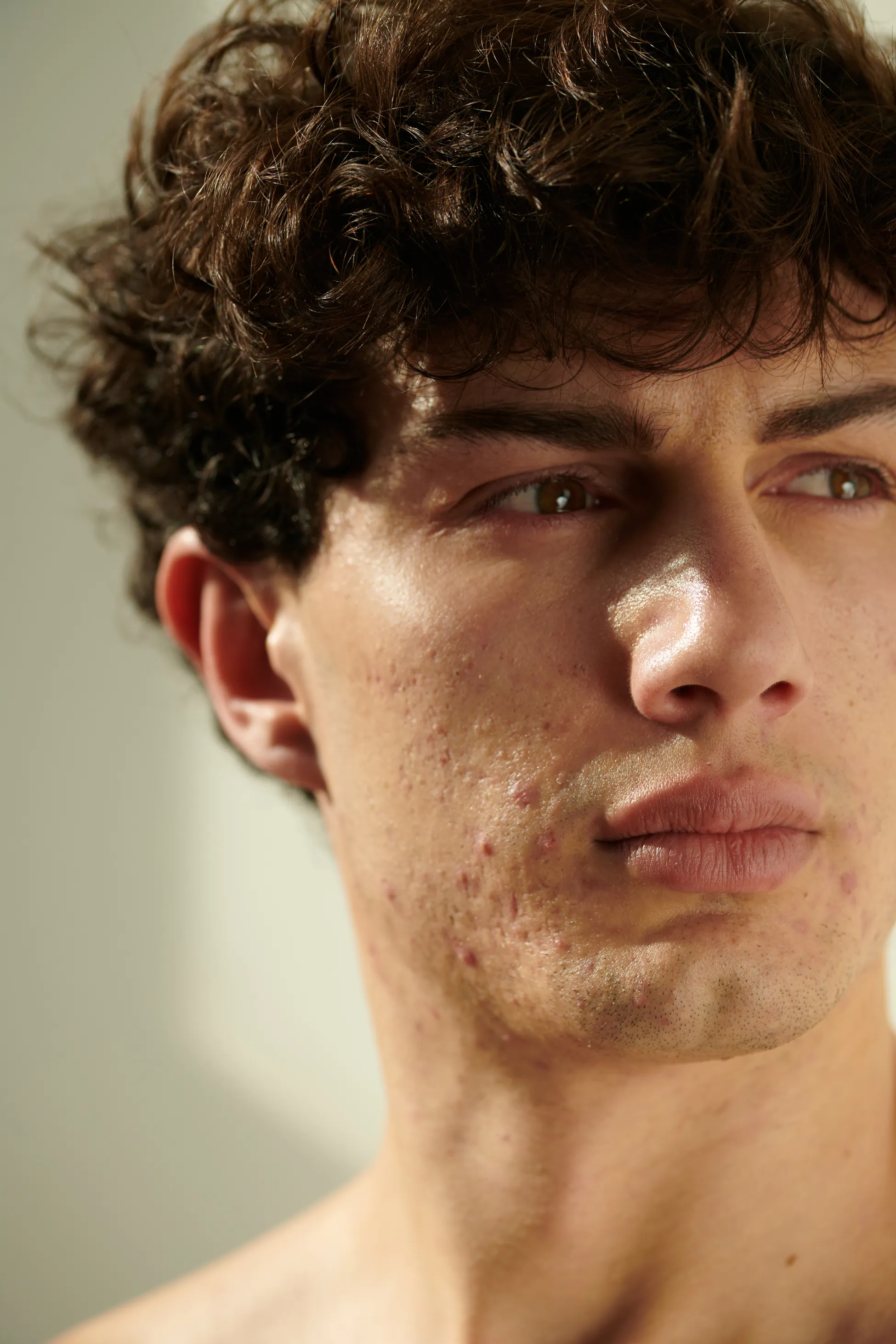
One important distinction: nodules and cysts are not the same thing, though they often occur together and are grouped under the umbrella term "nodulocystic acne." Nodules are deep, hard, solid lumps — they feel like a marble under the skin and are painful, but they do not contain fluid. Cysts are similarly deep but are filled with pus and inflammatory material. Both indicate severe acne and benefit from the same treatment approaches, but a dermatologist can differentiate between them during an examination.
What to expect: Many people with cystic acne also have other types of acne simultaneously — blackheads, whiteheads, and regular papules alongside their deep cysts. This is normal. Your dermatologist will assess the full picture and design a treatment plan that addresses all the types of lesions present, not just the cysts.
Cystic Acne Risk Factors
Certain factors make some people significantly more likely to develop cystic acne than others. Understanding your risk profile can help you and your dermatologist make informed decisions about prevention and treatment.
Age
Cystic acne most commonly appears during adolescence and young adulthood, when androgen levels are at their peak. However, it can persist well into the 20s, 30s, and beyond — particularly in people with hormonal drivers. Adult-onset cystic acne is increasingly recognized as a distinct clinical pattern, especially among people in their late 20s to 40s who may have had clear skin as teenagers. According to research published in the Journal of the American Academy of Dermatology, adult acne affects up to 15% of adults, and severe inflammatory forms are not uncommon in this population.
Family History
As discussed above, genetics play a powerful role. If your parents or siblings experienced cystic acne, your risk is substantially elevated. This is not something you can change, but knowing your family history helps set realistic expectations — you may need more aggressive treatment earlier rather than spending months on mild topical therapies.
Hormonal Conditions
Endocrine disorders that elevate androgen levels — particularly PCOS, congenital adrenal hyperplasia, and androgen-secreting tumors (rare) — are closely linked to cystic acne. If you have cystic acne alongside irregular menstrual cycles, unexplained weight changes, excess body hair, or hair thinning, your dermatologist may recommend hormonal evaluation to rule out an underlying condition.
Stress
Chronic psychological stress does not directly cause cystic acne, but it creates conditions that promote and worsen it. Stress elevates cortisol, which stimulates the adrenal glands to produce more androgens, which increases sebum production. A 2017 study in the journal Clinical, Cosmetic and Investigational Dermatology found a significant and dose-dependent association between perceived psychological stress and acne severity.
Diet
The relationship between diet and acne is more nuanced than many sources suggest. Diet alone does not cause cystic acne. However, evidence from the Journal of the American Academy of Dermatology has found that high-glycemic diets — those heavy in refined carbohydrates, processed sugars, and white flour — are associated with increased acne severity. High-glycemic foods spike insulin and insulin-like growth factor 1 (IGF-1), which in turn stimulate androgen production and sebaceous gland activity. Some research also suggests an association between dairy consumption and acne, particularly skim milk, though the evidence is less definitive. For more on the dietary connection, see our article on whether dairy causes acne.
Medications
Certain drugs can trigger or worsen cystic acne as a side effect. These include:
- Corticosteroids (oral and topical) — can cause "steroid acne"
- Lithium — used for bipolar disorder, known to exacerbate acne
- Testosterone and anabolic steroids — directly increase androgen levels
- Certain anticonvulsants — including phenytoin
- B12 supplements — in high doses, can alter skin microbiome activity
If you suspect a medication is contributing to your breakouts, do not stop taking it without consulting your prescribing physician. Instead, bring it up with your dermatologist so they can develop a treatment plan that accounts for the medication.
Red flag: Sudden-onset cystic acne in an adult — especially if accompanied by other symptoms like menstrual irregularities, rapid weight changes, or new body hair growth — warrants prompt medical evaluation. While most cystic acne is driven by common hormonal fluctuations and genetics, these additional symptoms can sometimes point to an underlying endocrine condition that needs its own treatment.
Treatment Overview
Because this article focuses on understanding what cystic acne is and what causes it, we will keep the treatment overview brief. For a detailed breakdown of every treatment option — including how they work, expected timelines, and how to choose between them — see our comprehensive guide on how to get rid of cystic acne.
The key takeaway is that cystic acne almost always requires prescription treatment. Over-the-counter products cannot penetrate deep enough to reach the inflammation driving cystic lesions. The most effective options include:
- Isotretinoin (Accutane) — the most effective treatment for persistent acne of any kind, including cystic acne. It is the only medication that addresses all four major acne factors (sebum, bacteria, cell turnover, inflammation). For a detailed look at how it works, see our Accutane comprehensive guide and our article on how exactly Accutane works
- Spironolactone — particularly effective for hormonally driven cystic acne concentrated on the chin, jawline, and lower face
- Oral antibiotics (doxycycline, minocycline) — useful for calming active inflammatory flares, though typically not a long-term solution on their own
- Topical retinoids (tretinoin, adapalene) — play an important supporting role in preventing new cystic lesions and maintaining results after systemic treatment
- Cortisone injections — a targeted in-office treatment for individual cysts that need rapid resolution
The right treatment for you depends on the severity of your acne, your specific triggers, your medical history, and your goals. This is exactly why working with a dermatologist — rather than self-treating — produces better outcomes. A provider who understands cystic acne can identify the driving factors behind your breakouts and build a plan that addresses them directly.
Understanding Your Skin Is the First Step
Cystic acne is not your fault, and it is not something you can fix with a better skincare routine. It is a medical condition driven by hormones, genetics, and inflammatory processes that operate beneath the surface — literally and figuratively. The fact that you are reading this article and learning about what is causing your breakouts means you are already approaching your skin with the seriousness it deserves.
If you recognize cystic acne in the descriptions above — deep, painful bumps without a head, concentrated on the chin, forehead, or cheeks, lasting for weeks — the most important next step is connecting with a dermatologist who can evaluate your skin, identify your specific triggers, and build a treatment plan that addresses the root cause rather than just the surface symptoms.
At Honeydew, our board-certified dermatologists, nurse practitioners, and physician assistants have treated over 100,000 acne cases, and we understand how frustrating and isolating cystic acne can be. We offer same-day and next-day video appointments, so you do not have to wait weeks for an in-person visit. Our providers can prescribe the full range of treatments for cystic acne — from spironolactone and oral antibiotics to Accutane (isotretinoin) — and will work with you to find the approach that fits your skin, your goals, and your life.
.webp)

Medically Reviewed by
Joel Spitz, MD
Co-Founder & Chief Medical Officer, Board Certified Dermatologist