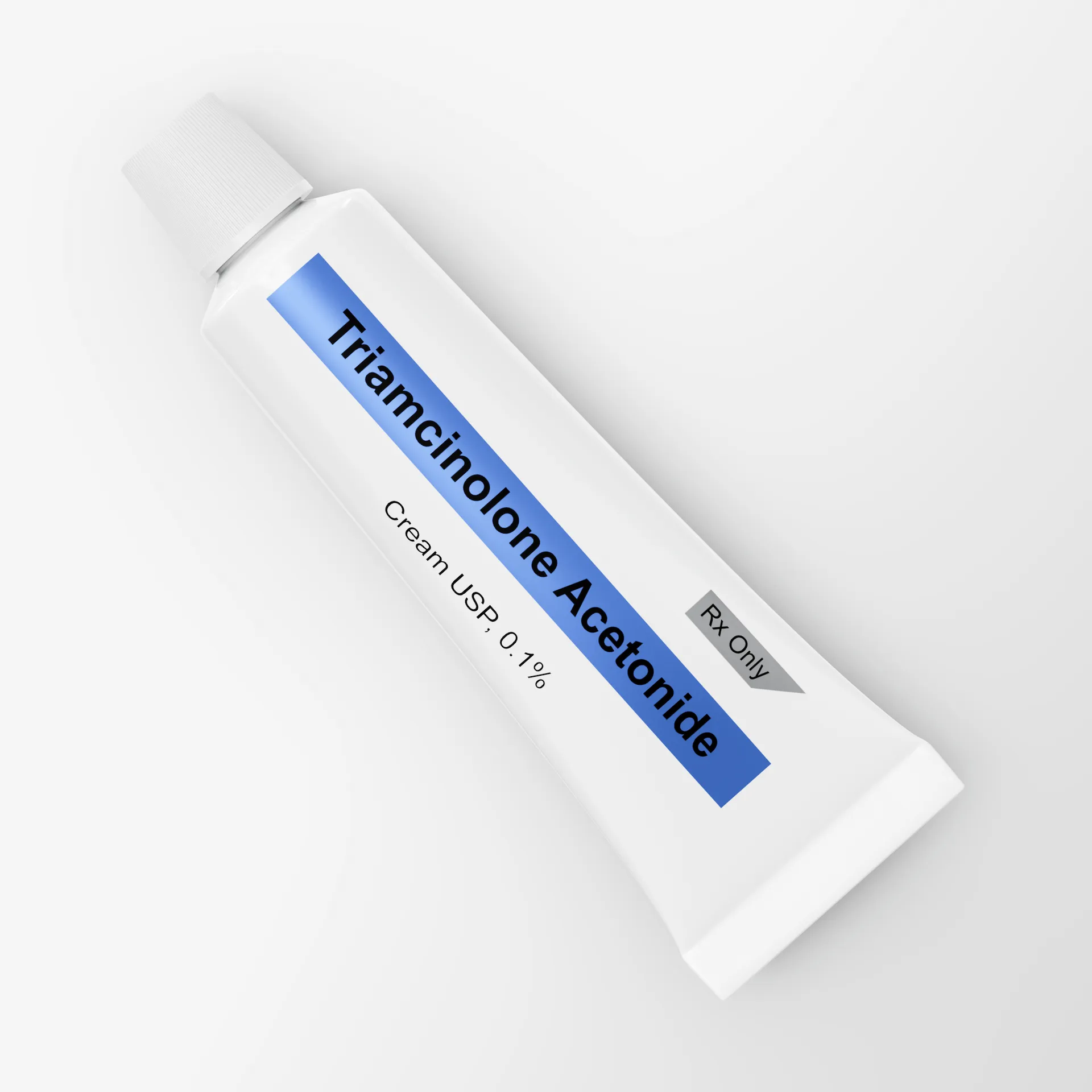
Topical corticosteroid
Treat skin inflammation through Honeydew with prescription triamcinolone. Get dermatologist-guided care online, with ongoing support and medication delivered to your door.





Triamcinolone treats inflammatory skin conditions like eczema, dermatitis, and allergic rashes by reducing redness, itching, and swelling.
When used as directed, side effects are uncommon. With prolonged or improper use, thinning of the skin can occur, which is why treatment is carefully guided by your provider.
Triamcinolone is intended for short-term use during flares. Your provider will guide where, how often, and how long to apply it to protect your skin.
Honeydew manages your prescription, dosing guidance, and follow-ups, 100% online. Your dermatologist and dedicated care team track progress and coordinate refills, with medication delivered directly to your door.

Fill out a quick medical questionnaire and upload photos of your skin. In many cases, treatment can begin right away without a video consult.

If a visit is needed, you can book a quick video consult within 48 hours. Your provider takes the time to understand your skin and your goals.

Your provider creates a personalized plan, then your treatment is delivered to your door or sent to your local pharmacy.

Track your progress with photos and message your Care Team anytime for questions, refills, and guidance. We'll respond, 7 days a week.
Triamcinolone is a topical corticosteroid that helps calm inflammation, redness, itching, and swelling caused by inflammatory skin conditions. It works quickly to relieve symptoms during active flares and support skin healing.
With dermatology guidance, triamcinolone can provide fast relief while protecting long-term skin health.
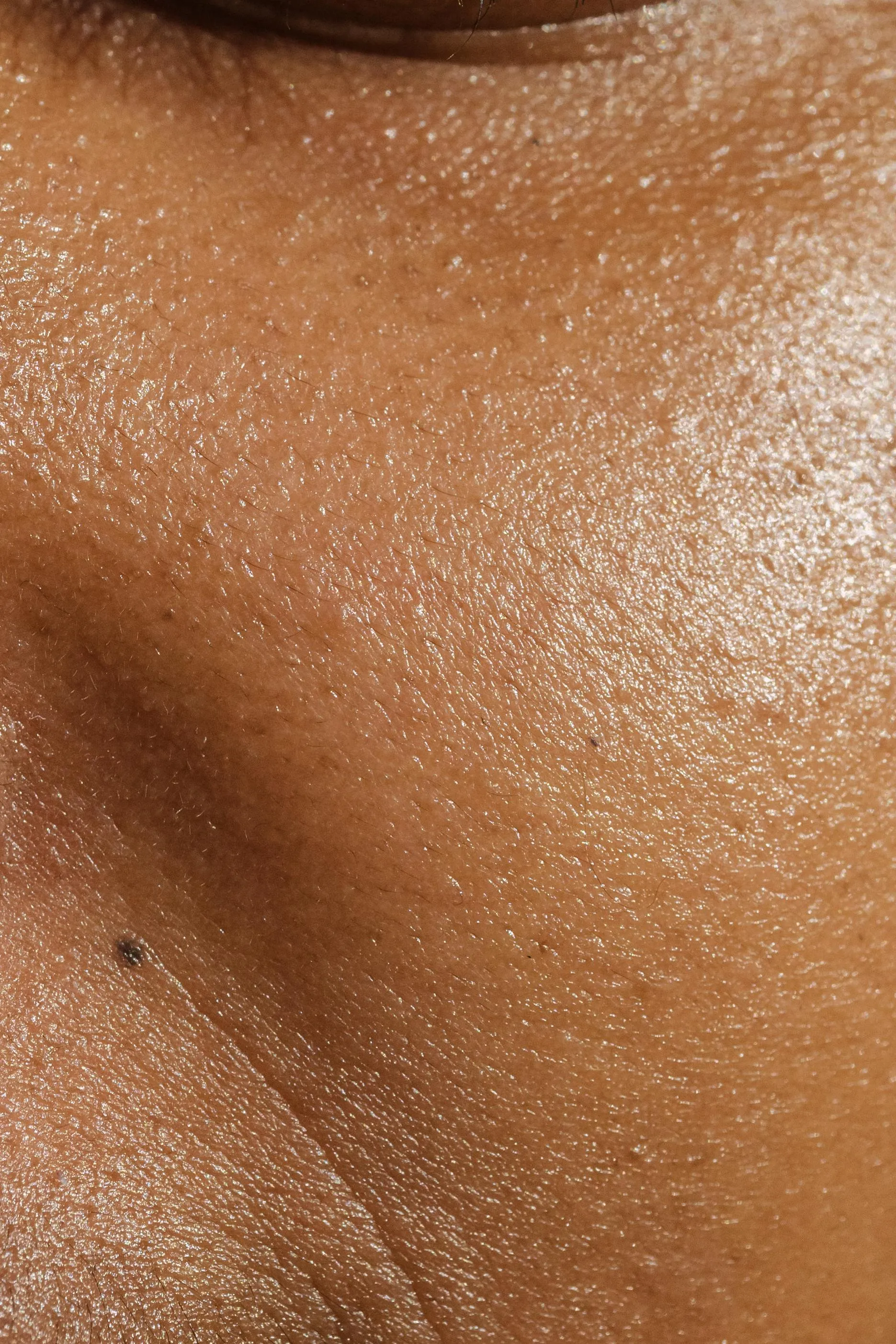

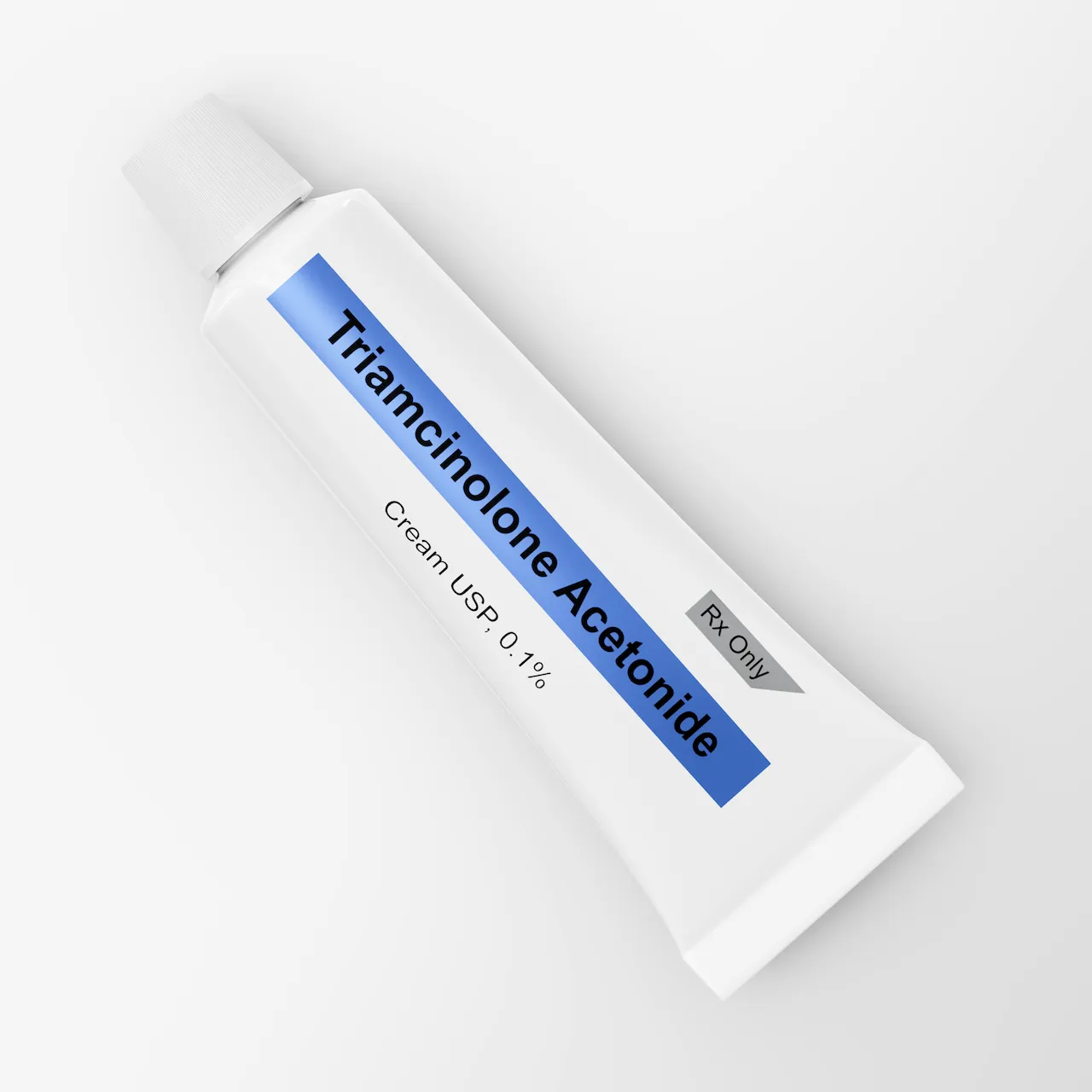

Your dermatology provider will review your skin and confirm whether Triamcinolone is the right fit before prescribing.

relief of redness, itching, and swelling*
use during active flares*
to protect skin health*
*Based on clinical use of topical corticosteroids and dermatology practice outcomes. Results depend on condition severity, strength, and duration of use.
Yes, Honeydew's board-certified dermatologists prescribe triamcinolone acetonide entirely online. No in-person office visit is required. You complete a short medical questionnaire and upload photos of your skin, and a licensed dermatology provider reviews your case and determines whether triamcinolone is the right fit for your condition, including which strength and formulation are most appropriate.
If prescribed, your triamcinolone is sent to a pharmacy near you or delivered directly to your door. Your provider will also give you specific guidance on where to apply it, how often, how long to use it, and which areas to avoid so you have a complete treatment plan, not just a prescription. Your Honeydew care team is available seven days a week if questions come up during treatment.
Triamcinolone can be used in children, but with more caution than in adults. Children's skin is thinner and more permeable than adult skin, which means a greater proportion of the medication is absorbed systemically relative to body weight. Prolonged or widespread use of medium-potency steroids like triamcinolone in children carries additional risks including slowed growth and adrenal suppression.
For most pediatric eczema, low-potency hydrocortisone is the preferred first-line topical steroid. It's effective for mild to moderate flares in children and carries less systemic risk. Triamcinolone may be appropriate for older children with more significant inflammatory skin conditions when lower-potency options haven't provided adequate relief, but this should be under direct provider oversight with clear guidance on area, frequency, and duration.
For patients under 18, a parent or guardian must be part of the initial Honeydew consultation. Your child's provider will factor their age, weight, skin condition, and affected area into the prescribing decision and give age-appropriate dosing guidance.
Triamcinolone should be used during pregnancy only when the potential benefit clearly outweighs the potential risk, and this decision should always be made in consultation with both your dermatologist and your OB-GYN. Topical corticosteroids as a class should not be used extensively on pregnant patients, in large amounts, or for prolonged periods, animal studies have shown evidence of risk at high doses, though the relevance to standard topical use in humans at typical doses is less clear.
For pregnant patients who need prescription-level treatment for eczema or dermatitis flares, lower-potency steroids such as hydrocortisone 2.5% are generally the preferred first choice over medium-potency options like triamcinolone. Your Honeydew provider will factor your pregnancy status into their prescribing decision and discuss what's safest for your specific situation.
If you are pregnant, planning to become pregnant, or breastfeeding, inform your Honeydew provider at the beginning of your consultation. It is unknown whether topical triamcinolone passes into breast milk when applied to the skin. If breastfeeding, avoid applying to the chest or any area that may come into contact with your baby.
A few application details meaningfully affect both effectiveness and safety:
Apply a thin film only: Rub a small amount gently into the affected area until absorbed. More product doesn't mean faster results. A thin layer is sufficient and excess medication increases the risk of skin thinning over time. The fingertip unit method provides a practical guide: one fingertip unit covers an area approximately the size of two adult palms.
Frequency: Triamcinolone 0.025% is typically applied two to four times daily. Triamcinolone 0.1% and 0.5% are applied two to three times daily, depending on severity. Follow your provider's specific instructions rather than defaulting to maximum frequency.
Apply to slightly damp skin: After cleansing the affected area, pat mostly dry and apply triamcinolone while there's still a little moisture. This improves absorption. Follow with an emollient or moisturizer if your provider recommends it.
Don't cover with airtight dressings unless your Honeydew provider specifically instructs this. Occlusive dressings significantly increase absorption which can be therapeutic for very stubborn psoriasis plaques under provider direction, but increases risk of side effects when done without guidance.
Wash your hands after applying, unless your hands are the area being treated.
Taper rather than stop abruptly: Once your skin has improved, your provider will typically recommend reducing frequency gradually rather than stopping cold to prevent rebound flares.
Most patients begin to notice a reduction in itching and redness within two to three days of consistent use. Visible improvement in skin inflammation, including calming of active redness, swelling, and irritation, typically occurs within one to two weeks.
The ointment formulation generally works somewhat faster than cream for dry or thickened plaques, due to its greater occlusive effect and deeper medication penetration. The stronger 0.1% and 0.5% concentrations also produce faster results than 0.025% for moderate to severe inflammation.
If you're not seeing meaningful improvement after one to two weeks of consistent use as directed, contact your Honeydew care team. Your provider may reassess whether stepping up to a higher concentration, switching to ointment, adding an occlusive dressing technique, or transitioning to a different treatment is more appropriate.
All three are topical corticosteroids, but they sit at very different points on the potency scale, and understanding where triamcinolone fits helps explain when and why your provider chooses it over the alternatives.
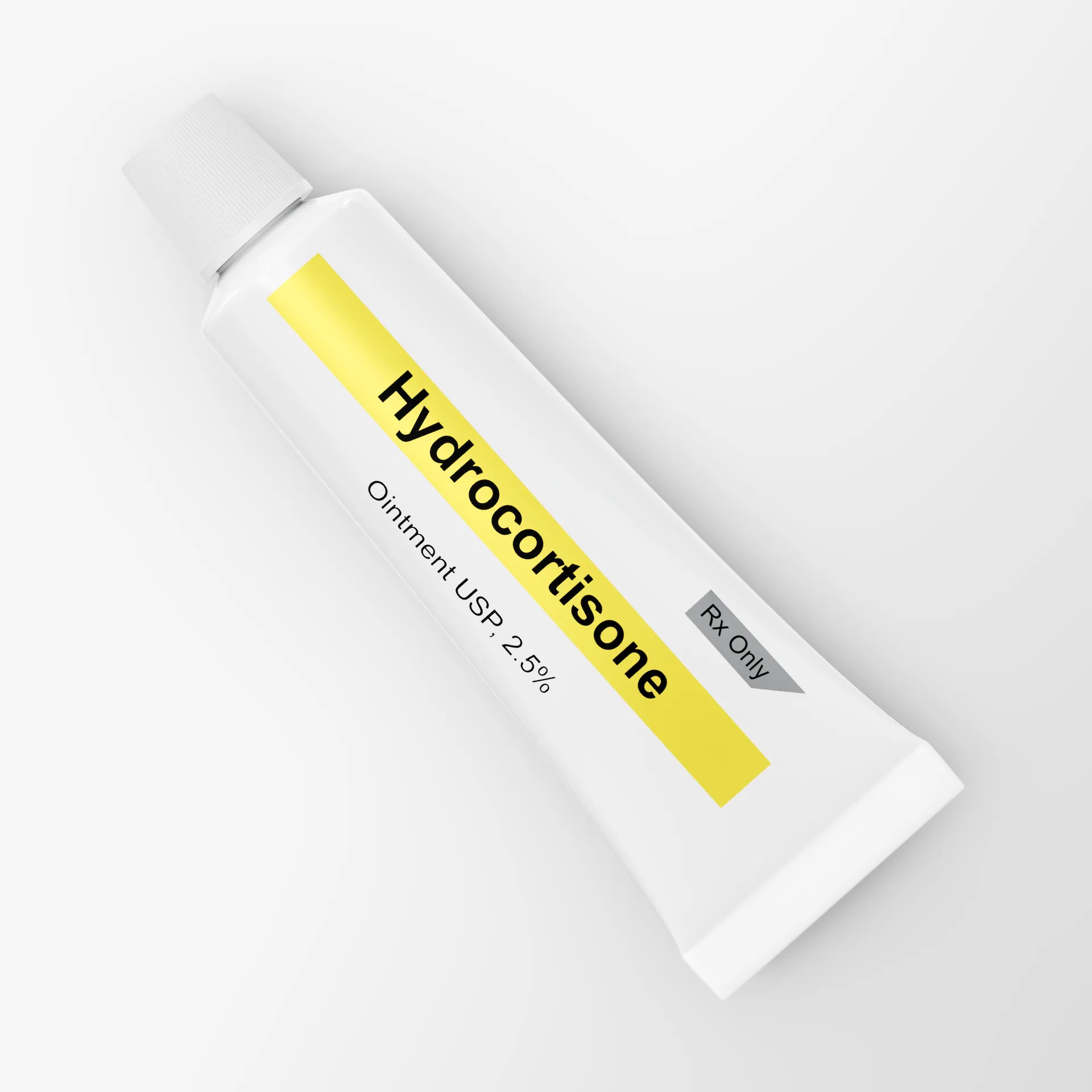
Hydrocortisone (low potency): The mildest class. OTC versions are available at 0.5% and 1%. Prescription hydrocortisone goes up to 2.5%. Best for mild eczema, sensitive skin areas, the face, and pediatric use. Appropriate for longer-term maintenance use on sensitive areas with the least risk of side effects.
Triamcinolone acetonide (medium potency): Significantly stronger than hydrocortisone. A prescription-only medication prescribed for moderate eczema, psoriasis, contact dermatitis, and inflammatory rashes on the body. More effective for stubborn or moderate-severity inflammation but carries a higher risk of skin thinning with prolonged or inappropriate use. Should not be used on the face or sensitive areas without provider direction.
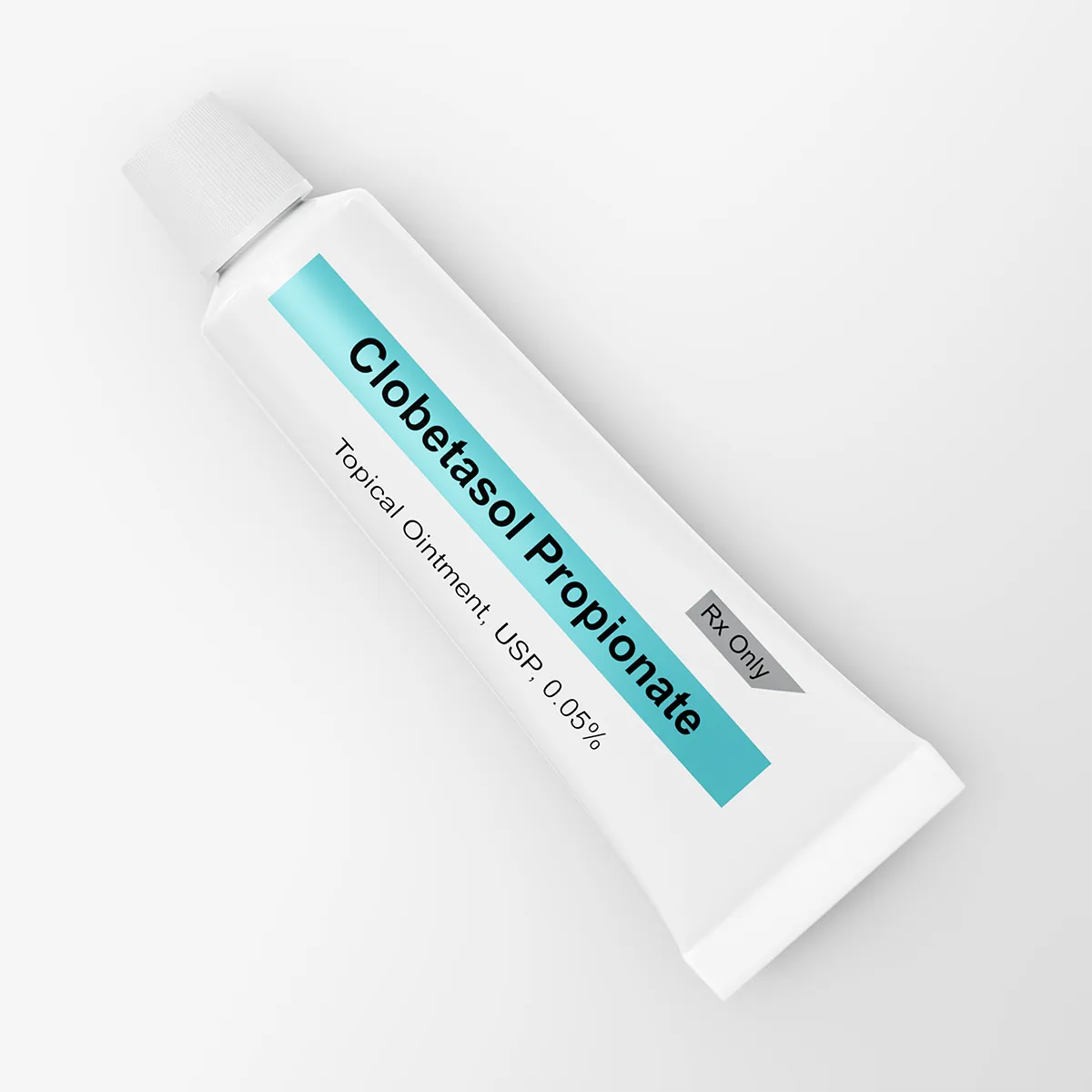
Clobetasol propionate (superpotent): The strongest class of topical steroid available. Reserved for severe, thick, or resistant inflammation that hasn't responded to lower-potency options. Carries the highest risk of skin thinning and systemic absorption. Typically limited to short courses of two weeks or less.
Honeydew's dermatologists prescribe all three. If you've been using hydrocortisone without adequate improvement, triamcinolone is typically the next step. If triamcinolone isn't controlling a severe flare, your provider may prescribe a short course of clobetasol before transitioning back to a lower-potency maintenance option.
Triamcinolone is a medium-potency steroid and there are specific areas of the body where it should generally not be applied without explicit provider direction because skin in these areas is thinner and absorbs medication more readily, significantly increasing the risk of side effects:
Face: Facial skin is thinner than body skin and more prone to steroid-related side effects including skin thinning, rosacea-like changes, perioral dermatitis, and broken capillaries. If you need a steroid for facial inflammation, your provider will typically prescribe a lower-potency option like hydrocortisone 2.5% rather than triamcinolone.
Groin and genitals: Skin absorption in these areas is dramatically higher than on the forearm or trunk. Genital skin can absorb steroids many times faster than other body areas. Triamcinolone should not be applied here without specific provider guidance.
Underarms and skin folds: Similar to the groin, moisture and skin-to-skin contact in these areas increases absorption and risk.
Eyelids: Very thin skin with proximity to the eyes; steroid use in this area can increase risk of glaucoma and cataracts.
Open wounds or infected skin: Never apply triamcinolone to skin with a bacterial, fungal, or viral infection, it can suppress the immune response and worsen the infection.
Your Honeydew dermatologist will specify exactly which areas to treat and will flag any area-specific concerns based on your skin and condition. If your rash or inflammation is in one of these sensitive areas, mention it clearly during your consultation so your provider can prescribe the appropriate alternative.
Triamcinolone acetonide is available in several formulations across all three concentrations. The right one depends on your skin type, the area being treated, and how your condition presents:
Cream: Water-based and lighter than ointment. Absorbs more quickly, leaves less residue, and is better suited for weeping, oozing, or acutely inflamed skin. The most commonly dispensed form and generally preferred for daytime use.
Ointment: Oil-based and more occlusive than cream. This means it holds more moisture against the skin and delivers medication more deeply making it better suited for dry, thickened, scaly, or chronically inflamed patches. More effective for stubborn plaques but greasier; often used at night. Generally the preferred formulation for psoriasis and lichenified eczema.
Lotion: Thinner and more spreadable than cream, making it practical for larger body surface areas or hair-bearing skin. Available in 0.025% and 0.1% concentrations.
Spray: An aerosol formulation for applying over large or hard-to-reach areas. Applied three to four times daily.
Your Honeydew dermatologist will prescribe the formulation best suited to your skin type and condition. If you have a preference based on previous experience, mention it during your consultation.
Triamcinolone acetonide is available in three concentrations, and the right one depends on your skin condition, affected area, and skin type. Your Honeydew dermatologist will prescribe the appropriate strength, but here's what each is typically used for:
0.025%: The mildest triamcinolone concentration. Used for conditions requiring gentle treatment, larger surface areas, or patients with more sensitive skin. Applied two to four times daily. Appropriate for mild eczema or dermatitis where a low-potency steroid like hydrocortisone hasn't provided sufficient relief.
0.1%: The most commonly prescribed strength. A good balance of efficacy and tolerability for moderate eczema, psoriasis, contact dermatitis, and allergic rashes on the body. Applied two to three times daily. This is the strength most patients are referring to when they mention "triamcinolone cream."
0.5%: The strongest triamcinolone concentration, reserved for thick, stubborn, or lichenified plaques where deeper penetration is needed. Applied two to three times daily. More risk of skin thinning with prolonged use; used for shorter, more targeted courses.
If you've been prescribed a specific strength before and want to continue with it, mention this during your Honeydew consultation. If you've used one strength without adequate results, your provider may step up to the next concentration or recommend a different approach.
While eczema and contact dermatitis are among the most common reasons triamcinolone is prescribed, it's an effective treatment for a broad range of inflammatory skin conditions:
Psoriasis: Triamcinolone acetonide cream and ointment are commonly prescribed for plaque psoriasis — particularly for moderate plaques on the body where a medium-potency steroid is appropriate. For thicker or more stubborn psoriasis plaques, the 0.5% strength or occlusive dressing technique may be used under provider guidance.
Lichen planus: A chronic inflammatory condition affecting the skin and, in some cases, the mouth. Triamcinolone 0.1% is one of the primary topical treatments for cutaneous lichen planus. A specialized formulation called triamcinolone acetonide dental paste (Kenalog in Orabase) is used for oral lichen planus and mouth sores.
Contact dermatitis: Red, itchy, inflamed skin caused by contact with an irritant or allergen. Triamcinolone's medium potency makes it effective for moderate contact dermatitis reactions that haven't responded to low-potency hydrocortisone.
Allergic rashes: Including reactions to plants like poison ivy, metals, cosmetics, or medications.
Dermatitis herpetiformis and other inflammatory rashes: Triamcinolone is prescribed for several additional inflammatory skin conditions under dermatologist guidance.
Your Honeydew provider will assess your specific condition and confirm whether triamcinolone is the most appropriate treatment before prescribing.
Yes, Kenalog is the most widely recognized brand name for triamcinolone acetonide. You may also see it sold under brand names including Aristocort, Trianex, Triderm, and Cinolar. When your prescription label reads "triamcinolone acetonide," that's the generic name for the same medication. Generic triamcinolone acetonide is considered equally effective to all branded versions and is typically significantly less expensive.
When your Honeydew dermatologist prescribes triamcinolone, they specify the strength and formulation, and your prescription is sent to a pharmacy near you or delivered to your door. Whether you receive a branded or generic version, the active ingredient is the same.
If you or your child is under the age of 18, a parent or guardian should be part of the initial consultation. In circumstances where this is not possible, please contact info@honeydewcare.com and we will assist you with alternate ways to establish parental consent.
We will run the prescriptions through your insurance and help you find the lowest costs out there. The membership fee and any products are also eligible for HSA or FSA reimbursement.
We offer comprehensive support for our patients, including access to experienced providers, assistance with lab orders and the iPledge program (when needed), unlimited support, and progress tracking.
.webp)
Monthly check-ins help your provider monitor side effects, tolerance, and overall progress throughout treatment.
.webp)
If needed, your provider may request baseline or follow-up labs to ensure treatment stays safe and effective.
.webp)
Patients who can become pregnant complete required monthly pregnancy testing and iPLEDGE steps, with support at every stage.
.webp)
Mood changes are rare but taken seriously. Your provider checks in regularly and adjusts care if needed.

Zero waiting rooms, zero co-pays. Get expert care, personalized treatments, and ongoing support, all online for one transparent price.
Licensed dermatology providers who understand acne beyond the surface and guide your treatment from day one.
We handle prior authorizations, pharmacy communication, and refills so you don't have to.
Upload photos directly to your patient dashboard so you and your provider can monitor how your skin is responding to treatment over time.
Message your provider anytime your skin changes, your prescription needs adjusting, or for anything else.
Honeydew membership is eligible for HSA/FSA spending.
Get expert dermatology care from anywhere in the U.S., with no in-person visits required.
Find more answers in our FAQ or Contact us.


.webp)