Key Takeaways
 The clear liquid from a popped pimple is serous fluid, which injured skin leaks as a normal part of healing.
- Pus is thick and white or yellow; serous fluid is thin, clear to yellow, and not a sign of infection on its own.
- Squeezing past the clear-fluid stage pushes inflammation deeper and raises the risk of scars and infection.
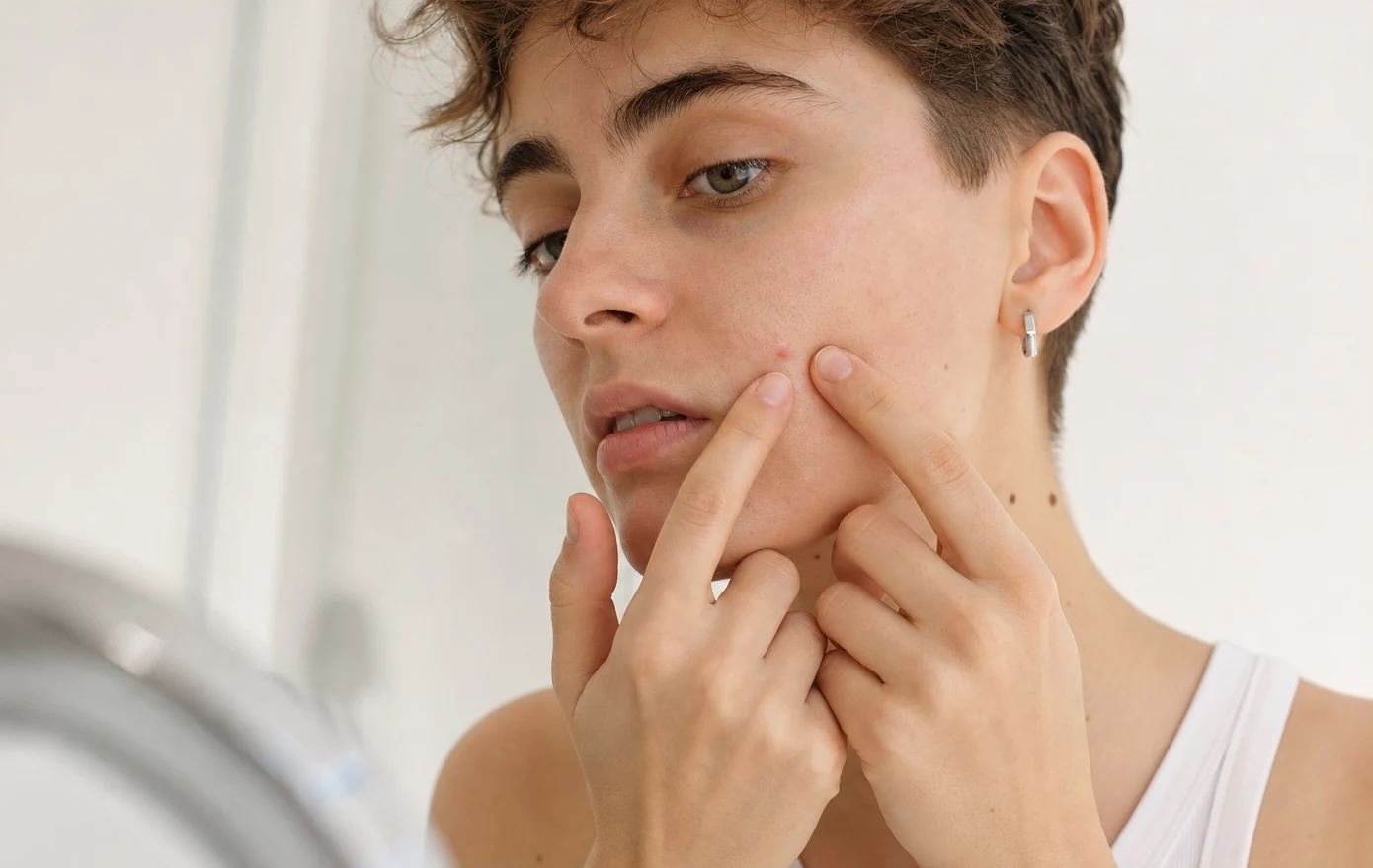
Have you ever popped a pimple expecting white pus, but got a thin, clear liquid instead? You’re definitely not alone. In a 2025 study of 180 medical-field students, 52.2% reported squeezing their acne. We’re a little surprised - we expected that to be a much higher percentage. Yet 80% of that 52.2% said it wasn't necessary. If you just popped your pimple and got thin, clear liquid instead of white pus, you're probably wondering what it is.
So, what is that transparent fluid, and why does it show up?
The good news: it's usually a sign your skin has started to heal. The catch is what you do next, because more squeezing can turn a small spot into a scar.
Quick Answer: What is the clear liquid that comes out of pimples?
That clear liquid is serous fluid - a natural mix of water, proteins, and white blood cells that leaks from damaged skin as it repairs itself. It helps fight off bacteria and triggers healing, so seeing it doesn't mean your pimple is infected. Honeydew providers view this serum liquid as your skin's clear sign to stop squeezing.
So generally that’s good news, but there’s a catch: seeing clear fluid means the infection is already draining. If you keep squeezing, you won't get any more pus out; you'll only damage your healthy skin, cause swelling, and risk leaving a permanent scar.
Here's what's actually in that fluid, how it differs from pus, why squeezing more makes things worse, and what to put on the spot instead.
First Off: Don’t Pop That Pimple!
First things first: resist that urge to pop the pimple recommends Jessica Cheng, a nurse practitioner that specializes in acne. There really is no 100% safe way to extract a pimple at home and can put you at risk for a scar to an infection. “In the clinic, we use sterile tools and techniques specifically to protect your skin from scarring and deep inflammation.” says Cheng.
We know that it’s difficult so while Honeydew strongly recommends not to pop that zit, if you absolutely cannot resist, only attempt it on a superficial whitehead that’s completely come to a head. But if you do make sure to wash your hands, gently cleanse your face, and hold a warm compress over the spot to soften the skin. Wrap clean tissues around your fingertips and apply soft, gentle pressure around the pimple.
“Never squeeze directly on it.” cautions Cheng. “And if it doesn't pop easily on the first gentle try, stop immediately and leave it alone!” If you’re successful, keep the area clean afterward so it can heal.
What is the clear liquid that comes out of a zit?
Ok so you popped that zit and there’s a transparent fluid coming out. That clear liquid is serous fluid, the same thin fluid that seeps from a fresh scrape. It's made from plasma, the watery part of your blood, and serous drainage is a clear to yellow fluid that signals your immune system is working to heal a wound. A squeezed pimple is a small wound, so your skin responds the same way.
Marshfield Clinic’s short answer to the question every pimple-squeezer asks: should you pop your pimples?
When skin is injured, the walls of tiny blood vessels stretch, small gaps open between their cells, and fluid leaks into the surrounding tissue and the wound. That's the liquid that wells up when you press on a pimple that's already open.
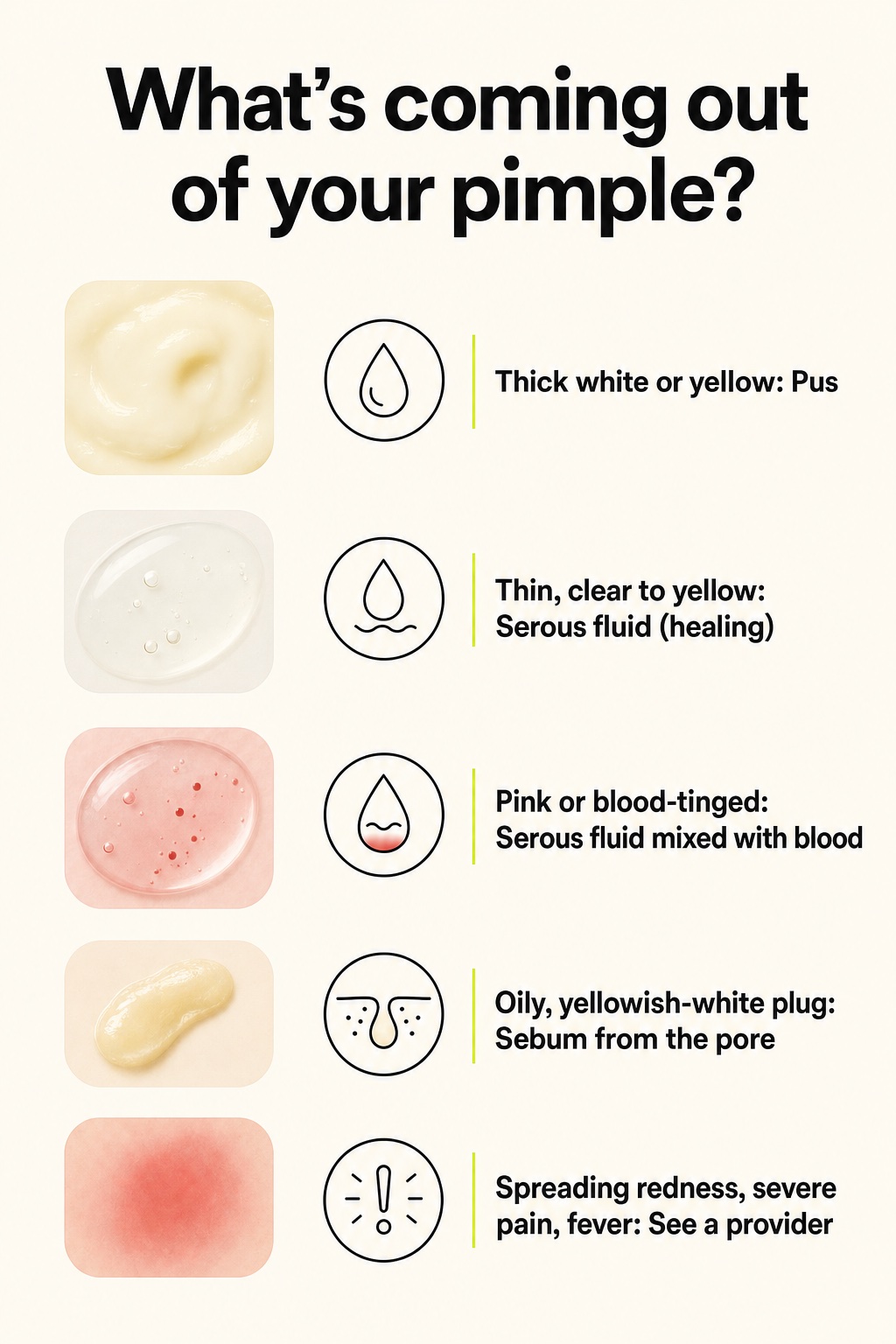
| What you see | What it is | What it usually means |
|---|---|---|
| Thick white or yellow | Pus: fluid, white blood cells, dead tissue, and bacteria | Inflammation inside the pore. Pus draining from an open wound can mean infection. |
| Thin, clear to yellow | Serous fluid, made from plasma | Normal healing of injured skin |
| Pink or streaked with blood | Serous fluid mixed with blood | Small blood vessels have broken; more pressure means more damage |
| Oily, yellowish-white plug | Sebum (skin oil) and dead skin cells from the clogged pore | Pore contents, not wound fluid |
That fluid has a job. In a fresh wound, it carries nutrients, immune cells, and growth factors, and it keeps the area moist so repair can happen. So it isn't leftover gunk to drain; it's part of the repair. Which raises a fair question: why does it show up only after the white stuff comes out?
Why does clear fluid come out after the pus?
Pus and clear fluid come from two different places. Pus is what's trapped inside the inflamed pore, while serous fluid seeps from the injured skin around it.
Acne starts with a clogged hair follicle. When your immune system detects acne bacteria, the follicle wall can rupture and spill skin cells, oil, and bacteria into the surrounding skin, which is what creates red bumps and pus-filled pimples. White blood cells rush in to deal with the spill.
Pus is a buildup of fluid, living and dead white blood cells, dead tissue, and bacteria. The first white blood cells on the scene are neutrophils, which dominate an injury within the first 24 hours. Together, they form the white or yellow head of a pus-filled pimple. Here's how to tell the fluids apart:
Should you keep squeezing until it runs clear?
Dermatologists generally say no. Once clear fluid appears, there's little left to gain and a lot to lose. Squeezing often pushes some of a pimple's contents deeper into the skin, which increases inflammation, and it can bring in bacteria from your hands.
Squeezing also raises the odds of a lasting mark. In a 2026 study of 403 people with acne, 56% had acne scars, and the researchers list squeezing and picking among the known risk factors. Picking can also leave flat dark marks, called post-inflammatory hyperpigmentation; here's how to fade the dark marks picking leaves.
As mentioned, we do not recommend squeezing pimples at all at home. “If you’re squeezing a pimple and only clear liquid is coming out, that’s your sign to stop.” tells Cheng. “I know it’s tempting to keep going as it feels like there is more gunk trapped inside, but squeezing harder only irritates the skin. It can also make the inflammation worse and increase the risk of scarring. Think of it as trying to squeeze water out of a towel that is already wrung out you’re only putting more pressure on it! Give your skin a break and let it heal!”
Deep, painful bumps are a different story. For a nodule or cyst, dermatologists advise against squeezing and suggest a warm, damp washcloth for 10–15 minutes, three times a day, to bring it closer to the surface. For a large, painful one, a dermatologist can inject a corticosteroid, which speeds healing and lowers the risk of scarring. If you've already squeezed, though, the next worry is usually infection.
How can you tell if a popped pimple is infected?
Thin, clear to yellow fluid is normal; infection looks and feels different. Purulent drainage, which is white, yellow, or brown, means bacteria got into the wound and caused an infection. Cleveland Clinic lists these as reasons to have a wound checked:
- Thick or cloudy drainage: yellow or white pus, or cloudy fluid, leaking from the spot.
- Spreading redness: redness around the spot that keeps getting larger.
- Severe pain or swelling: far more than the mild soreness of a healing pimple.
- Fever or chills: feeling sick along with a sore, red spot.
- Lots of fluid, or no healing: heavy drainage, or a wound that won't heal.
Red flag: If a popped pimple shows any of these signs, contact a provider instead of squeezing it again or treating it at home. Infections that spread through the skin need medical treatment, not more pressure.
What Cheng sees most often are patients worried that a popped pimple is infected, when it is just irritated from being picked. “Patients show photos with clear or thin yellow fluid, some surrounding redness, and tenderness right after popping is normal!” says Cheng. “I am more concerned for lasting symptoms, or worsening symptoms like pain, spreading warmth, redness or thick and persistent pus from the site.” If you’re unsure, especially if symptoms appear to be getting worse, have a provider take a look at it.
You may also have heard that squeezing a pimple near your nose can spread infection to your brain. For ordinary acne, that's mostly myth. A 2025 review in the British Journal of General Practice found no published case reports of brain abscesses caused by squeezed acne, though it noted that squeezing still risks scarring and local infection.
While serious complications are extremely rare, deeper infected bumps like boils (furuncles) require extra caution. For example, 2023 case report documented a patient who popped a lip boil and developed a fast-spreading tissue infection that led to a clot in the cavernous sinus - a major vein near the brain connected to the face. This facial region is sometimes called the "danger triangle," but while severe complications from popping routine acne here are extraordinarily uncommon, avoiding picking or popping is still the best way to prevent routine bacterial infections and permanent scarring.
If a spot is simply weeping clear fluid, the care steps are straightforward: keep it clean and let it heal. However, if you have a larger, painful cyst, you don't have to squeeze it to get relief. In our clinic, we can provide targeted treatments like a quick corticosteroid injection to calm down deep inflammation almost overnight, helping you manage both acute spots and chronic acne safely.
How to Treat a Leaking Pimple
Treat it like any small wound: clean it gently, keep it moist and covered, and leave it alone. These steps are standard dermatology wound care:
- Wash your hands, then the spot: use mild soap and lukewarm water, then pat dry with a clean towel.
- Plain petroleum jelly is usually all you need to keep the area moist and healing, making OTC antibacterial ointment isn't necessary if you clean the spot daily. In fact, over-the-counter antibacterial creams often contain ingredients like bacitracin and neomycin, which are common allergens that can cause contact dermatitis. In a randomized trial of 922 people healing from skin surgery, plain petrolatum and bacitracin ointment showed statistically similar infection rates (2.0% vs. 0.9%), but only the bacitracin group suffered allergic skin reactions.
- A hydrocolloid patch works too: the patch turns into a gel as it absorbs fluid, keeping the spot moist and protected. In a 2024 randomized trial of 41 people aged 12 to 35, patches plus gentle washing improved texture, redness, size, and how raised the spots were over 14 days, compared with washing alone. Our guide to how pimple patches work covers the difference between basic and medicated options—plus, they’re a great way to protect spots and prevent picking if you have a habit of touching your face.
- Add sunscreen once it closes: sun protection may help reduce red or brown discoloration as the spot fades.
What to expect: Published research on patches for acne is still limited, so think of a patch as protection for a healing spot, not treatment for the acne behind it. And if you're doing all this every week, the fluid isn't the real problem.
What if you keep popping pimples?
If you're squeezing pimples every week, the bigger issue is the acne that keeps making them. Acne is a chronic inflammatory condition of the hair follicle and its oil gland, so new bumps keep forming until the clogging and inflammation are treated. Dermatology providers typically match prescription topicals or oral medicines to the type of acne, which leaves fewer bumps to pick. Here's how our providers treat acne. “A popped pimple is also more likely to cause hyperpigmentation and scarring which can be long lasting.” adds Cheng.
You also don't have to guess whether a weeping spot looks normal. Honeydew's care is managed 100% online, with Care Team support seven days a week and 100k+ cases treated online, so a provider can look at a worrying spot without an office visit.
Honeydew Recommends
Our providers recommend treating clear fluid as your signal to stop: no more squeezing, a gentle wash, a thin layer of plain petroleum jelly or a hydrocolloid patch, then hands off until the spot seals. That fluid is a normal part of the healing process. Extra pressure is what pushes inflammation deeper and raises the odds of a scar, while petroleum jelly protects the open skin without the allergy risk that comes with antibiotic ointment.
Even before clear fluid appears, avoiding the urge to pop is always the safest approach. "We do not recommend popping any pimples due to the risk of skin infection or scarring," explains Cheng. "For any larger cysts that are painful, we can offer short-term relief in the clinic, like a corticosteroid shot that instantly calms down inflammation."
If you're squeezing pimples often enough to wonder about the fluid, treating the underlying acne is the best way to give your hands a break. "Chronic acne can be fixed with topical or oral medications prescribed by dermatology providers," adds Cheng. “A patch or ointment can help a single spot heal, but if you’re dealing with constant breakouts, you need a treatment plan that targets the root cause.”
You should see a provider promptly if you notice spreading redness, severe pain, swelling, fever, thick or cloudy drainage, or a painful, swollen lump near your nose or lips.
That said, getting long-term care doesn't have to be complicated. Your first consultation with Honeydew is free, and membership starts at $25/month with an annual plan—including unlimited follow-ups and messaging, fully HSA/FSA eligible. While medications aren't included and are filled at outside pharmacies, prescriptions may be covered by insurance. We handle all prior authorizations, and for some generics, the cash price is lower than a copay.
If breakouts keep tempting you to squeeze, start your free online consultation today and get a personalized treatment plan built around your skin.

Medically Reviewed by
Jessica Cheng, DNP
Nurse Practitioner