Key Takeaways

Few food myths are as persistent as "chocolate causes acne." If you have ever broken out after eating a candy bar, you have probably wondered whether it was the chocolate's fault — or if it was just a coincidence. Friends and family may have told you to "stop eating chocolate" as if it were the obvious solution to your skin problems, and the internet is full of conflicting advice on the topic.
The truth is more nuanced than either side of the debate would suggest. Decades of research have produced mixed results, and the picture only became clearer when scientists started separating the different components of chocolate — cocoa, sugar, milk fat, and additives — and studying their individual effects on the skin. What they found is that pure cocoa is largely innocent, but the ingredients that surround it in most commercial chocolate products are a different story.
If you love chocolate and struggle with acne, you do not have to give it up entirely. But understanding which types of chocolate are more likely to lead to breakouts — and why — can help you make smarter choices for your skin.
Quick Answer: Does Chocolate Cause Acne?
It is not the cocoa — it is the sugar and dairy. Here is what the research shows:
- Pure cocoa does not appear to cause acne and may even have anti-inflammatory benefits
- Sugar in milk chocolate and candy bars spikes insulin and IGF-1, both of which increase oil production and promote breakouts
- Dairy (milk solids, milk fat) in chocolate contains hormones and growth factors linked to acne
- Dark chocolate (70%+ cocoa) with minimal sugar is the safest option for acne-prone skin
- Milk chocolate and white chocolate are the most likely to contribute to breakouts
If you are dealing with persistent acne, a dermatologist can help you determine whether diet is a contributing factor and build a treatment plan tailored to your skin. Learn more about acne treatment options.
What Does the Research Say About Chocolate and Acne?
The chocolate-acne debate has a longer scientific history than most people realize. Researchers have been studying this question since the 1960s, and the results have gone back and forth — largely because early studies did not distinguish between cocoa and the sugar, dairy, and fat that make up commercial chocolate.
The Classic 1969 Study
The most frequently cited study in the "chocolate does not cause acne" camp was published in JAMA in 1969. Researchers gave 65 participants either a chocolate bar or a control bar that looked and tasted similar but contained no chocolate. After four weeks, they found no significant difference in acne between the two groups.
For decades, this study was treated as the definitive word on the subject. But it had significant limitations that later researchers pointed out: the control bar contained similar amounts of sugar and fat, the sample size was small, the study duration was short, and it was partially funded by the Chocolate Manufacturers Association of the United States. Because both the chocolate bar and the control bar contained comparable levels of sugar and hydrogenated fats, the study essentially compared two acne-promoting foods and concluded — unsurprisingly — that there was no difference.
More Recent Research
Modern studies have taken a more rigorous approach. A 2014 double-blind study published in the Journal of Clinical and Aesthetic Dermatology gave acne-prone participants either unsweetened 100% cocoa capsules or gelatin placebo capsules. After just one week, the cocoa group showed a statistically significant increase in acne lesions compared to the placebo group. This was one of the first studies to isolate cocoa from sugar and dairy, and it suggested that cocoa itself might have some effect on acne — though the mechanism remains debated and the study was very short-term with a small sample.
Another 2016 study in the International Journal of Dermatology had similar findings: participants who consumed dark chocolate daily for four weeks showed an increase in acne lesions. However, the authors noted that the amounts consumed were higher than typical dietary intake, and the clinical significance of the increase was modest.
Importantly, a 2022 review published in Nutrients that examined the broader relationship between diet and acne concluded that high-glycemic foods and dairy have the strongest and most consistent associations with acne. Chocolate was flagged as a potential contributor, but primarily through its sugar and dairy content rather than cocoa alone.
What to expect: The research on chocolate and acne is genuinely mixed. Some studies suggest cocoa itself may have a modest effect on breakouts, while others point to sugar and dairy as the real drivers. What most dermatologists agree on is that the sugar and dairy in commercial chocolate products are more problematic for acne than the cocoa itself.
Sugar vs. Cocoa: What Is Actually Causing Breakouts?
To understand whether chocolate causes acne, you need to understand what is in the chocolate you are eating. A standard milk chocolate bar is roughly 20-30% cocoa, with the rest being sugar, milk solids, milk fat, and additives. The sugar and dairy far outweigh the cocoa — and both have well-established connections to acne.
How Sugar Promotes Acne
Sugar is one of the most well-researched dietary triggers for acne. When you eat sugar, your blood glucose spikes, which triggers a corresponding spike in insulin. Elevated insulin levels increase the production of insulin-like growth factor 1 (IGF-1), a hormone that drives multiple acne-promoting processes.
Research published in the American Journal of Clinical Nutrition showed that a low-glycemic diet significantly improved acne compared to a conventional diet. The study demonstrated that reducing sugar intake led to lower insulin and IGF-1 levels, decreased sebum production, and measurable improvements in both the number and severity of acne lesions.
IGF-1 is problematic for acne-prone skin because it stimulates the sebaceous glands to produce more oil, accelerates the growth of skin cells (which clogs pores), and triggers inflammatory responses. A typical milk chocolate bar contains 20-25 grams of sugar — enough to produce a meaningful insulin spike.
How Dairy in Chocolate Affects Acne
Milk chocolate and white chocolate contain significant amounts of dairy in the form of milk solids, milk powder, and milk fat. Dairy has its own established connection to acne, driven by multiple mechanisms:
- Hormones and growth factors: Cow's milk naturally contains over 60 hormones, including androgens and IGF-1, that can stimulate oil production and skin cell turnover
- Insulin response: Dairy has a high insulinemic index, meaning it spikes insulin disproportionately to its sugar content
- mTORC1 activation: Whey proteins in milk are potent activators of the mTORC1 signaling pathway, which promotes sebum production and inflammation
When you eat milk chocolate, you are getting a double hit: the sugar spike and the dairy-driven hormonal response. This combination is likely why milk chocolate is the type most commonly associated with breakouts in people's personal experience.
What About Cocoa Itself?
Pure cocoa is a different story. Cocoa is rich in flavonoids — plant-based antioxidants that have documented anti-inflammatory and antioxidant properties. A review published in Antioxidants & Redox Signaling detailed how cocoa flavonoids reduce oxidative stress, improve blood flow to the skin, and may even offer photoprotective benefits.
These properties would, in theory, be beneficial for acne-prone skin, since inflammation and oxidative stress both play central roles in acne development. The problem is that the amount of flavonoids in commercial chocolate varies enormously depending on the type and processing. Dark chocolate with a high cocoa percentage retains significantly more flavonoids than milk chocolate, which has been heavily processed and diluted with sugar and dairy.
Important to know: The few studies suggesting cocoa itself may worsen acne used isolated, concentrated cocoa powder in amounts larger than what most people consume in their regular diet. In the context of a normal chocolate-eating habit, the sugar and dairy are far more likely to be the acne-driving culprits than the cocoa.
Does Dark Chocolate Cause Acne?
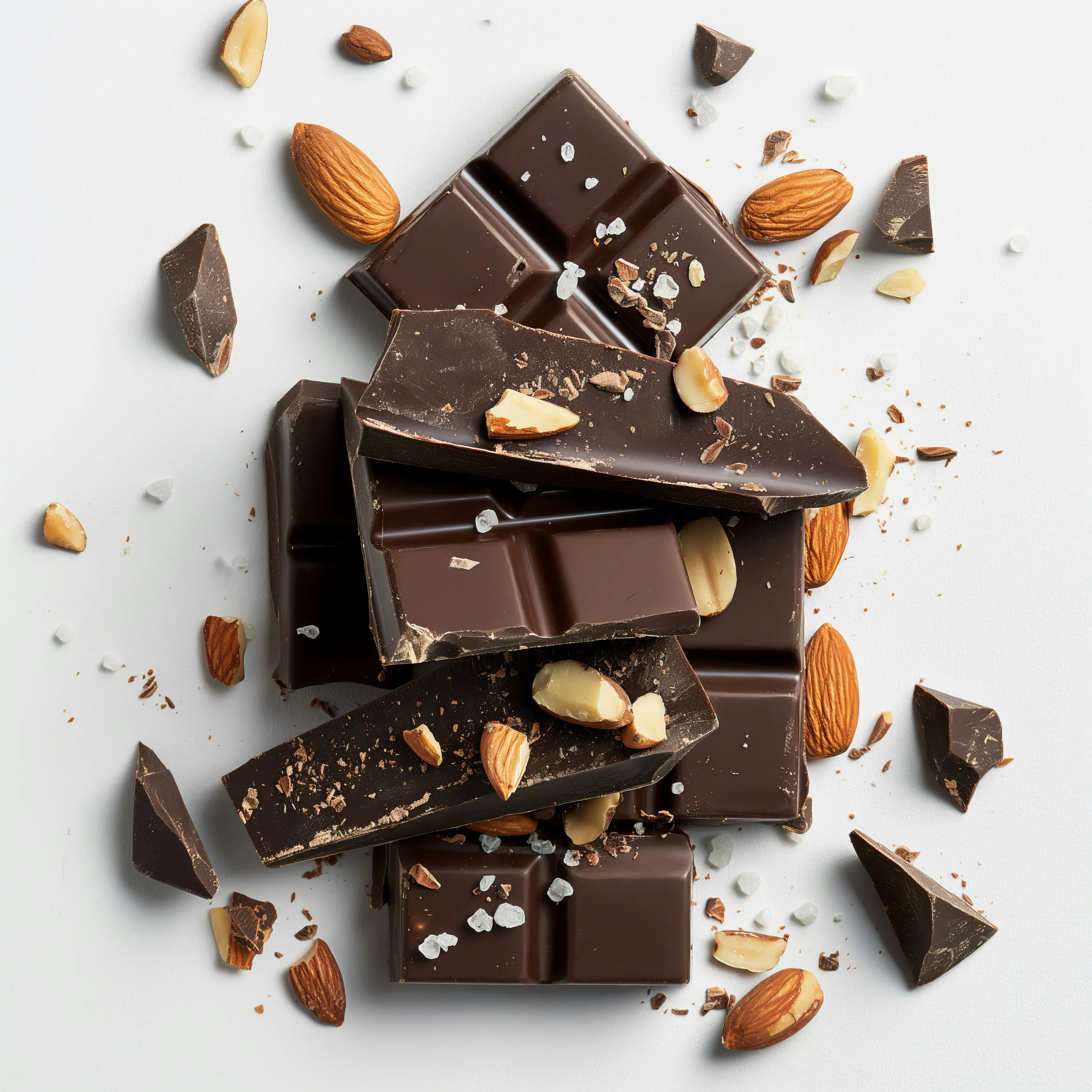
This is one of the most common follow-up questions, and the answer is encouraging for chocolate lovers. Dark chocolate — particularly varieties with 70% cocoa or higher — is significantly less likely to contribute to breakouts than milk chocolate or white chocolate.
Here is why dark chocolate is a safer choice for acne-prone skin:
- Less sugar: A typical 70% dark chocolate bar contains roughly 8-12 grams of sugar per serving, compared to 20-25 grams in milk chocolate
- No dairy (or very little): High-quality dark chocolate is often dairy-free, eliminating the hormonal and insulinemic effects of milk
- More flavonoids: The higher cocoa content means more antioxidants, which combat the inflammation that drives acne
- Lower glycemic index: Dark chocolate has a lower glycemic index than milk chocolate, resulting in a smaller insulin and IGF-1 response
That said, dark chocolate is not acne-proof. The studies that did find a connection between cocoa and acne used unsweetened cocoa, which is essentially what you get in very high-percentage dark chocolate. If you eat large amounts of dark chocolate daily, there is a possibility — though not a certainty — that it could contribute to breakouts in some individuals. Moderation remains a reasonable approach.
Milk Chocolate vs. Dark Chocolate: A Comparison for Acne-Prone Skin
Not all chocolate is created equal when it comes to your skin. Here is how different types compare across the factors that matter most for acne.
| Factor | Milk Chocolate | Dark Chocolate (70%+) | White Chocolate |
|---|---|---|---|
| Sugar content | High (20-25g per serving) | Low to moderate (8-12g per serving) | Very high (20-30g per serving) |
| Dairy content | Significant (milk solids, milk fat) | None or minimal | High (cocoa butter + milk) |
| Cocoa flavonoids | Low | High | None (no cocoa solids) |
| Glycemic index | Moderate to high (~50-60) | Low to moderate (~23-40) | High (~45-65) |
| Insulin spike | Significant (sugar + dairy) | Modest | Significant (sugar + dairy) |
| Acne risk | Higher | Lower | Highest |
White chocolate is worth mentioning specifically because it contains zero cocoa solids — it is made entirely from cocoa butter, sugar, and milk. Despite having "chocolate" in the name, it has none of the potential antioxidant benefits of cocoa while delivering the maximum amount of sugar and dairy. If any type of chocolate is going to contribute to acne, white chocolate is the most likely candidate.
Tips for Chocolate Lovers with Acne-Prone Skin
You do not have to swear off chocolate to manage your acne. The goal is to enjoy it in ways that minimize the factors most likely to trigger breakouts. Here are practical strategies that let you have your chocolate without paying for it on your skin.
1. Choose Dark Chocolate with 70% Cocoa or Higher
The higher the cocoa percentage, the less room there is for sugar and dairy. A bar that is 70-85% cocoa will typically have a fraction of the sugar found in milk chocolate and is often dairy-free. Check the ingredient list — the best options list cocoa mass, cocoa butter, and a small amount of sugar, with no milk solids or milk powder.
2. Watch Your Portion Size
Even dark chocolate contains some sugar and calories. A serving of one to two squares (about 20-30 grams) is a reasonable amount that satisfies a craving without delivering a large sugar load. The dose matters — a square of dark chocolate after dinner is very different from eating half a bar in one sitting.
3. Read Labels Carefully
Not all dark chocolate is equal. Some "dark" chocolate bars contain milk ingredients, added sugars, or fillers that undermine the benefits of the higher cocoa content. Look for short ingredient lists: cocoa mass, cocoa butter, sugar, and possibly vanilla or lecithin. Avoid bars with milk fat, milk powder, or high-fructose corn syrup.
4. Avoid Chocolate on an Empty Stomach
Eating chocolate — especially sweeter varieties — on an empty stomach can cause a sharper blood sugar and insulin spike than eating it alongside a balanced meal or snack that includes protein, healthy fat, or fiber. Having a square of dark chocolate after a meal blunts the glycemic impact.
5. Be Mindful of Other High-Glycemic Foods
If you are eating chocolate as part of a diet that is already high in sugar, refined carbohydrates, and processed foods, the cumulative effect on your insulin and IGF-1 levels will be greater. It is not just about the chocolate — it is about your overall dietary pattern. If you are interested in how diet connects to acne more broadly, our article on foods to avoid on Accutane covers many of the same principles around high-glycemic eating.
What to expect: Switching from milk chocolate to high-quality dark chocolate is one of the simplest dietary swaps you can make for your skin. Most people find that after a short adjustment period, they actually prefer the richer, more complex flavor of dark chocolate — and their skin benefits from the reduced sugar and dairy intake.
How to Tell If Chocolate Is Affecting Your Acne
Everyone's skin responds differently to dietary triggers. If you suspect chocolate is contributing to your breakouts, the most reliable way to find out is a structured elimination approach — similar to what we recommend for testing whether dairy affects your acne.
Step 1: Eliminate Chocolate for 4 Weeks
Remove all chocolate products from your diet for at least four weeks. This includes candy bars, chocolate-flavored drinks, cocoa powder in baking, chocolate ice cream, and any chocolate-containing snacks. Four weeks is the minimum needed because breakouts currently forming beneath your skin will still surface during this period regardless of dietary changes.
Step 2: Track Your Skin
Take photos of your skin at the start and weekly throughout the elimination. Note the number of new breakouts, their severity, and their location. Also track other factors that could influence your skin — stress, sleep, skincare products, and the rest of your diet — so you can isolate chocolate's effect.
Step 3: Reintroduce Strategically
After four weeks, reintroduce chocolate one type at a time. Start with a high-cocoa dark chocolate (70%+ with no dairy). Eat it daily for a week and monitor your skin. If no change, try milk chocolate for the next week. This stepwise approach helps you pinpoint whether it is chocolate in general, specific types, or simply the sugar and dairy in certain products.
Step 4: Adjust Accordingly
Based on what you learn, adjust your chocolate habits. Many people find that dark chocolate causes no issues while milk chocolate clearly triggers breakouts — which makes sense given what the science says about sugar and dairy's role in acne. Others discover chocolate has no impact on their skin at all, which is equally useful information.
Red flag: If you are eliminating chocolate and other foods one by one without seeing improvement, your acne may be driven by factors that diet alone cannot address — such as genetics, hormones, or bacteria. Persistent acne typically requires treatment from a dermatologist, not just dietary changes. Do not spend months chasing food triggers if your acne is not responding.
When Chocolate Is Not the Problem
It is easy to blame food for breakouts, especially when acne feels unpredictable and frustrating. But for most people with persistent acne, chocolate — or any single food — is not the primary cause. Acne is a complex condition driven by multiple factors working together.
The most common drivers of persistent acne include:
- Genetics: Your genetic makeup determines how your skin responds to hormones, how much oil your glands produce, and how easily your pores become clogged
- Hormonal fluctuations: Androgens stimulate sebum production and are the primary driver behind hormonal acne
- Bacterial activity: Cutibacterium acnes bacteria thrive in clogged pores and drive the inflammatory response that turns a clogged pore into a red, swollen breakout
- Skincare and lifestyle factors: Comedogenic products, stress, sleep deprivation, and certain medications can all play a role
Diet — including chocolate — can be a contributing factor in some people, but it is almost never the sole cause. If you have been trying to clear your acne through diet alone and are not seeing results, it is time to work with a dermatologist who can look at the full picture.
At Honeydew, our providers treat all types of acne and take lifestyle factors like diet into account when building treatment plans. We offer same-day or next-day virtual appointments with board-certified dermatologists and other qualified providers, so you can get personalized care without the weeks-long wait for an in-person visit. Learn more about our pricing and membership options.
The Bottom Line
The decades-old belief that chocolate causes acne is both partially true and deeply misleading. The cocoa in chocolate is rich in antioxidants and is unlikely to be the primary driver of breakouts. But the sugar and dairy that dominate most commercial chocolate products — particularly milk chocolate, candy bars, and white chocolate — have well-established connections to the insulin spikes, hormonal shifts, and inflammatory responses that promote acne.
If you love chocolate and have acne-prone skin, the practical move is simple: choose dark chocolate with 70% cocoa or higher, keep portions reasonable, and pay attention to how your skin responds. And if your acne is persistent regardless of what you eat, remember that diet is just one piece of the puzzle. A dermatologist can help you address the underlying causes — hormonal, genetic, or bacterial — and build a treatment plan that actually clears your skin.
You should not have to choose between enjoying the foods you love and having clear skin. With the right treatment and a few smart dietary choices, you can have both.
.webp)

Medically Reviewed by
Joel Spitz, MD
Co-Founder & Chief Medical Officer, Board Certified Dermatologist