Key Takeaways

You have a big deadline, a rough week, or a stretch of sleepless nights — and then the breakouts show up right on cue. If you have ever suspected that stress and acne are connected, you are right. The link between psychological stress and acne flares is one of the most well-supported relationships in dermatology, backed by decades of clinical research.
But saying "stress causes acne" is an oversimplification. Stress does not create acne out of thin air in someone who is not acne-prone. What it does is amplify the biological processes that drive breakouts — more oil production, more inflammation, slower healing — turning what might have been a clear week into a breakout. For people who already deal with acne, stress can be the difference between a manageable skin day and a flare that tanks your confidence.
The frustrating part is that acne itself is stressful, which creates a feedback loop that can feel impossible to escape. Understanding how stress affects your skin is the first step toward breaking that cycle. Let us walk through the science, what stress acne actually looks like, and what you can do about it.
Quick Answer: Does Stress Cause Acne?
Yes, stress can trigger and worsen acne — but it is rarely the sole cause. Here is what happens:
- Cortisol rises — your body's main stress hormone increases oil (sebum) production in the skin
- Inflammation spikes — stress activates inflammatory pathways that make existing acne worse and new breakouts more likely
- Your skin barrier weakens — chronic stress impairs your skin's ability to heal and protect itself
- Stress acne tends to appear on the forehead, jawline, chin, and cheeks — often as deeper, inflamed lesions rather than surface-level whiteheads
- Managing stress helps, but persistent acne usually needs targeted treatment alongside lifestyle changes
If stress-related breakouts are a recurring problem, a dermatologist can help you build a treatment plan that addresses both your skin and the biological effects of stress. Learn more about acne treatment options.
The Science Behind Stress and Acne
The connection between stress and acne is not just anecdotal — it has been studied extensively. When you experience stress, your body activates what is known as the hypothalamic-pituitary-adrenal (HPA) axis, a hormonal cascade that ultimately leads to the release of cortisol from the adrenal glands. Cortisol is your body's primary stress hormone, and while it plays an essential role in the fight-or-flight response, chronically elevated cortisol has widespread effects on your body — including your skin.
Cortisol and Sebum Production
One of the most direct ways stress causes acne is through increased sebum (oil) production. Your sebaceous glands — the oil-producing glands in your skin — have receptors for cortisol and other stress-related hormones, including corticotropin-releasing hormone (CRH) and adrenal androgens. When stress levels rise, these hormones stimulate the sebaceous glands to produce more oil.
A landmark 2017 study published in Clinical, Cosmetic and Investigational Dermatology examined the relationship between stress and sebum production in medical students during exam periods. The researchers found that higher self-reported stress correlated significantly with increased sebum production and acne severity. Students who reported more stress during exams had measurably oilier skin and more breakouts than during lower-stress periods.
Excess sebum is a foundational factor in acne development. When your skin produces too much oil, it mixes with dead skin cells and clogs your pores, creating the environment where acne-causing bacteria (Cutibacterium acnes) thrive. More oil means more clogged pores, which means more breakouts.
Stress-Driven Inflammation
Stress does not just make your skin oilier — it also makes it more inflamed. Chronic stress increases the production of pro-inflammatory cytokines, signaling molecules that ramp up inflammation throughout the body, including in the skin. Research published in Brain, Behavior, and Immunity has demonstrated that psychological stress upregulates inflammatory markers like interleukin-6 (IL-6) and tumor necrosis factor-alpha (TNF-alpha) — the same inflammatory mediators that are elevated in acne lesions.
This is why stress acne often presents as deeper, more painful, inflamed breakouts rather than simple surface-level blemishes. The inflammation is not just at the level of the individual pore — it is systemic, which means your entire skin is in a more reactive, acne-prone state.
The Skin's Own Stress Response
Here is something most people do not realize: your skin has its own local stress response system. Research published in the Journal of Investigative Dermatology has shown that skin cells themselves can produce CRH — the same hormone that initiates the stress response in the brain. This means your skin can locally amplify the effects of stress, producing its own hormones that stimulate sebum production and inflammation independently of what your adrenal glands are doing.
This local stress response in the skin helps explain why some people break out primarily in certain areas during stressful periods. The skin's response to stress is not uniform — some regions have more active sebaceous glands and more CRH receptors, making them more susceptible to stress-triggered breakouts.
Stress and Your Skin Barrier
Chronic stress also compromises your skin barrier — the outermost layer of your skin that keeps moisture in and irritants out. A study published in the Archives of Dermatology demonstrated that psychological stress delays skin barrier recovery after disruption. When your barrier is weakened, your skin loses moisture more easily, becomes more sensitive to irritants, and is less effective at defending against the bacteria that contribute to acne.
A compromised skin barrier can also trigger a compensatory increase in oil production — your skin tries to make up for lost moisture by producing more sebum, which only compounds the problem.
What to expect: Stress-related breakouts typically do not appear immediately. There is usually a lag of a few days to a couple of weeks between a high-stress period and the resulting flare. This delay happens because the hormonal and inflammatory changes need time to translate into visible breakouts — sebum has to build up, pores have to clog, and inflammation has to develop. So that breakout you got on Friday may have been set in motion by the stressful week before.
What Does Stress Acne Look Like?
Stress acne does not have a single definitive appearance, but it does tend to follow certain patterns that distinguish it from other types of breakouts.
| Feature | Stress Acne | Non-Stress Acne |
|---|---|---|
| Lesion type | Often deeper, inflamed papules and cysts | Can be any type — comedones, papules, or pustules |
| Timing | Flares during or shortly after stressful periods | More consistent pattern, or tied to other triggers |
| Oiliness | Skin often feels noticeably oilier during flares | Oil levels may be more stable |
| Pattern | Multiple new breakouts at once, often in a cluster | May be more gradual or isolated |
| Healing | Often slower to heal due to ongoing inflammation | Follows a more predictable healing timeline |
Stress acne often appears as a sudden worsening of existing acne rather than a completely new breakout. You might go from a few manageable spots to a noticeable flare that feels disproportionate to your usual skin. The breakouts tend to be more inflammatory — red, swollen, and sometimes painful — because of the systemic inflammation that stress produces. You may also notice that your skin feels generally more congested, with an increase in blackheads and clogged pores alongside the more inflamed lesions.
It is worth noting that stress acne and hormonal acne share significant overlap, because stress directly affects your hormones. The two are not mutually exclusive — in many cases, stress is worsening an underlying hormonal pattern. This is one reason why addressing stress acne effectively often requires a multi-pronged approach that considers both the hormonal and lifestyle components.
Where Does Stress Acne Appear?
Stress acne can show up anywhere you are prone to breakouts, but certain areas are more common targets due to higher concentrations of sebaceous glands and stress hormone receptors.
- Forehead: The T-zone has a high density of oil glands, making it one of the first areas to respond to cortisol-driven sebum increases. Stress-related forehead acne is common and often presents as a mix of small comedones and inflamed papules.
- Jawline and chin: These areas are closely linked to hormonal fluctuations, and since stress directly influences your hormonal balance, the jawline is a frequent site for stress-related breakouts. Deep, cystic lesions along the jaw are a hallmark of hormonally-influenced acne that stress can trigger or worsen.
- Cheeks: The cheeks have a large surface area with ample sebaceous glands, and stress-related breakouts here often present as scattered papules and pustules. If you tend to touch your face more when stressed (a common habit), this can compound the problem.
- Chest and back: These areas have large, active sebaceous glands and can flare significantly during periods of stress — particularly if you are also sweating more due to anxiety or disrupted sleep.
Important to know: The location of your breakouts alone cannot confirm that stress is the cause. Many factors influence where acne appears, including genetics, hormonal patterns, and even habits like resting your chin on your hand. If you notice a consistent pattern of breakouts worsening during stressful periods — regardless of location — that is a stronger signal of stress-related acne than location alone.
How to Get Rid of Stress Acne
Managing stress acne requires addressing both sides of the equation: treating the acne itself and reducing the stress that is fueling it. Here is how to approach each.
Treating Stress Acne Directly
Stress acne responds to the same evidence-based treatments as other forms of acne. The key is using treatments that target the specific mechanisms stress activates — excess sebum, inflammation, and bacterial overgrowth.
- Topical retinoids (tretinoin, adapalene): These are first-line treatments for acne that work by normalizing skin cell turnover and preventing clogged pores. They also have anti-inflammatory properties that directly counteract stress-driven inflammation. Your dermatologist can prescribe a retinoid suited to your skin.
- Benzoyl peroxide: An effective over-the-counter option that kills acne-causing bacteria and helps reduce inflammation. A 2.5% to 5% formulation is often enough — you do not need the strongest concentration, especially if stress has already sensitized your skin.
- Topical or oral antibiotics: For moderate inflammatory acne, antibiotics like clindamycin (topical) or doxycycline (oral) can reduce the bacterial load and inflammation driving your breakouts.
- Spironolactone: If your stress acne has a strong hormonal component — particularly breakouts along the jawline and chin — spironolactone can help by blocking androgen receptors in the skin. It is often an excellent option for people whose acne worsens with stress because it targets the hormonal pathway that cortisol activates.
- Isotretinoin (Accutane): For persistent acne that does not respond adequately to other treatments, isotretinoin remains the most effective option. It dramatically reduces sebum production, which directly counteracts one of the main effects of cortisol on the skin.
What to expect: Do not overhaul your entire skincare routine during a stress breakout. Adding too many new active ingredients at once can irritate your already-stressed skin and make things worse. Stick with your core routine and talk to a dermatologist about targeted additions. Consistency with a proven regimen is more effective than constantly switching products in response to every flare.
Skincare Tips During Stressful Periods
When you know you are heading into a stressful stretch — exams, a work deadline, a major life change — a few proactive adjustments can help minimize the impact on your skin.
- Keep cleansing simple: Use a gentle, non-stripping cleanser twice a day. Over-washing or using harsh products strips your barrier further, which makes stress-related breakouts worse.
- Prioritize moisturizer: Even oily, acne-prone skin needs hydration, and this is especially true when stress is compromising your skin barrier. A lightweight, non-comedogenic moisturizer helps your barrier function properly and can actually reduce compensatory oil production.
- Do not skip sunscreen: Post-inflammatory hyperpigmentation — the dark marks acne leaves behind — is worse with sun exposure. A non-comedogenic SPF 30+ sunscreen is essential, especially since stress acne tends to leave more persistent marks due to the heightened inflammation involved.
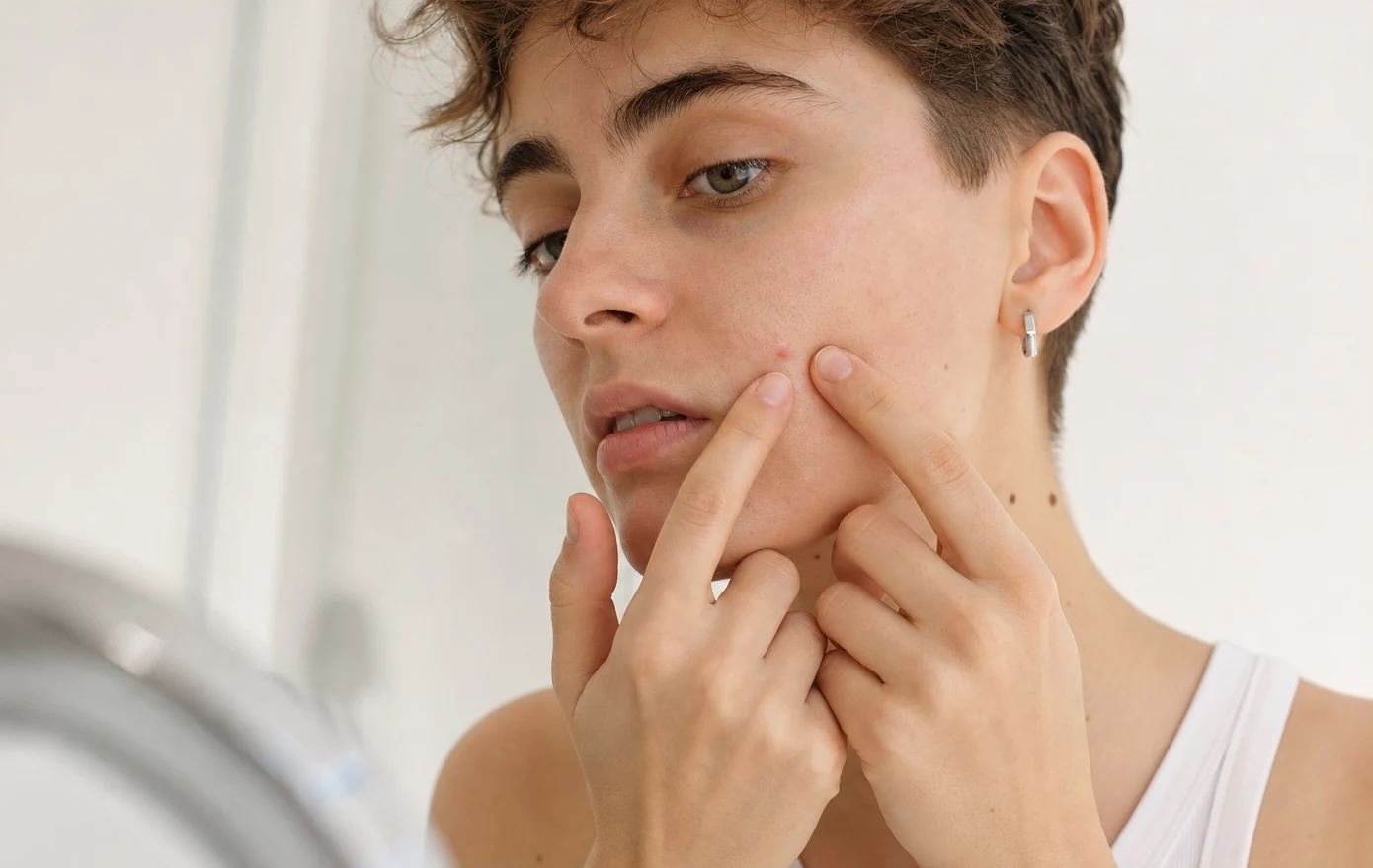
- Avoid picking: Stress often makes the urge to pick at your skin worse, and picking leads to scarring, infection, and more inflammation. If you struggle with skin picking, talk to a dermatologist or mental health provider about strategies to manage it.
Stress Management Strategies That Help Your Skin
Treating the acne is essential, but if you do not address the stress driving it, you are fighting the problem from only one direction. The following stress management strategies have evidence supporting their effects on both stress reduction and skin health.
Sleep
Sleep deprivation is one of the most potent triggers for cortisol elevation. A study published in Sleep found that even partial sleep restriction significantly increases cortisol levels the following evening. When you are not sleeping enough, your body stays in a low-grade stress state that keeps cortisol elevated and sebum production high. Aim for seven to nine hours per night, and prioritize sleep consistency — going to bed and waking up at roughly the same time — over total hours.
Exercise
Regular physical activity is one of the most effective natural stress reducers. Exercise lowers cortisol levels, improves mood through endorphin release, and improves circulation to the skin. A meta-analysis in Health Psychology Review found that exercise significantly reduces anxiety across a wide range of populations and settings. Even moderate activity — a 30-minute walk, a yoga session, a bike ride — can make a meaningful difference. Just make sure to shower or cleanse your skin after sweating, since sweat and bacteria sitting on the skin can contribute to breakouts.
Mindfulness and Relaxation Techniques
Practices like meditation, deep breathing, and progressive muscle relaxation have been shown to lower cortisol levels. A meta-analysis in Health Psychology Review found that mindfulness-based stress reduction programs significantly decrease cortisol. You do not need a 45-minute meditation practice to benefit — even five to ten minutes of focused breathing per day can help regulate your stress response.
Diet
What you eat during stressful periods matters. Stress often drives cravings for high-glycemic, processed foods — exactly the kinds of foods that spike insulin and worsen acne. Prioritizing whole foods, adequate protein, and anti-inflammatory foods like fatty fish, leafy greens, and berries can help counteract the inflammatory effects of stress. Reducing sugar and refined carbohydrate intake during stressful periods is one of the most practical dietary changes you can make for your skin.
Limiting Caffeine and Alcohol
Both caffeine and alcohol can amplify the stress response. Research has shown that caffeine increases cortisol secretion, particularly when combined with psychological stress. Alcohol disrupts sleep quality and dehydrates the skin. You do not have to eliminate these entirely, but being mindful of your consumption during high-stress periods can help keep cortisol in check.
| Strategy | How It Helps Acne | How Quickly It Works |
|---|---|---|
| Consistent sleep (7-9 hours) | Lowers cortisol, supports skin barrier repair | Days to weeks |
| Regular exercise | Reduces cortisol, improves circulation, lowers inflammation | Weeks (cumulative benefit) |
| Mindfulness / meditation | Lowers cortisol, reduces anxiety | Weeks to months |
| Anti-inflammatory diet | Reduces systemic inflammation, stabilizes insulin | Weeks to months |
| Reducing caffeine/alcohol | Lowers cortisol, improves sleep quality | Days to weeks |
The Stress-Acne Cycle — and How to Break It
One of the most challenging aspects of stress acne is the feedback loop: stress causes breakouts, and breakouts cause stress. Research has consistently shown that acne significantly impacts mental health. A 2018 study published in the British Journal of Dermatology found that people with acne had a 63% increased risk of developing depression compared to those without acne. The emotional toll of living with breakouts — the self-consciousness, the frustration, the feeling that your skin is out of your control — feeds right back into the stress that is making the acne worse.
Breaking this cycle typically requires action on both fronts simultaneously. Effective acne treatment reduces the emotional burden of breakouts, which lowers stress, which in turn reduces the hormonal triggers for more acne. At the same time, stress management techniques lower cortisol and inflammation directly, giving your acne treatment a better chance to work.
This is why we take a holistic approach at Honeydew. When you meet with one of our providers, they do not just look at your skin — they consider the full picture, including stress, lifestyle, sleep, and how your acne is affecting your quality of life. Sometimes the most effective treatment plan includes both a prescription and a conversation about what is going on in your life.
When to See a Dermatologist for Stress Acne
Lifestyle changes and over-the-counter products can help manage mild stress-related breakouts, but there are situations where professional help is the right call.
Consider Seeing a Dermatologist If:
- Your stress-related breakouts leave dark marks or scars
- Over-the-counter treatments are not controlling your flares
- You are getting deep, painful cystic breakouts during stressful periods
- Your acne is persistent regardless of your stress levels
- Breakouts are significantly affecting your confidence or mental health
- You want a personalized treatment plan rather than guessing with products
At Honeydew, our providers treat all types of acne, including stress-related breakouts. We offer same-day or next-day virtual appointments with board-certified dermatologists and other qualified providers, so you do not have to wait weeks for an appointment — which, ironically, tends to add even more stress. Learn more about our pricing and membership options.
The Bottom Line
Stress and acne are deeply connected. Cortisol increases sebum production, amplifies inflammation, weakens your skin barrier, and keeps your body in a state that makes breakouts more frequent and more severe. The research on this relationship is robust, and if you have noticed your skin getting worse during stressful periods, the biology backs up what your mirror is showing you.
But understanding the connection is only useful if you can do something about it. The most effective approach combines targeted acne treatment with practical stress management — addressing both the skin itself and the underlying forces that are driving the breakouts. Lifestyle strategies like prioritizing sleep, exercising regularly, and practicing stress reduction techniques can make a real difference, but they work best alongside a treatment plan tailored to your specific skin.
You do not have to choose between managing your stress and managing your acne. A dermatologist can help you build a plan that does both — so that the next time life gets overwhelming, your skin does not have to pay the price.
.webp)

Medically Reviewed by
Joel Spitz, MD
Co-Founder & Chief Medical Officer, Board Certified Dermatologist