Key Takeaways

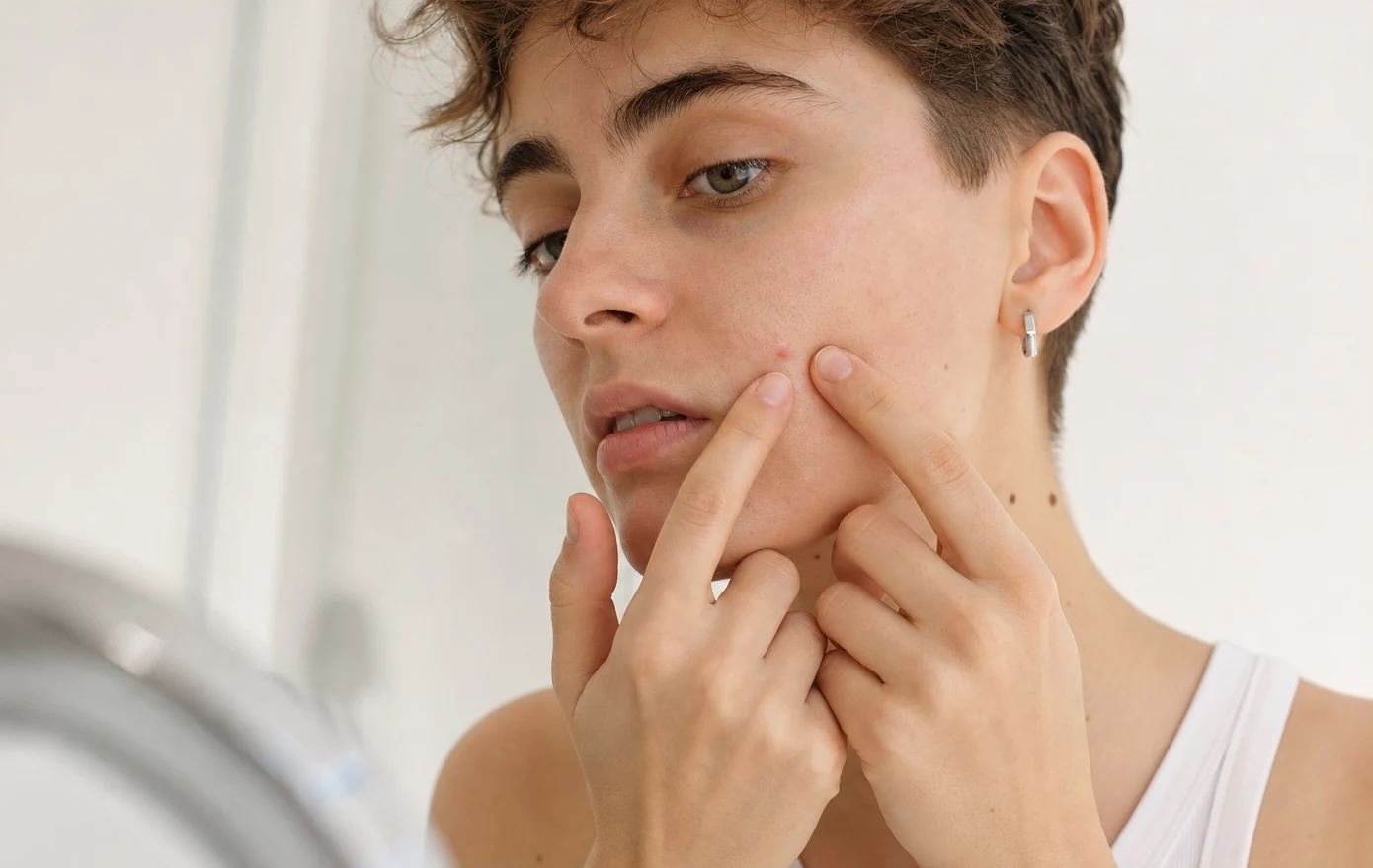
If you have acne, you have probably noticed something after a day at the beach or a session in a tanning bed: your skin looks a little better. The redness fades, active pimples seem less visible, and your complexion takes on a more even tone. It is easy to conclude that tanning is helping your acne. Plenty of people do.
But here is the problem: what you are seeing is camouflage, not treatment. A tan darkens the surrounding skin so that red and pink acne marks blend in. The breakouts are still there. The inflammation is still happening beneath the surface. And the UV exposure that produced that tan is actively making your acne worse in ways that will catch up with you in the days and weeks ahead.
This myth has been around for decades, and it persists because the short-term visual effect is convincing. But dermatologists are clear on this one — tanning does not help acne, and it introduces a range of skin problems that go well beyond breakouts. Let us break down why.
Quick Answer: Does Tanning Help Acne?
No. Tanning does not help acne — it makes it worse. Here is what you need to know:
- The "improvement" is an illusion — a tan masks redness by darkening the surrounding skin, but it does not treat breakouts
- UV radiation damages the skin barrier, triggers excess oil production, and increases inflammation — all of which fuel acne
- Tanning beds are even worse — they emit concentrated UVA radiation that penetrates deeper into the skin
- UV exposure worsens post-acne marks — dark spots (post-inflammatory hyperpigmentation) become darker and last longer with sun exposure
- Many acne medications increase sun sensitivity, making UV exposure particularly dangerous during treatment
If your acne is persistent, a dermatologist can recommend treatments that actually work. Learn more about proven acne treatment options.
Why People Think Tanning Helps Acne
The tanning-acne myth is not baseless — it is rooted in real observations that are easy to misinterpret. Understanding why it seems like tanning helps your skin is the first step toward understanding why it actually does not.
The Camouflage Effect
This is the biggest reason people believe tanning clears their acne. When you tan, melanin production increases across your skin. That darker pigment reduces the contrast between your normal skin tone and the redness of acne lesions. Active pimples, post-inflammatory erythema (the pink and red marks left after breakouts), and even some shallow scarring become less visible against a tanned backdrop.
But this is purely cosmetic. The acne is not improving — it is just harder to see. Once the tan fades, the breakouts and marks are right back where they were, often worse than before because of the UV damage that accumulated while you were tanning.
The Temporary Drying Effect
UV exposure can temporarily dry out the skin, which can make oily skin feel less greasy for a day or two. If your acne is driven in part by excess oil, that brief drying sensation can feel like progress. But this is where the cycle turns against you. When UV radiation strips moisture from the skin, your sebaceous glands respond by ramping up oil production to compensate. Within days, your skin is producing more sebum than it was before — and more sebum means more clogged pores and more breakouts.
The Vitamin D Connection
Some people have heard that vitamin D is good for the skin, and since sun exposure triggers vitamin D synthesis, they assume tanning must help acne. While vitamin D does play a role in immune function and skin health, you do not need a tan to get adequate vitamin D. Brief, incidental sun exposure — far less than what it takes to tan — is sufficient for most people. And if your levels are low, a supplement is a safer and more reliable option than UV exposure.
What to expect: The visual improvement you see after tanning is temporary and superficial. Once the tan fades — usually within one to two weeks — your acne will appear just as prominent as before, and in many cases, you will notice new breakouts triggered by the UV damage.
How Tanning Actually Makes Acne Worse
The case against tanning for acne is not just theoretical. UV radiation affects your skin through multiple biological pathways, and virtually all of them work against clear skin.
UV Radiation Damages the Skin Barrier
Your skin barrier — the outermost layer of your epidermis — is your first line of defense against bacteria, pollution, and moisture loss. UV exposure compromises this barrier by degrading the lipids and proteins that hold it together. When the barrier is weakened, acne-causing bacteria (particularly Cutibacterium acnes) can penetrate more easily, and your skin becomes more reactive to irritants. A damaged barrier also leads to increased transepidermal water loss, which triggers the compensatory oil production mentioned earlier.
UV Exposure Increases Inflammation
Acne is fundamentally an inflammatory condition. Even comedonal acne (blackheads and whiteheads) involves low-grade inflammation, and inflammatory acne — papules, pustules, cysts — is driven by the immune system's response to clogged, bacteria-filled pores. UV radiation is a well-documented trigger of skin inflammation. Sunburn is the most obvious example, but even sub-sunburn UV exposure activates inflammatory cascades in the skin — increasing levels of pro-inflammatory cytokines like IL-1, IL-6, and TNF-alpha. These are the same inflammatory mediators that drive acne flares.
In other words, UV exposure adds fuel to the fire that is already burning in acne-prone skin.
Tanning Thickens the Skin and Clogs Pores
One of the skin's protective responses to UV damage is to thicken the outermost layer of the epidermis — a process called photoprotective hyperkeratinization. While this thickening is the skin's attempt to shield deeper layers from UV damage, it has an unfortunate side effect for acne-prone skin: thicker, tougher skin traps dead cells and sebum inside pores, creating the perfect environment for comedones (clogged pores) to form. This is why many people experience a wave of new breakouts one to two weeks after heavy sun exposure — the skin thickening that began during tanning is now blocking pores.
UV Worsens Post-Inflammatory Hyperpigmentation
If you have darker skin tones, or even if you tend to develop brown or dark marks after breakouts, UV exposure is particularly damaging. Post-inflammatory hyperpigmentation (PIH) — the dark spots left behind after acne heals — is caused by excess melanin deposited in the skin at the site of inflammation. UV radiation stimulates melanocytes (the cells that produce melanin) to produce even more pigment, making these marks darker, more noticeable, and longer-lasting.
PIH can take months or even years to fade on its own. UV exposure can turn a mark that might have resolved in eight weeks into one that lingers for six months or more. For many people dealing with acne, the dark marks are actually more distressing than the active breakouts — and tanning makes them significantly worse.
Red flag: If you are currently using acne medications like tretinoin, doxycycline, or isotretinoin (Accutane), your skin is significantly more sensitive to UV radiation. These medications thin the outer layer of skin or reduce its ability to protect against UV, making sunburns more severe and increasing your risk of lasting damage. Tanning while on these medications is particularly dangerous. For more on Accutane treatment, see our comprehensive guide to isotretinoin.
Do Tanning Beds Help Acne?
Tanning beds are not a safer or more controlled alternative to sun exposure for acne — they are actually worse. This is a question we hear often, so it deserves its own section.
Indoor tanning beds primarily emit UVA radiation, which penetrates deeper into the skin than the UVB rays that dominate natural sunlight. While UVB is the primary cause of sunburn, UVA causes deeper structural damage — breaking down collagen, accelerating aging, and penetrating into the dermis where it triggers inflammation at the level of the sebaceous glands.
The American Academy of Dermatology (AAD) has taken a firm position against indoor tanning for any purpose. Their concerns are not limited to skin cancer risk (which increases by 59% with any indoor tanning use) — they also note the damaging effects on overall skin health, including worsening acne and accelerated aging.
The concentrated nature of tanning bed radiation means you are getting a more intense dose of UV in a shorter time than you would outdoors. The skin barrier damage, inflammation, oil overproduction, and pore-clogging hyperkeratinization we discussed above all happen faster and more aggressively with tanning beds.
| Factor | Sun Exposure | Tanning Beds |
|---|---|---|
| Primary UV type | UVA + UVB | Primarily UVA (higher intensity) |
| Skin barrier damage | Yes | Yes, often more intense |
| Inflammation trigger | Yes | Yes, deeper penetration |
| Pore-clogging effect | Yes (delayed breakouts) | Yes (delayed breakouts) |
| Worsens PIH (dark spots) | Yes | Yes |
| Skin cancer risk | Increased with unprotected exposure | 59% increase with any use |
| Premature aging | Yes | Accelerated due to deep UVA penetration |
Bottom line: tanning beds do not help acne. They damage your skin in all the same ways as the sun, often more intensely, while adding a significant cancer risk. There is no scenario in which a dermatologist would recommend a tanning bed as part of an acne treatment plan.
Why Sunscreen Is Essential for Acne-Prone Skin
If tanning makes acne worse, it follows that protecting your skin from UV exposure helps. And it does. Wearing sunscreen daily is one of the simplest and most effective things you can do for acne-prone skin — yet many people with acne skip it because they are worried it will clog their pores or make their skin oilier.
That concern is understandable, but modern sunscreen formulations have come a long way. The key is choosing the right product.
Sunscreen Guide for Acne-Prone Skin
- Look for "non-comedogenic" on the label — this means the formula is designed not to clog pores
- Choose SPF 30 or higher with broad-spectrum (UVA + UVB) protection
- Opt for lightweight, oil-free or gel-based formulas over heavy creams
- Consider mineral sunscreens (zinc oxide or titanium dioxide) if chemical sunscreens irritate your skin
- Apply every morning, even on cloudy days — up to 80% of UV radiation penetrates cloud cover
- Reapply every two hours during extended outdoor exposure
- If you are on acne medications (retinoids, antibiotics, isotretinoin), sunscreen is not optional — it is essential
Sunscreen protects your skin barrier, prevents UV-driven inflammation, and — critically — prevents post-inflammatory hyperpigmentation from worsening. If you are investing time and money into acne treatment, skipping sunscreen undermines your results. Think of it as protecting the progress your treatments are making.
What to expect: It may take some trial and error to find a sunscreen that works well with your acne-prone skin. If one product feels too heavy or causes breakouts, do not give up — try a different formula. Your dermatologist can also recommend specific products suited to your skin type.
What Actually Helps Acne (Instead of Tanning)
If you have been tanning in an attempt to manage your acne, it is worth redirecting that effort toward treatments that are backed by evidence. The good news is that effective acne treatments exist across a wide spectrum — from over-the-counter products to prescription medications — and a dermatologist can help you find the right combination for your skin.
Topical Treatments
- Retinoids (tretinoin, adapalene) — normalize skin cell turnover and prevent clogged pores; considered the gold standard for topical acne treatment
- Benzoyl peroxide — kills acne-causing bacteria and reduces inflammation; available over the counter in various strengths
- Topical antibiotics (clindamycin) — reduce bacteria and inflammation, typically used in combination with benzoyl peroxide
- Azelaic acid — reduces inflammation and helps with post-acne dark spots; a good option for sensitive skin
Oral Medications
- Doxycycline — an oral antibiotic that reduces acne-causing bacteria and inflammation, typically used for moderate inflammatory acne
- Spironolactone — blocks androgen receptors to reduce hormonally driven oil production and breakouts
- Isotretinoin (Accutane) — the most effective treatment for persistent acne that has not responded to other options; can produce long-term remission
For a deeper look at how these treatments compare, see our guide to the most effective acne treatments.
Daily Habits That Support Clear Skin
- Use a gentle, non-stripping cleanser twice daily
- Apply a lightweight, oil-free moisturizer — even oily skin needs hydration
- Wear sunscreen every day (SPF 30+, non-comedogenic)
- Avoid touching or picking at your skin
- Change pillowcases regularly
- Keep your skincare routine simple — overloading your skin with too many products can worsen breakouts
What to expect: Most acne treatments take 6 to 12 weeks to show meaningful results. Unlike tanning, which creates an instant visual effect that fades quickly, evidence-based treatments produce real, lasting improvement — but they require patience and consistency.
What About Light Therapy for Acne?
You may have heard about light-based therapies for acne and wondered whether that is the same thing as tanning. It is not. Dermatologists do sometimes use specific wavelengths of light — particularly blue light and red light — to treat acne. But these treatments are fundamentally different from UV exposure.
Blue light therapy (wavelength around 415 nm) works by targeting porphyrins produced by C. acnes bacteria, generating reactive oxygen species that kill the bacteria without UV radiation. Red light therapy (wavelength around 630-660 nm) penetrates deeper and has anti-inflammatory properties. Neither blue nor red light involves the UV wavelengths (below 400 nm) that cause the damage associated with tanning.
These treatments can be used as supplements to a topical or oral acne regimen, but they are not substitutes for proven medical treatments. And importantly, they are not tanning — they do not darken your skin or carry the risks associated with UV exposure.
The Bottom Line
The idea that tanning helps acne is a myth — one that is easy to believe because of the temporary visual improvement a tan provides, but one that dermatologists and skin researchers consistently refute. UV exposure from the sun or tanning beds damages your skin barrier, drives inflammation, thickens the epidermis in ways that clog pores, and makes post-acne dark spots darker and longer-lasting. There is no version of tanning that benefits acne-prone skin.
If your acne is persistent enough that you have been looking for solutions in a tanning bed, that is a signal that it is time to explore treatments that actually work. Modern acne therapies — from topical retinoids to oral medications like isotretinoin — can produce real, lasting results without the skin damage that comes with UV exposure. And protecting your skin with daily sunscreen is one of the simplest ways to support those treatments and prevent the dark spots that make acne's aftermath so frustrating.
You deserve clear skin — and a treatment approach that does not trade one problem for a host of others.
.webp)

Medically Reviewed by
Joel Spitz, MD
Co-Founder & Chief Medical Officer, Board Certified Dermatologist