Key Takeaways

Think about the last hour. Did you rest your chin on your hand? Rub your eyes? Scratch your forehead? Most people touch their face dozens of times per day without even thinking about it. A 2015 study published in the American Journal of Infection Control found that medical students touched their faces an average of 23 times per hour — with nearly half of those touches involving contact with the eyes, nose, or mouth. And if you are someone who deals with acne, every one of those touches is a potential opportunity for bacteria, oil, and irritants to make their way onto skin that is already prone to breakouts.
But does touching your face actually cause acne, or is it one of those pieces of advice that sounds logical but does not hold up under scrutiny? The answer is nuanced. Touching your face is unlikely to be the primary cause of acne on its own — that distinction belongs to hormones, genetics, and excess sebum production. However, face touching is a well-documented contributing factor that can introduce bacteria, spread existing infections, irritate the skin, and worsen breakouts you are already dealing with.
If you have been struggling with persistent breakouts — especially in areas where you rest your hands, hold your phone, or where your hair brushes against your skin — understanding the face-touching connection could be a meaningful piece of the puzzle. Let us break down what the science says, how different types of face contact affect your skin, and what you can actually do about it.
Quick Answer: Does Touching Your Face Cause Acne?
Touching your face does not cause acne by itself, but it can significantly worsen breakouts in acne-prone skin. Here is why:
- Bacteria transfer — your hands carry bacteria, dirt, and oils that can clog pores and trigger inflammation
- Picking and squeezing — damages skin, pushes bacteria deeper, and causes scarring and post-inflammatory hyperpigmentation
- Phone contact — creates a warm, humid environment on the cheek and jawline that promotes bacterial growth
- Hair touching the face — transfers hair products, natural oils, and bacteria onto acne-prone areas
- Friction and pressure — repeated rubbing or resting on the same spot can cause or worsen a form of acne called acne mechanica
Breaking the face-touching habit can help, but persistent acne usually requires more than behavioral changes alone. Learn more about acne treatment options.
How Touching Your Face Contributes to Acne
To understand why touching your face can worsen acne, it helps to know what is happening on the surface of your hands and your skin at any given moment.
Bacteria Transfer: What Your Hands Carry
Your hands are in contact with surfaces all day — door handles, keyboards, phones, countertops, other people. Each interaction deposits microorganisms onto your skin. A study published in the Journal of Applied Microbiology found that hands can harbor up to several million bacteria per square centimeter, with the composition changing throughout the day depending on what you have touched.
When you touch your face, you transfer some of those microorganisms onto facial skin that is fundamentally different from the skin on your hands. Facial skin — especially in the T-zone and along the jawline — has a high density of sebaceous (oil-producing) glands. Bacteria thrive in oily environments, and introducing new bacteria into already oil-rich pores creates the conditions for acne. The bacteria Cutibacterium acnes (formerly Propionibacterium acnes), which is central to inflammatory acne development, flourishes in clogged, sebum-filled pores. While C. acnes already lives on your skin naturally, the additional bacteria, dirt, and debris from your hands can contribute to pore blockages that allow it to overgrow.
Research in the Journal of Clinical Medicine has demonstrated that the skin microbiome — the ecosystem of bacteria on your face — plays a critical role in acne development. Disruptions to this microbial balance, including the introduction of external bacteria from hands and surfaces, can shift the skin toward an acne-promoting state.
Oil and Dirt Buildup
Beyond bacteria, your hands carry sebum (your body's own oil), sweat residue, food particles, and environmental pollutants. Every time you touch your face, a thin film of this mixture is deposited onto your skin. For people with normal or dry skin, this occasional deposit may not cause problems. But for people with oily or acne-prone skin, the additional oil and debris can be the tipping point that clogs pores and triggers a breakout.
This is especially true for habitual touching — resting your chin on your hand during work, rubbing your temples when you are tired, or leaning your cheek into your palm while scrolling your phone. These repetitive, sustained contacts deposit more material and create prolonged occlusion (blocking the pore opening), which is a known acne trigger.
What to expect: If face touching is a significant contributor to your acne, you are most likely to notice breakouts concentrated in specific areas — the chin, jawline, or cheeks where your hands rest, or the side of your face where you hold your phone. A scattered, all-over breakout pattern is less likely to be driven by face touching alone and more likely points to hormonal, dietary, or other systemic factors.
The Damage from Picking and Squeezing
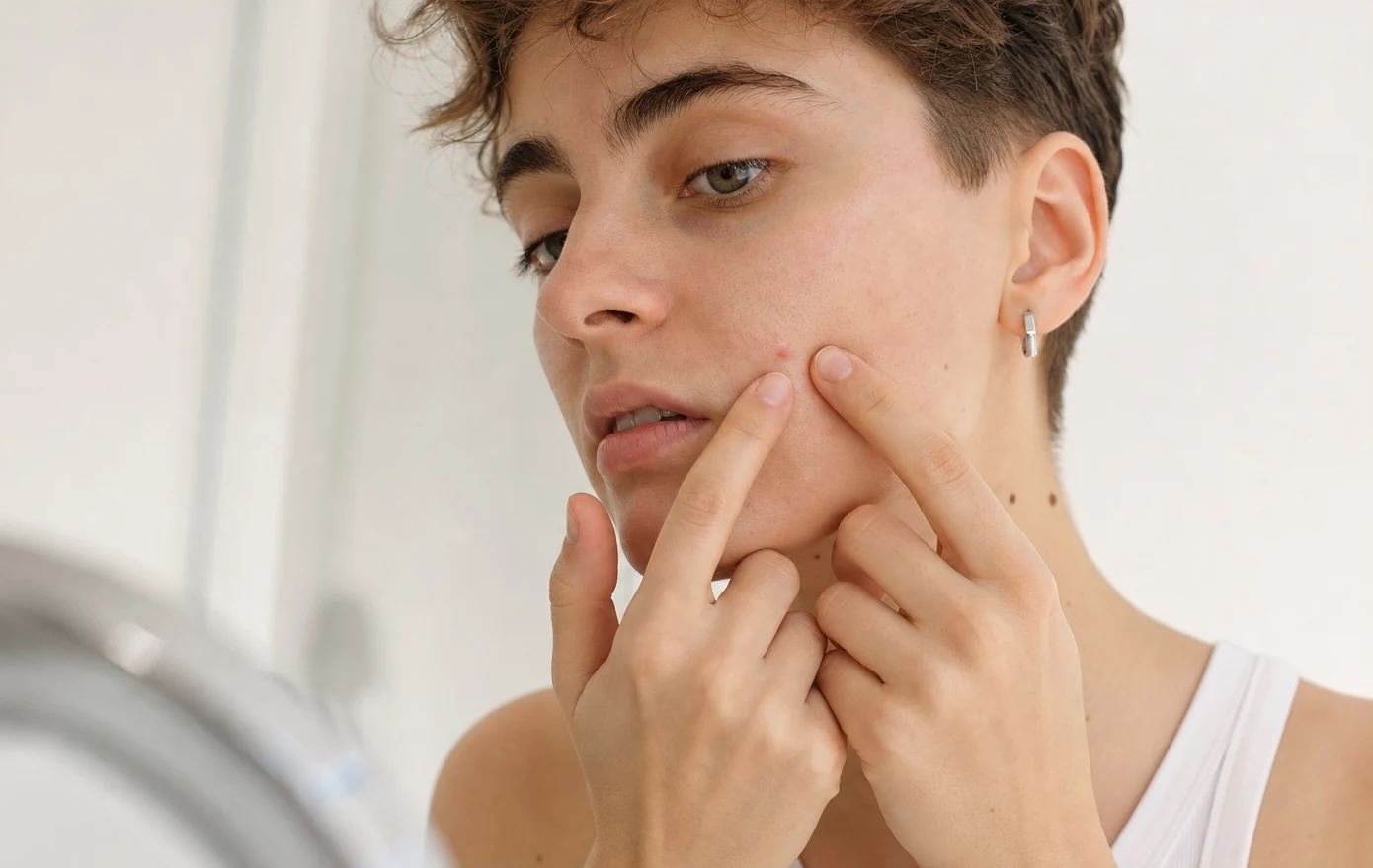
If bacteria transfer is the passive way face touching worsens acne, picking and squeezing is the active — and far more destructive — version. Almost everyone with acne has given in to the urge to pop a pimple at some point. And almost everyone has regretted it.
Why Picking Makes Acne Worse
When you squeeze or pick at a pimple, several things happen — none of them good for your skin:
- Bacteria spread: Squeezing a pimple does not just push contents out — it also pushes bacteria, sebum, and dead skin cells deeper into the surrounding tissue and sideways into adjacent pores. This can turn a single blemish into a cluster of new breakouts.
- Inflammation intensifies: The mechanical trauma of squeezing triggers an inflammatory response. The redness, swelling, and pain you see after picking is your immune system reacting to the damage you just caused — on top of the inflammation that was already there from the acne itself.
- The skin barrier breaks: Picking creates micro-wounds in your skin. These wounds are entry points for additional bacteria and can disrupt the skin barrier, leading to increased sensitivity, dryness, and — paradoxically — more oil production as your skin tries to compensate.
- Scarring and hyperpigmentation: This is the most lasting consequence. Research published in the Journal of Clinical and Aesthetic Dermatology has documented that manipulation of acne lesions is a significant risk factor for both atrophic scarring (pitted scars) and post-inflammatory hyperpigmentation (dark marks). These marks can persist for months or even years after the original breakout has resolved.
Skin Picking Disorder: When It Goes Beyond a Bad Habit
For some people, picking at the skin goes beyond the occasional pimple pop and becomes a compulsive behavior. Excoriation disorder (also called skin picking disorder or dermatillomania) is a recognized condition in the Diagnostic and Statistical Manual of Mental Disorders (DSM-5) that affects an estimated 1.4% to 5.4% of the population. People with this condition repeatedly pick at their skin despite attempts to stop, often causing significant tissue damage and scarring.
If you find yourself unable to resist picking, spending significant time picking at your skin, or if picking is causing noticeable scarring or emotional distress, it is worth discussing with a healthcare provider. Excoriation disorder is treatable — cognitive behavioral therapy, particularly a technique called habit reversal training, has shown strong results in clinical studies.
Red flag: If you are picking at acne lesions to the point of significant scarring, bleeding, or infection — or if you are spending substantial time each day examining and picking your skin — talk to a healthcare provider. This is not a willpower issue; it is a recognized medical condition with effective treatments. Your dermatologist can also help manage the skin damage while you address the underlying behavior.
Phone-Related Acne: Your Screen Is Dirtier Than You Think
Your smartphone goes everywhere with you — the kitchen counter, the bathroom, public transit, your desk. And then it presses directly against your cheek and jawline every time you take a call. It is one of the most overlooked sources of face contact, and the research on how dirty phones actually are is striking.
A 2019 study published in the Journal of Travel Medicine and Infectious Disease found that mobile phones harbor a diverse array of bacteria, including species associated with skin infections. Other research has found that the average smartphone screen can carry more bacteria per square inch than a toilet seat — a comparison that is more alarming than scientifically useful, but it makes the point.
How Phones Cause Breakouts
There are three mechanisms by which phone use can contribute to acne:
- Bacterial transfer: Every time you press your phone against your face, you are transferring whatever bacteria have accumulated on the screen onto your skin. This includes bacteria from your hands, any surfaces the phone has been set on, and bacteria that have been growing on the warm screen surface.
- Occlusion and heat: Holding a phone against your cheek creates a sealed, warm environment. The heat from the phone and your skin, combined with the lack of airflow, increases sweating and sebum production in that area. This occlusive environment is ideal for bacterial growth and pore clogging.
- Friction: The physical pressure and rubbing of the phone against your skin — especially during long calls — can cause a specific type of acne called acne mechanica. This form of acne is triggered by friction, pressure, and heat, and it is a common cause of localized breakouts on the cheek and jawline.
If you have noticed that your breakouts are consistently worse on one side of your face — specifically the side you hold your phone to — that is a strong clue that phone contact is contributing to your acne.
What to expect: Switching to speakerphone or earbuds for calls is one of the simplest and most effective changes you can make. If you clean your phone screen daily and stop pressing it against your face, you may see a noticeable reduction in cheek and jawline breakouts within a few weeks — especially if phone contact was a significant contributor.
Does Hair Touching Your Face Cause Acne?
If you have bangs, layers that frame your face, or any hairstyle that allows hair to rest against your forehead, cheeks, or jawline, your hair could be contributing to breakouts in those areas. This is a frequently asked question — and the answer is yes, hair touching the face can contribute to acne through several pathways.
Hair Products and Comedogenic Ingredients
Many styling products — pomades, gels, mousses, leave-in conditioners, oils, and hairsprays — contain ingredients that are comedogenic (pore-clogging). When hair treated with these products rests against your face, the product transfers onto your skin throughout the day. Dermatologists have a specific term for acne caused by hair products: pomade acne. It typically appears along the hairline, forehead, and temples, and it often presents as small, persistent comedones (blackheads and whiteheads) rather than the deep, inflamed lesions associated with hormonal acne.
Common comedogenic ingredients found in hair products include coconut oil, cocoa butter, lanolin, isopropyl myristate, and certain silicones. If your breakouts are concentrated along your hairline or where your hair contacts your face, your products could be a factor.
Natural Hair Oils
Even without styling products, hair carries natural sebum — the same oil your skin produces. Throughout the day, your hair accumulates oil from your scalp, along with environmental pollutants, dust, and sweat. When this oily hair contacts facial skin, it deposits these substances directly onto acne-prone areas. People who do not wash their hair frequently, or whose scalps tend to be oily, may notice this effect more.
The Habit of Touching Your Hair
There is also an indirect pathway. Many people habitually touch, twirl, or push their hair out of their face throughout the day. Each time you do this, you are transferring oil and product residue from your hair onto your hands, and then from your hands onto your face the next time you touch it. It creates a continuous loop of oil and bacteria transfer between your hair, hands, and face.
| Type of Face Contact | Common Breakout Location | Primary Mechanism |
|---|---|---|
| Resting chin on hand | Chin, jawline | Bacteria transfer, friction, occlusion |
| Phone pressed to face | Cheek, jawline (one side) | Bacteria, heat, occlusion, friction |
| Hair touching face | Forehead, temples, cheeks along hairline | Product transfer, oil deposit |
| Picking and squeezing | Anywhere existing acne is present | Bacteria spread, tissue damage, inflammation |
| Rubbing eyes or forehead | Forehead, between brows | Bacteria transfer, skin irritation |
| Pillowcase contact | Cheek, jaw (sleeping side) | Accumulated bacteria, oil, and debris |
Acne Mechanica: When Friction and Pressure Cause Breakouts
Acne mechanica is a specific subtype of acne caused by friction, pressure, and heat applied to the skin. It deserves its own section because many forms of face touching — resting on your hand, pressing a phone to your cheek, wearing tight headbands or hats — fall into this category. A review in the Journal of the American Academy of Dermatology described acne mechanica as a well-recognized clinical entity that can affect anyone, particularly in areas subjected to repeated mechanical irritation.
The mechanism is straightforward: friction and sustained pressure on the skin disrupt the follicular lining (the wall of the pore), trapping sebum and dead skin cells inside. The heat generated by prolonged contact — whether from a phone, a hand, or a chin strap — increases local sweating and oil production, compounding the problem. The result is typically localized breakouts that correspond precisely to the area of contact.
Common triggers for acne mechanica beyond hand and phone contact include:
- Tight headbands, hats, or helmets
- Athletic equipment (chin straps, face masks)
- Musical instruments that press against the face (violin, flute)
- Sleeping consistently on one side of your face
- Face masks worn for extended periods
If you can draw a direct line between an area of friction and a cluster of breakouts, acne mechanica is likely involved — and the solution starts with reducing or eliminating that source of contact.
How to Stop Touching Your Face: Practical Strategies
Knowing that face touching contributes to acne is one thing. Actually stopping a deeply ingrained, often unconscious habit is another. Here are strategies that dermatologists and behavioral researchers have found effective.
Build Awareness First
You cannot change a behavior you are not aware of. Most face touching is completely unconscious — you do not decide to rest your chin on your hand, you just find yourself doing it. The first step is bringing these unconscious touches into awareness.
- Track your touches: Spend one full day paying attention to how often you touch your face and in what context. You might be surprised at the number. Keeping a simple tally on a sticky note at your desk can make the pattern visible.
- Identify your triggers: Notice when face touching happens. Is it when you are bored? Stressed? Concentrating? On the phone? In meetings? Most people have specific contexts that trigger the behavior, and knowing your triggers makes them easier to address.
- Ask others to help: If you are comfortable doing so, ask a coworker, friend, or family member to gently point out when they see you touching your face. External feedback can catch moments you miss yourself.
Replace the Habit
Research on habit reversal training — a well-studied behavioral technique — shows that the most effective way to break a habit is not simply to "stop" but to replace the unwanted behavior with a competing response. When you feel the urge to touch your face:
- Clasp your hands together or sit on your hands
- Pick up a pen, stress ball, or fidget tool
- Place your hands flat on your desk or in your lap
- Cross your arms (this physically prevents face touching while feeling natural)
The replacement behavior does not have to be permanent — it just needs to interrupt the automatic hand-to-face motion long enough for the urge to pass. Over time, the new pattern replaces the old one.
Modify Your Environment
Sometimes the easiest way to break a habit is to change the conditions that support it.
- Keep your hands busy: If you tend to touch your face while reading or watching something, hold a drink, a pen, or keep your hands occupied with something else.
- Adjust your workspace: If you rest your chin on your hand while working at a desk, try adjusting your chair height or monitor position so that the posture that leads to face resting becomes less comfortable or natural.
- Use visual reminders: A sticky note on your monitor that says "hands down" or a rubber band on your wrist can serve as a gentle prompt throughout the day.
- Switch to speakerphone or earbuds: This is one of the highest-impact changes you can make. Eliminating phone-to-face contact removes a major source of bacteria transfer, friction, and heat.
Daily Habit Checklist for Clearer Skin
- Wash or sanitize hands before any intentional face contact (applying skincare, etc.)
- Use earbuds or speakerphone for calls
- Wipe down your phone screen daily with an antibacterial wipe
- Change your pillowcase at least twice a week
- Pin back hair or use non-comedogenic styling products
- Keep a fidget tool or pen at your desk to occupy your hands
- Resist the urge to pick or squeeze — apply a pimple patch instead
What to Do Instead of Picking at Acne
The urge to pick is powerful — especially when you can see or feel a pimple that seems like it just needs to be popped. Here are better alternatives that address the immediate desire without causing damage.
- Hydrocolloid pimple patches: These small adhesive patches absorb fluid from surface-level pimples and create a physical barrier that prevents you from touching or picking. They also protect the breakout from external bacteria and keep you from making things worse.
- Spot treatments: Applying a benzoyl peroxide or salicylic acid spot treatment gives you the feeling of "doing something" about a blemish without causing damage. It also creates a physical layer on the skin that makes picking less tempting.
- Ice: Holding a clean ice cube (wrapped in a soft cloth) against an inflamed pimple for 30 to 60 seconds can reduce swelling, redness, and pain. It addresses the discomfort that often drives the picking urge without any of the consequences.
- Walk away from the mirror: Extended mirror sessions are one of the biggest triggers for picking episodes. If you find yourself lingering at the mirror examining your skin, set a time limit for your skincare routine and step away when it is done.
What to expect: Breaking the face-touching habit takes time. Research on habit formation suggests it takes an average of 66 days for a new behavior to become automatic, according to a study published in the European Journal of Social Psychology. Be patient with yourself. The goal is not perfection — it is a meaningful reduction in face contact over time. Even cutting your face-touching frequency in half can make a difference for your skin.
When Face-Touching Is Not the Problem
It is important to put face touching in context. While it can be a contributing factor to acne, it is rarely the primary driver. Acne is fundamentally a condition driven by excess sebum production, abnormal skin cell turnover, bacterial overgrowth, and inflammation — processes that are largely controlled by your hormones and genetics.
If you have already minimized face touching, changed your pillowcase religiously, switched to speakerphone, and pinned back your hair — and your acne persists — the issue almost certainly goes deeper than surface contact. Persistent acne that does not respond to lifestyle and hygiene changes is a signal that your skin needs more targeted treatment.
At Honeydew, our providers treat all types of acne and can help you identify what is actually driving your breakouts. Whether you need a topical retinoid like tretinoin, an oral antibiotic like doxycycline, a hormonal treatment like spironolactone, or isotretinoin (Accutane) for persistent acne that has not responded to other approaches, a personalized treatment plan addresses the root causes rather than just the surface-level triggers.
We offer same-day or next-day virtual appointments with board-certified dermatologists and other qualified providers, so you can get expert guidance without the weeks-long wait for an in-person visit. Learn more about our pricing and membership options.
The Bottom Line
Does touching your face cause acne? It can certainly make acne worse. Every touch transfers bacteria, oil, and debris onto your skin. Picking and squeezing damages tissue and spreads infection. Phone contact creates a breeding ground for bacteria on your cheek and jaw. Hair deposits products and oils along your hairline and forehead. These are all real, measurable contributors to breakouts — and they are all within your control to minimize.
But face touching is one piece of a larger picture. If you have broken the habit and your acne persists, the underlying drivers — hormones, genetics, excess oil production — need to be addressed with targeted treatment. Lifestyle changes and good hygiene habits are important complements to acne treatment, not substitutes for it.
The best approach is both: reduce the external factors you can control while working with a dermatologist to treat the internal factors you cannot. Your skin is dealing with enough — it does not need the added challenge of everything your hands picked up today.
.webp)

Medically Reviewed by
Joel Spitz, MD
Co-Founder & Chief Medical Officer, Board Certified Dermatologist