Key Takeaways

You cleanse, moisturize, and do everything the skincare influencers tell you to do — but those deep, painful breakouts along your jawline keep coming back like clockwork. If this sounds familiar, you are likely dealing with hormonal acne, and you are far from alone.
Hormonal acne affects an estimated 50 million Americans each year, and it does not discriminate by age. While it is especially common during the teenage years, many adults — particularly those in their 20s, 30s, and beyond — continue to experience breakouts driven by hormonal fluctuations. Research published in the Journal of the American Academy of Dermatology found that acne affects up to 22% of adult women, with hormonal factors playing a central role.
The frustration is real. You may feel like you have tried everything, only to watch your skin cycle through periods of clarity and relapse. The good news is that hormonal acne is highly treatable once you understand what is driving it and use the right approach. This guide will walk you through exactly how to get rid of hormonal acne — from understanding the root causes to the prescription treatments that actually work.
Quick Answer: How to Get Rid of Hormonal Acne
The most effective approach combines targeted prescription treatments with a consistent skincare routine:
- Spironolactone — blocks androgen hormones that trigger breakouts (learn more)
- Topical retinoids (tretinoin) — increase cell turnover and prevent clogged pores
- Accutane (isotretinoin) — highly effective for persistent hormonal acne that has not responded to other treatments (learn more)
- Gentle, non-comedogenic skincare — supports treatment without irritation
- Dermatologist guidance — a personalized plan is key since hormonal acne rarely responds to over-the-counter products alone
Ready to talk to a dermatologist? Start your consultation with Honeydew and get a personalized treatment plan.
What Is Hormonal Acne?
Hormonal acne is acne that is primarily driven by fluctuations in your body's hormone levels — specifically androgens like testosterone and dihydrotestosterone (DHT). Unlike acne caused primarily by bacteria or external factors like pore-clogging products, hormonal acne originates from within your endocrine system.
Here is how it works: when androgen levels rise or fluctuate, your sebaceous (oil) glands go into overdrive. This excess sebum mixes with dead skin cells inside the pore, creating the perfect environment for the acne-causing bacterium Cutibacterium acnes (C. acnes) to thrive. The result is inflammation — often deep, cystic lesions that are painful to the touch and slow to heal.
What makes hormonal acne particularly frustrating is that it is cyclical. Many people notice breakouts that predictably worsen at certain times of the month or during specific life stages. It is not your fault, and it is not a hygiene issue — it is your body's internal chemistry at work.
Not sure whether your acne is hormonal or bacterial in origin? Our guide on decoding the origins of your acne can help you figure it out.
Signs Your Acne Is Hormonal
Hormonal acne has some hallmark characteristics that set it apart from other types of breakouts. If several of these sound familiar, hormones are very likely playing a role:
| Sign | What It Looks Like | Why It Points to Hormones |
|---|---|---|
| Location: jawline and chin | Breakouts concentrated along the lower face, jaw, and chin | This area has a high density of androgen-sensitive oil glands |
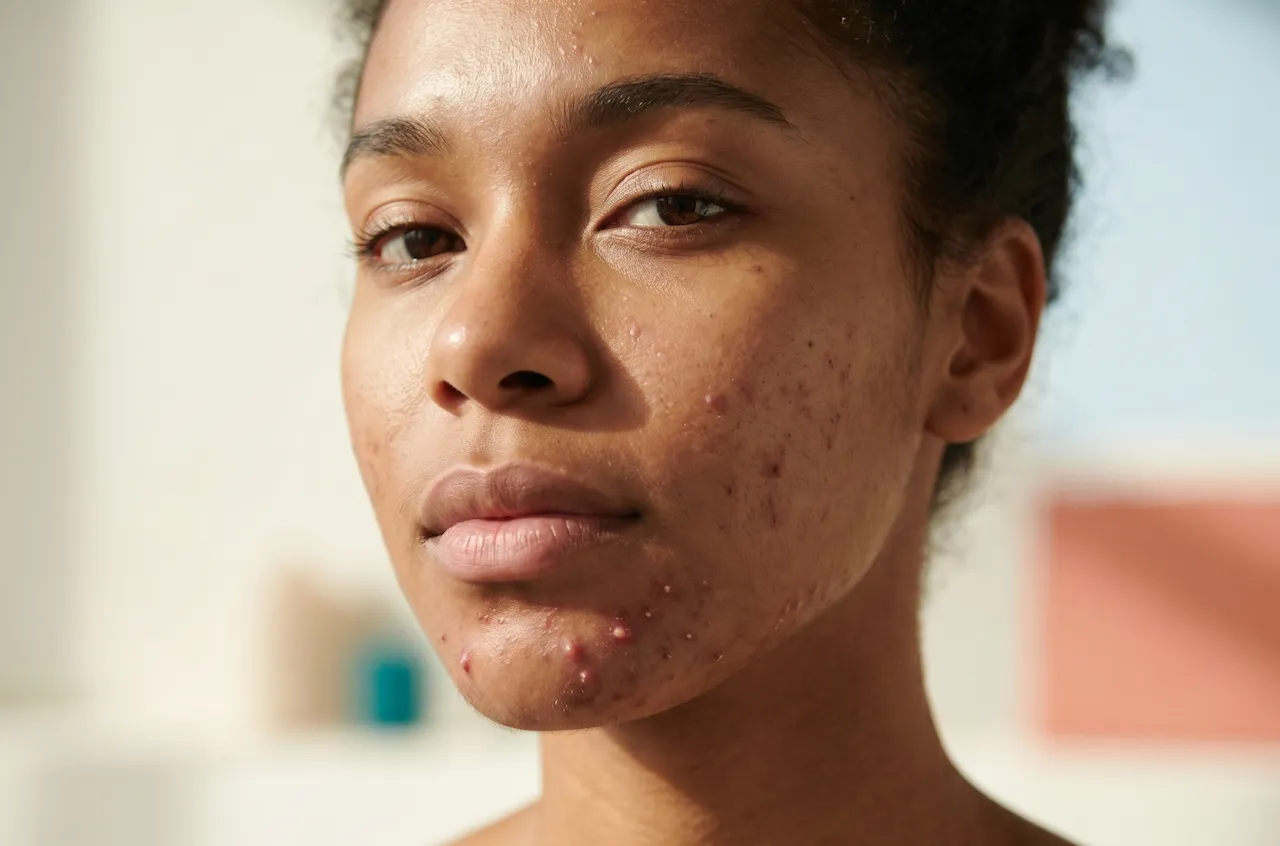
| Deep, cystic lesions | Painful, under-the-skin bumps that do not come to a head | Hormonal inflammation occurs deep within the follicle |
| Cyclical pattern | Breakouts that flare around your menstrual cycle | Hormones fluctuate predictably throughout the cycle |
| Resistant to OTC products | Benzoyl peroxide, salicylic acid, and cleansers do not make a lasting difference | Topical OTC products cannot address the internal hormonal driver |
| Adult onset or persistence | Acne that starts or continues well past the teenage years | Hormonal shifts during adulthood (stress, aging) fuel ongoing breakouts |
| Excess oiliness | Persistently oily skin, especially in the T-zone and lower face | Androgens directly stimulate sebum production |
What to expect: If you recognize three or more of these signs, there is a strong chance your acne has a hormonal component. A board-certified dermatologist can confirm this and build a treatment plan that targets the root cause — not just the surface symptoms.
What Causes Hormonal Acne?
Understanding what causes hormonal acne is the first step toward treating it effectively. Several interconnected factors are at play:
Androgens and Sebum Overproduction
Androgens — particularly testosterone and its more potent derivative, DHT — are the primary hormonal drivers of acne. These hormones bind to receptors in the sebaceous glands, signaling them to produce more oil. A 2014 review in the Journal of Clinical and Aesthetic Dermatology confirmed that androgen excess is the most common endocrine abnormality linked to acne in adult patients.
Even if your blood testosterone levels are within normal range, your skin may be hypersensitive to androgens at the receptor level. This means your oil glands respond more aggressively to the same amount of hormone, producing enough sebum to clog pores and trigger inflammation.
Hormonal Fluctuations Throughout the Menstrual Cycle
Many people who menstruate notice predictable breakouts in the week before their period. This happens because estrogen and progesterone drop in the luteal phase, giving androgens a relatively stronger influence on the skin. The result is a premenstrual flare of cystic breakouts — typically along the jawline and chin.
Stress and Cortisol
Chronic stress triggers the adrenal glands to produce cortisol, which in turn can stimulate androgen production. Research from Archives of Dermatological Research has shown a significant correlation between perceived stress levels and acne severity. This is why many people notice their skin worsening during stressful life events — exams, job changes, or relationship difficulties.
Insulin and Diet
Insulin is another hormone that can aggravate acne. High-glycemic foods (refined sugars, white bread, processed snacks) cause rapid spikes in blood sugar and insulin, which in turn stimulate androgen production and sebum output. A landmark 2007 study in the American Journal of Clinical Nutrition found that a low-glycemic diet significantly improved acne severity compared to a conventional diet over 12 weeks.
Life Transitions
Hormonal acne often intensifies during major hormonal transitions, including puberty, pregnancy, postpartum recovery, perimenopause, and after discontinuing hormonal contraception. These shifts can temporarily destabilize the hormonal balance that keeps sebum production in check.
How to Treat Hormonal Acne: Proven Prescription Options
Over-the-counter cleansers, spot treatments, and serums can help with mild acne — but hormonal acne typically requires prescription-strength treatment to address the underlying cause. Here are the most effective options, backed by clinical evidence.
Spironolactone
Spironolactone is an anti-androgen medication that has become one of the most important tools for treating hormonal acne. Originally developed as a blood pressure medication, it works by blocking androgen receptors in the skin, reducing the hormonal stimulation that drives excess oil production and breakouts.
A 2019 systematic review in the Journal of the American Academy of Dermatology found that spironolactone significantly reduced acne lesion counts, with most patients seeing meaningful improvement at doses of 50 to 200 mg daily.
Who it is best for: People with classic hormonal acne patterns — jawline breakouts, cyclical flares, and excess oiliness — who are not planning to become pregnant during treatment.
What to know:
- Most patients begin to see improvement within 2 to 3 months
- Full results typically take 3 to 6 months
- Common side effects include increased urination, lightheadedness, and breast tenderness
- It is not safe during pregnancy due to anti-androgen effects on fetal development
For a deeper look at how spironolactone works, dosing, and what to expect, read our comprehensive spironolactone guide. If you are concerned about potential side effects, our spironolactone side effects guide covers everything in detail. You can also learn how to get spironolactone online through a telehealth platform like ours.
Topical Retinoids (Tretinoin)
Tretinoin — the gold standard of topical retinoids — is a cornerstone of acne treatment, including hormonal acne. It works by accelerating skin cell turnover, preventing dead cells from clogging pores, and reducing inflammation at the cellular level.
While tretinoin does not directly address hormone levels, it is highly effective at preventing the downstream effects of hormonal sebum overproduction. Many dermatologists prescribe it alongside an anti-androgen like spironolactone for a combination approach that attacks hormonal acne from multiple angles.
What to know:
- Start with a lower concentration (0.025%) and gradually increase as your skin tolerates it
- Initial dryness, peeling, and a temporary "purge" period are normal during the first few weeks
- Always apply sunscreen during the day, as retinoids increase sun sensitivity
- Consistent use over 8 to 12 weeks is needed to see meaningful results
Our comprehensive tretinoin guide covers everything from how to start, what to expect during the adjustment period, and how to layer it into your skincare routine.
Accutane (Isotretinoin)
For persistent hormonal acne that has not responded adequately to other treatments, Accutane (isotretinoin) is often the most effective solution. Isotretinoin works by dramatically shrinking the sebaceous glands, reducing oil production by up to 80%, and fundamentally changing the skin's environment so acne cannot thrive.
A common misconception is that Accutane is only for severe cystic acne. In reality, it is an effective option for any form of persistent acne — including hormonal acne — that has not responded to other treatments. A study published in JAMA Dermatology reported that 97.4% of patients treated with isotretinoin showed improvement at 12 months, and many experience long-term remission.
What to know:
- A typical course lasts 4 to 6 months
- Most patients achieve long-term remission — around 70% do not need a second course
- Monthly blood tests and check-ins with your dermatologist are required
- People who may become pregnant must follow the iPLEDGE program
- Common side effects include dry skin, dry lips, and joint aches — your dermatologist will help you manage these
If you are curious about whether Accutane addresses the hormonal component of your acne specifically, our article on whether Accutane affects hormones is worth reading. You can also explore how spironolactone and Accutane compare to determine which might be a better fit for your situation.
What to expect: Hormonal acne treatment is not one-size-fits-all. Your dermatologist may start with spironolactone and a topical retinoid, then consider Accutane if those are not enough. At Honeydew, our providers work with you to find the right combination based on your acne severity, medical history, and goals.
Oral Antibiotics
Antibiotics like doxycycline or minocycline are sometimes prescribed as a short-term bridge to help reduce inflammation and bacterial load while longer-acting treatments (like spironolactone or tretinoin) take effect. They can bring noticeable relief within a few weeks.
However, antibiotics are not a long-term solution for hormonal acne. They do not address the hormonal root cause, and prolonged use can lead to antibiotic resistance. The American Academy of Dermatology guidelines recommend limiting oral antibiotic use for acne to 3 to 4 months, always combined with a non-antibiotic maintenance therapy like a retinoid.
Hormonal Acne Treatment Comparison
| Treatment | How It Works | Time to Results | Best For |
|---|---|---|---|
| Spironolactone | Blocks androgen receptors, reduces oil | 2-6 months | Classic hormonal pattern (jawline, cyclical) |
| Tretinoin | Speeds cell turnover, unclogs pores | 8-12 weeks | All acne types; pairs well with other Rx |
| Accutane (isotretinoin) | Shrinks oil glands, reduces sebum ~80% | 4-6 months | Persistent acne not responding to other Rx |
| Doxycycline | Reduces bacteria and inflammation | 2-4 weeks | Short-term bridge while other treatments kick in |
How to Help Hormonal Acne with Lifestyle Changes
Prescription treatments are the backbone of hormonal acne treatment, but certain lifestyle adjustments can support your skin from the inside out. Think of these as complementary strategies — they will not replace medication for moderate-to-severe hormonal acne, but they can make a real difference in how quickly you improve and how well your results hold.
Adopt a Low-Glycemic Diet
High-glycemic foods spike your blood sugar and insulin levels, which triggers a cascade of hormonal activity that worsens acne. Research consistently supports a connection between diet and acne. The 2007 study from the American Journal of Clinical Nutrition mentioned earlier showed that switching to a low-glycemic diet led to significant improvements in both acne lesion count and insulin sensitivity.
Practical steps:
- Prioritize whole grains, vegetables, lean proteins, and healthy fats
- Limit refined sugars, white bread, pasta, sugary drinks, and processed snacks
- Consider reducing dairy intake — some studies suggest a link between dairy consumption and acne severity, though the evidence is still evolving
Manage Stress
Since cortisol directly stimulates androgen production, chronic stress keeps your hormonal acne engine running. Incorporate stress-reduction practices that work for your life:
- Regular physical activity (even 30 minutes of walking daily)
- Adequate sleep — aim for 7 to 9 hours per night
- Mindfulness, meditation, or deep breathing exercises
- Setting boundaries to avoid burnout
Use the Right Skincare Products
Your skincare routine should support — not undermine — your prescription treatments:
- Cleanser: Use a gentle, non-foaming or low-foaming cleanser (look for sulfate-free formulas). Avoid harsh scrubs that strip your skin and trigger rebound oil production.
- Moisturizer: Choose a lightweight, non-comedogenic moisturizer. Even oily skin needs hydration, especially when using retinoids or Accutane.
- Sunscreen: A broad-spectrum SPF 30+ is essential, particularly if you are using tretinoin or other photosensitizing treatments. Opt for mineral or "oil-free" formulas.
- Avoid: Heavy oils, occlusive products not designed for acne-prone skin, and any product that causes stinging or irritation on treated skin.
Red flag: Be cautious of "miracle" supplements or detox products marketed for hormonal acne. Many of these have no clinical evidence behind them and can interact with prescription medications. Always discuss any supplements with your dermatologist before adding them to your routine.
How Long Does It Take to Clear Up Hormonal Acne?
One of the hardest parts of treating hormonal acne is patience. These treatments work — but they take time. Setting realistic expectations is important so you do not abandon an effective treatment prematurely.
| Treatment | When to Expect Initial Improvement | When to Expect Full Results |
|---|---|---|
| Spironolactone | 4-8 weeks | 3-6 months |
| Tretinoin | 6-8 weeks (after possible purge) | 3-4 months |
| Accutane | 4-8 weeks (after possible purge) | 4-6 months |
| Doxycycline | 2-4 weeks | 6-12 weeks (short-term use only) |
What to expect: Many treatments cause an initial "purge" — a temporary worsening of acne during the first few weeks as your skin adjusts. This is a normal part of the process and does not mean the treatment is not working. Your dermatologist can help you distinguish between a normal purge and a treatment that needs to be adjusted.
When to See a Dermatologist for Hormonal Acne
While mild acne can sometimes be managed with over-the-counter products, hormonal acne almost always benefits from professional guidance. You should see a dermatologist if:
- Your acne is primarily deep, cystic, or nodular
- Over-the-counter products have not improved your skin after 2 to 3 months of consistent use
- Your breakouts follow a cyclical, hormonal pattern
- Acne is leaving behind dark marks (post-inflammatory hyperpigmentation) or scars
- Your skin is affecting your confidence, mood, or daily life
- You are interested in prescription treatments like spironolactone or Accutane
The emotional toll of persistent acne is real. Studies have linked acne to increased rates of anxiety, depression, and reduced quality of life. Seeking treatment is not vanity — it is healthcare.
Red flag: If you are experiencing sudden, severe acne alongside other symptoms like irregular periods, unexplained weight changes, or excessive hair growth, see a healthcare provider promptly. These could be signs of an underlying endocrine condition like polycystic ovary syndrome (PCOS) that requires additional evaluation beyond acne treatment.
How Honeydew Can Help with Hormonal Acne
At Honeydew, we specialize in treating persistent acne — including hormonal acne. Our team of board-certified dermatologists, nurse practitioners, and physician assistants understands that hormonal breakouts require more than a generic skincare recommendation. Here is what we offer:
- Board-certified dermatologists: You will work with experienced providers who can diagnose the hormonal component of your acne and prescribe the right treatment
- Same-day or next-day appointments: No waiting weeks for a dermatology visit
- Personalized treatment plans: Whether that means spironolactone, tretinoin, Accutane, or a combination approach, we tailor your plan to your skin
- Ongoing support: Regular follow-ups to track your progress and adjust your treatment as needed
- Affordable pricing: With an annual plan, our memberships start at $25/month, and Accutane care starts at $50/month
- Over 100,000 acne cases treated: We have deep expertise in exactly what you are dealing with
You do not have to keep fighting hormonal acne alone. We are here to help you build a plan that actually works.
.webp)

Medically Reviewed by
Joel Spitz, MD
Co-Founder & Chief Medical Officer, Board Certified Dermatologist