Key Takeaways

If you have ever typed "what does chin acne mean" into a search bar, you are not alone. Breakouts along the chin and jawline are among the most common adult acne patterns, and they have a way of showing up at the exact wrong time — right before a big event, during a stressful week, or in a frustratingly predictable monthly cycle. It is natural to wonder whether your skin is trying to tell you something.
The internet is full of face mapping charts that assign a specific internal cause to every zone of your face. Chin acne equals hormones. Forehead acne equals digestion. Cheek acne equals your lungs. These maps are eye-catching and satisfying in their simplicity, but the reality is more nuanced. While there is genuine dermatological evidence that breakout location can offer clues about what is driving your acne, face mapping as a diagnostic system is a blend of ancient tradition and modern oversimplification.
In this article, we will break down what chin acne actually means from a clinical perspective, examine what face mapping gets right (and wrong), explain the real hormonal connection that makes the chin a breakout hotspot, and cover what to do about it.
Quick Answer: What Does Chin Acne Mean?
Chin acne most commonly indicates hormonal activity. The chin and jawline have a high density of oil glands that are sensitive to androgen hormones (like testosterone and DHT). When these hormones fluctuate — around your menstrual cycle, during periods of stress, or due to underlying conditions like PCOS — the oil glands on your chin respond by overproducing sebum, leading to clogged pores and deep, inflammatory breakouts.
What face mapping gets right: The chin-hormone connection is real and well-supported by dermatological research.
What face mapping gets wrong: It oversimplifies by suggesting every face zone maps to a specific organ. Acne is multifactorial — genetics, bacteria, skincare products, and external irritants all play a role alongside hormones.
What Is Face Mapping?
Face mapping is the idea that the location of your breakouts reveals what is happening inside your body. Different versions of face mapping have circulated for centuries, and the concept has roots in both traditional Chinese medicine (TCM) and Ayurvedic practice, where different facial zones were believed to correspond to specific organ systems.
In the TCM tradition, the face was divided into regions linked to the lungs, liver, kidneys, stomach, and reproductive organs. Breakouts or skin changes in a specific zone were interpreted as signs of imbalance in the corresponding organ. Modern face mapping charts — the kind you see on skincare blogs and social media — are largely adapted from these ancient frameworks, though they often strip away the broader diagnostic context that practitioners originally used.
The Modern Face Mapping Chart
A typical modern face mapping chart looks something like this:
| Face Zone | Face Mapping Claim | Dermatological Reality |
|---|---|---|
| Forehead | Digestive issues, liver problems | High oil production, hair product transfer, friction from hats/headbands |
| Between the brows | Liver or food sensitivities | Dense oil glands in the T-zone, eyebrow product buildup |
| Cheeks | Respiratory issues, allergies | Phone/pillowcase contact, mask friction, rosacea overlap |
| Nose | Heart or blood pressure issues | Highest concentration of oil glands on the face, large pore size |
| Chin and jawline | Hormonal imbalance, reproductive issues | Androgen-sensitive oil glands, hormonal fluctuations, face touching |
What Face Mapping Gets Right
Face mapping is not entirely wrong — it just conflates correlation with causation and oversimplifies a complex picture. The one area where it holds up best is the chin and jawline.
There is solid clinical evidence that the lower third of the face is disproportionately affected by hormonal acne. A 2014 review in the Journal of Clinical and Aesthetic Dermatology confirmed that adult acne — particularly in people who menstruate — tends to concentrate along the chin, jawline, and lower cheeks, and this distribution is closely linked to androgen excess. The sebaceous glands in this zone are anatomically more sensitive to androgens than glands elsewhere on the face, which is why hormonal fluctuations produce breakouts specifically here.
So when a face mapping chart says "chin acne = hormones," it is onto something. The chin really is a hormonal hotspot.
What Face Mapping Gets Wrong
The problem is that face mapping takes a grain of truth and builds an entire diagnostic system around it — one that is not supported by evidence. There are no controlled clinical studies demonstrating that forehead acne reliably indicates digestive problems, or that cheek breakouts point to respiratory issues. These claims have not been validated in peer-reviewed dermatological literature.
A 2019 study published in the Journal of the European Academy of Dermatology and Venereology examined acne distribution patterns in over 900 patients and found that breakout location was most strongly associated with age, sebum production levels, and skin type — not with specific internal organ function. Teenage acne tended to cluster on the forehead and central face (the T-zone), while adult acne gravitated toward the lower face, regardless of the patient's digestive health, lung function, or other internal factors.
The takeaway: breakout location can offer useful clues, especially when it comes to the chin and hormones. But face mapping charts that promise to diagnose your internal health based on pimple placement are not reliable diagnostic tools.
What to expect: If you have been using face mapping to self-diagnose, do not feel bad about it — the concept is compelling because it offers a satisfying explanation for something frustrating. But a dermatologist can give you a much clearer picture of what is actually driving your breakouts, whether the cause is hormonal, bacterial, environmental, or a combination.
What Does Chin Acne Mean? The Hormonal Connection
Setting aside the broader claims of face mapping, the connection between chin acne and hormones is one of the most well-established patterns in dermatology. Understanding why the chin is a hormonal target zone requires a closer look at the biology of your skin.
Androgens and the Lower Face
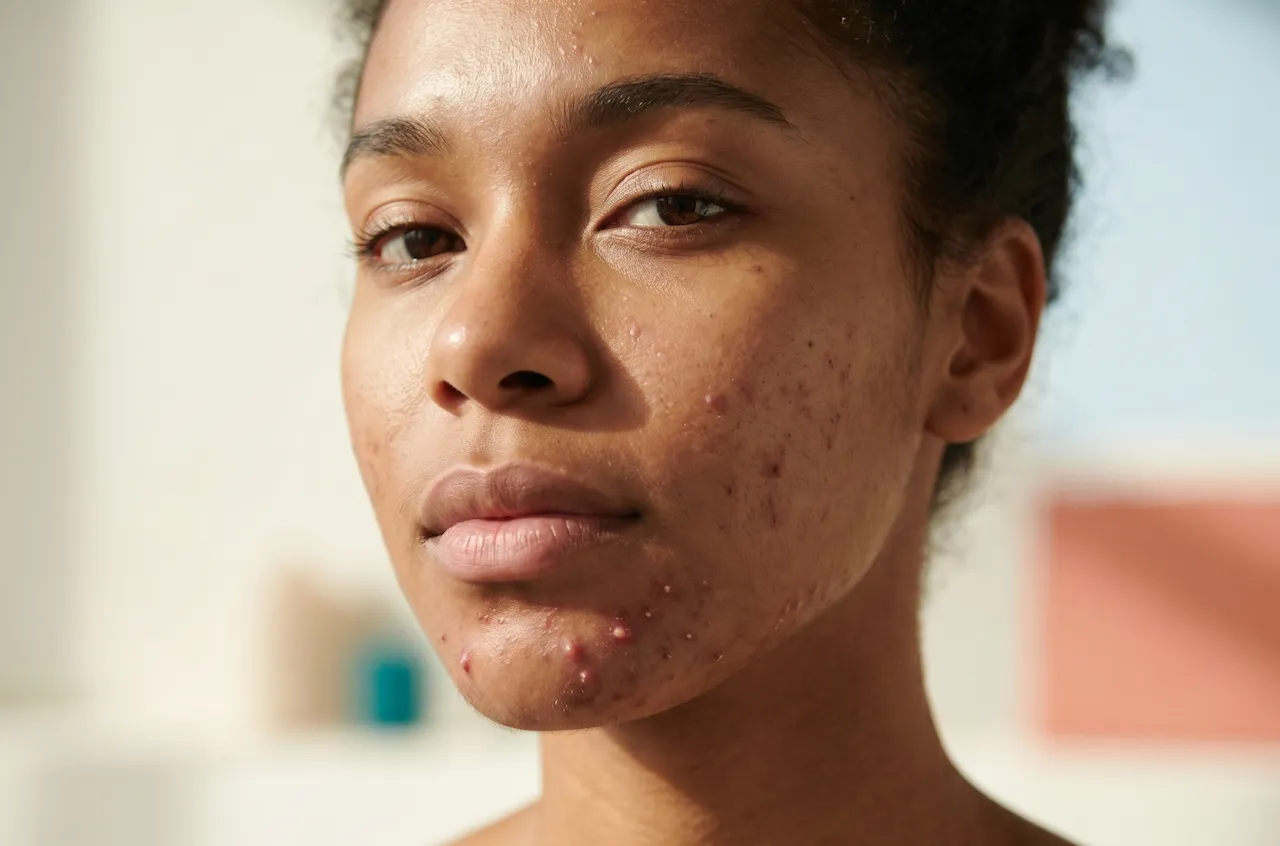
Androgens — a group of hormones that includes testosterone, dihydrotestosterone (DHT), and dehydroepiandrosterone sulfate (DHEA-S) — directly stimulate the sebaceous (oil) glands in your skin. All skin has sebaceous glands, but the density and androgen sensitivity of these glands varies by location. The chin, jawline, and perioral area have a particularly high concentration of androgen-responsive oil glands.
When androgen levels rise — or when your skin's oil glands become more sensitive to normal androgen levels — the glands in the lower face respond by ramping up sebum production. That excess oil mixes with dead skin cells, creating the perfect environment for pore blockage and bacterial overgrowth. The result is the deep, inflammatory acne that so many people experience along the chin and jaw.
A 2014 study in Dermato-Endocrinology demonstrated that androgen receptors are significantly more concentrated in facial skin compared to other body sites, with the lower face showing particularly high receptor density. This explains why hormonal shifts produce visible effects on the chin before (or instead of) other areas.
What Causes the Hormonal Fluctuations?
Several common situations can trigger the androgen fluctuations that lead to chin breakouts:
- Menstrual cycle changes: Many people notice chin breakouts flaring in the 7 to 10 days before their period, when progesterone rises and has a mild androgenic effect. A study in the Journal of the American Academy of Dermatology found that up to 63% of people who menstruate experience premenstrual acne flares, predominantly along the lower face.
- Polycystic ovary syndrome (PCOS): PCOS involves elevated androgen levels and is one of the most common endocrine disorders, affecting an estimated 8 to 13% of people of reproductive age according to the World Health Organization. Persistent chin and jawline acne is one of its hallmark skin manifestations.
- Chronic stress: Stress triggers the adrenal glands to produce more cortisol and DHEA-S. A 2017 study in Clinical, Cosmetic and Investigational Dermatology confirmed that psychological stress significantly worsens acne severity, likely through this hormonal pathway.
- Perimenopause and menopause: As estrogen levels decline, the relative influence of androgens increases — which is why some people develop chin acne for the first time in their 40s or 50s.
- Pregnancy: The dramatic hormonal shifts during pregnancy — including rising progesterone and increased androgen production — can trigger or worsen chin acne. (More on this below.)
For a deeper dive into how hormonal acne develops and how to treat it, see our complete guide to hormonal acne.
Does Chin Acne Mean Pregnancy?
This is one of the most searched questions around chin acne — and it is understandable why. If you have heard that chin breakouts are tied to hormones and reproductive health, it is a short leap to wondering whether a sudden chin breakout could be an early sign of pregnancy.
Here is the reality: chin acne alone is not a reliable indicator of pregnancy. While pregnancy does cause significant hormonal shifts that can trigger acne (particularly during the first trimester, when androgen levels rise), many other factors cause the exact same breakout pattern. Premenstrual hormonal changes, stress, dietary shifts, and even switching skincare products can all produce chin acne that looks identical to pregnancy-related breakouts.
That said, pregnancy acne is common. A review in the American Journal of Clinical Dermatology found that acne affects an estimated 42% of pregnant people, with the first and second trimesters being the most common onset periods. The chin and jawline are frequently affected because the progesterone and androgen surges of early pregnancy stimulate the same androgen-sensitive oil glands we have been discussing.
Red flag: If you suspect you might be pregnant, take a pregnancy test rather than interpreting a chin breakout as a signal. This is especially important if you are considering acne treatments, since several common prescription acne medications — including isotretinoin (Accutane), spironolactone, and certain topical retinoids — are not safe to use during pregnancy. A dermatologist can help you find pregnancy-safe alternatives if needed.
For more on this topic, see our article on whether acne is a sign of pregnancy.
What Does Chin Acne Mean Beyond Hormones?
While hormones are the most common driver, chin acne is not always purely hormonal. Several non-hormonal factors can trigger or worsen breakouts in this specific zone — and understanding them matters because the treatment approach differs.
Mechanical Irritation
The chin is uniquely exposed to friction and pressure. Resting your chin in your hands, mask straps, chin guards from helmets, and even instrument players pressing against the chin (like violinists) can all cause acne mechanica — breakouts triggered by sustained pressure and friction. A 2021 study in the Journal of the American Academy of Dermatology documented the significant rise in chin and lower-face acne associated with prolonged mask use during the pandemic.
Bacterial Transfer
Your hands, your phone screen, and even your pillowcase carry bacteria that transfer to the chin with every touch. For people whose chin skin is already hormonally predisposed to breakouts, this added bacterial load can push a manageable tendency into active acne.
Skincare and Cosmetic Products
Heavy moisturizers, thick foundations, and lip products that extend past the lip line can clog the pores around the chin. Toothpaste containing sodium lauryl sulfate has also been linked to perioral acne. These product-driven breakouts tend to look different from hormonal acne — more small, surface-level bumps rather than deep cysts — but they can co-exist with hormonal breakouts and make them harder to resolve.
Diet
While diet does not directly cause chin-specific acne, high-glycemic foods can worsen hormonal acne overall. A 2007 study in the American Journal of Clinical Nutrition showed that a low-glycemic diet significantly reduced acne severity over 12 weeks, likely because high-glycemic foods spike insulin, which in turn stimulates androgen production and oil output. If your chin acne is hormonally driven, dietary factors can amplify the problem.
What to expect: Most people with chin acne have multiple contributing factors — hormonal activity plus one or more external triggers. A dermatologist can help you untangle what is driving your specific breakouts and build a treatment plan that addresses all the relevant causes, not just the most obvious one.
What Breakouts in Other Face Zones Might Indicate
While face mapping as a complete system is not evidence-based, dermatologists do recognize that breakout location can offer useful clinical clues. Here is what research actually supports about acne in different zones — distinct from the organ-based claims of traditional face mapping.
Forehead
Forehead acne is most commonly associated with excess oil production in the T-zone, particularly during puberty and adolescence when sebum output peaks. In adults, forehead breakouts are often linked to external factors like hair product transfer (pomade acne), friction from hats or headbands, and stress-related oil overproduction. The forehead does not reliably indicate digestive issues despite what face mapping charts claim.
Cheeks
Cheek acne in adults is frequently associated with external contact — phone screens pressed against the face, dirty pillowcases, and mask friction. Cheek breakouts can also overlap with rosacea, a separate skin condition that produces redness and bumps that can mimic acne. If your cheek "acne" appears alongside persistent redness or flushing, a dermatologist should evaluate whether rosacea is involved.
Nose
The nose has the highest concentration of sebaceous glands on the face, which is why blackheads and enlarged pores are so common in this area. Nose breakouts are generally related to excess sebum and are not a meaningful indicator of cardiovascular health, despite face mapping claims to the contrary.
Around the Mouth (Perioral Area)
Breakouts concentrated around the mouth — sometimes extending to the chin — may indicate perioral dermatitis rather than typical acne. Perioral dermatitis is a distinct condition often triggered by topical steroid use, fluorinated toothpaste, or heavy occlusive skincare products. It requires different treatment than acne, so accurate diagnosis matters. Not sure whether your breakouts are acne or something else? Our guide on decoding the origins of your acne can help.
When Chin Acne Might Signal a Medical Condition
In most cases, chin acne is a cosmetic and quality-of-life concern rather than a sign of a serious medical problem. But persistent, severe chin and jawline acne — especially when combined with other symptoms — can sometimes point to an underlying endocrine condition that warrants evaluation.
Talk to a Provider if Your Chin Acne Comes with:
- Irregular or absent menstrual periods
- Unexplained weight gain or difficulty losing weight
- Excessive hair growth on the face, chest, or abdomen (hirsutism)
- Thinning hair on the scalp
- Darkening of the skin in folds (acanthosis nigricans)
- Acne that started or dramatically worsened in adulthood without an obvious trigger
These symptoms together may suggest PCOS, adrenal hyperplasia, or other androgen-excess conditions. A dermatologist can evaluate whether hormone testing is appropriate and coordinate care with an endocrinologist if needed.
Red flag: Chin acne that appears suddenly and severely in an adult — especially someone who has never had significant acne before — deserves medical attention. While it is usually hormonal, a rapid onset can occasionally be linked to medication side effects (such as certain supplements or steroids), endocrine tumors, or other conditions that a provider should rule out.
How to Treat Chin Acne Based on What It Means
Once you understand what is driving your chin acne, you can match your treatment approach to the actual cause. A one-size-fits-all approach rarely works for chin breakouts precisely because the causes vary.
| If Your Chin Acne Is Caused By | Most Effective Approach |
|---|---|
| Hormonal fluctuations (cyclical, deep, cystic) | Prescription anti-androgen therapy (spironolactone), topical retinoids, or Accutane for persistent cases |
| Mechanical irritation (masks, chin-resting, helmets) | Reduce friction source, gentle cleansing, non-comedogenic barrier cream, topical benzoyl peroxide |
| Product-related clogging (cosmetics, lip products) | Switch to non-comedogenic products, simplify skincare routine, topical retinoid |
| Bacterial/inflammatory (surface-level, widespread) | Benzoyl peroxide, topical antibiotics (clindamycin), short-term oral antibiotics |
| Multiple factors combined (hormonal + external triggers) | Combination therapy tailored by a dermatologist |
For a detailed breakdown of treatment options and how to choose between them, see our complete guide to getting rid of chin acne.
What to expect: If your chin acne is hormonal, over-the-counter products are unlikely to provide lasting relief on their own. The good news is that prescription treatments like spironolactone are highly effective for hormonal chin acne — a 2019 systematic review found significant lesion reduction in most patients. Most people see meaningful improvement within a few months of starting the right treatment.
How We Can Help
At Honeydew, we treat acne every day — and chin acne is one of the breakout patterns we see most often. Our team of board-certified dermatologists, nurse practitioners, and physician assistants can help you figure out what your chin acne actually means, whether hormonal testing is warranted, and which treatment approach will give you the best results.
We prescribe spironolactone, tretinoin, doxycycline, topical antibiotics, and Accutane based on your specific situation — not a one-size-fits-all protocol. And because we offer same-day or next-day appointments, you do not have to wait weeks to get started.
With an annual plan, memberships start at $25/month, and Accutane care starts at $50/month if that is the right path for you.
.webp)

Medically Reviewed by
Joel Spitz, MD
Co-Founder & Chief Medical Officer, Board Certified Dermatologist