Key Takeaways

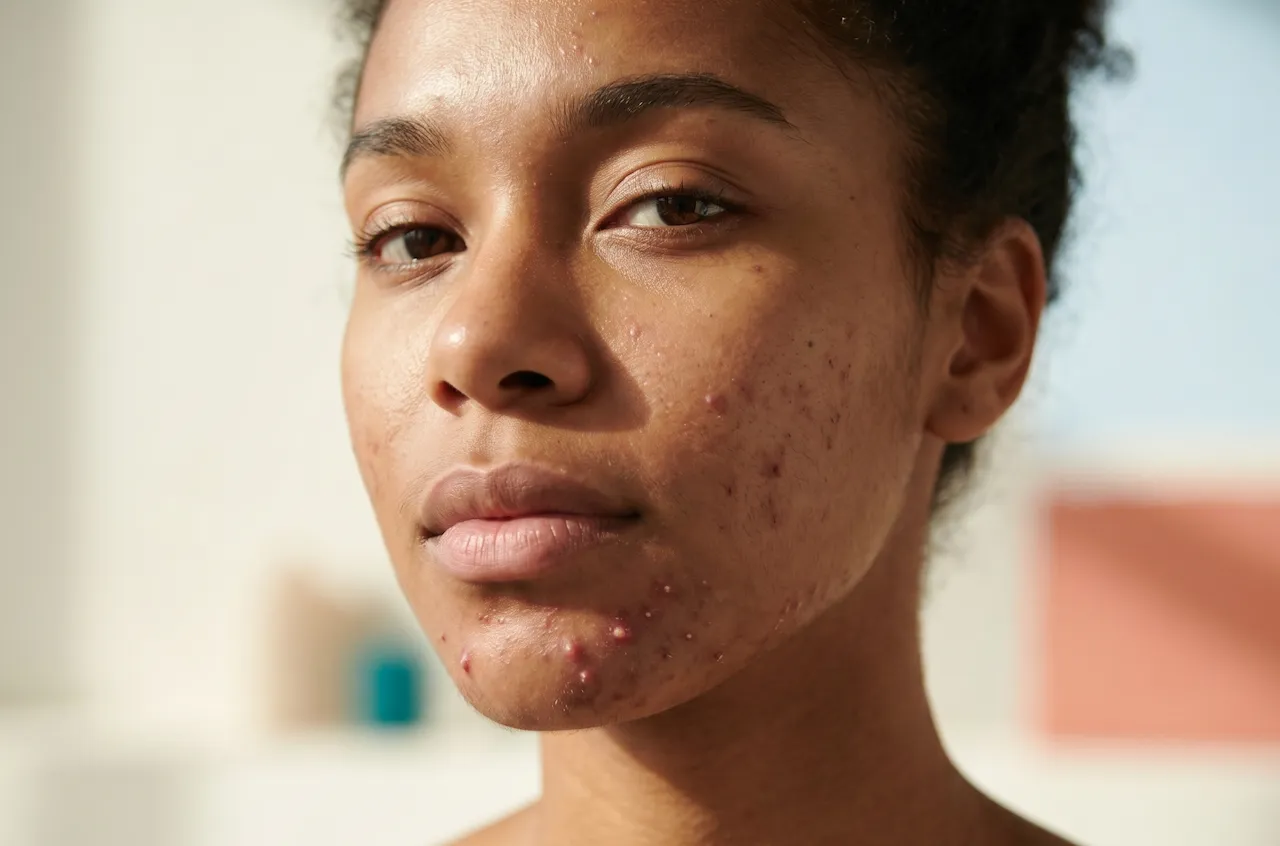
If your breakouts keep showing up in the same spot — right along your chin and lower jawline — you are not imagining a pattern. Chin acne is one of the most location-specific forms of acne, and there is a reason it keeps coming back to the same place. For most people, the answer comes down to hormones.
Acne along the chin and jawline is incredibly common, particularly among adults. While teenage acne tends to spread across the forehead and cheeks, adult acne gravitates toward the lower third of the face. A study published in the Journal of the American Academy of Dermatology found that acne affects up to 22% of adults, and the chin and jawline are among the most frequently affected areas in this age group.
The frustrating part is that chin acne rarely responds to the same treatments that work for other types of breakouts. You can layer on benzoyl peroxide washes, salicylic acid serums, and expensive spot treatments — and the same deep, painful bumps keep returning month after month. That is because the root cause is not on the surface of your skin. It is happening inside your body.
Quick Answer: What Causes Chin Acne?
Chin acne is most often hormonal. The chin and jawline have a high concentration of androgen-sensitive oil glands, making this area especially prone to breakouts driven by hormonal fluctuations.
Most effective treatments include:
- Spironolactone — blocks the androgen hormones that trigger chin breakouts (learn more)
- Topical retinoids (tretinoin) — prevent clogged pores and reduce inflammation
- Accutane (isotretinoin) — for persistent chin acne that has not responded to other treatments
- Lifestyle adjustments — reducing face touching, mask friction, and dietary triggers
A dermatologist can determine the exact cause and build a targeted plan. Start your consultation with Honeydew.
What Causes Chin Acne?
Understanding what is behind your chin acne is the first step toward getting rid of it. While there are several potential triggers, the most common cause — by far — is hormonal activity. Here is a breakdown of the key factors.
Hormonal Fluctuations
The number one reason you get acne specifically on your chin is anatomy. The lower face — your chin, jawline, and the area around your mouth — has a particularly high density of sebaceous glands that are sensitive to androgens (hormones like testosterone and DHT). When these hormones fluctuate or spike, the oil glands in your chin respond more aggressively than glands elsewhere on your face, producing excess sebum that clogs pores and triggers deep, inflammatory breakouts.
This is why chin acne is strongly associated with:
- Premenstrual flares (breakouts in the 7 to 10 days before a period)
- Polycystic ovary syndrome (PCOS)
- Perimenopause and menopause
- Chronic stress, which raises cortisol and indirectly stimulates androgen production
- Post-pregnancy hormonal shifts
A 2014 review in the Journal of Clinical and Aesthetic Dermatology confirmed that androgen excess is the most common endocrine abnormality linked to adult acne, and the lower face distribution is one of the hallmark patterns.
For a deeper dive into the hormonal mechanisms behind breakouts, see our complete guide to hormonal acne.
Touching Your Face
Think about how often you rest your chin in your hand during the day — while working at a desk, scrolling on your phone, or sitting in a meeting. Your hands carry bacteria, oil, and debris that transfer directly to the skin on your chin every time you touch it. Over the course of a day, this repeated contact can clog pores and introduce bacteria into follicles that are already prone to hormonal inflammation.
This is one of the more underestimated causes of chin acne because it happens unconsciously. But for people whose chin skin is already hormonally sensitized, the added irritation from face-touching can be the difference between a manageable breakout and a persistent one.
Mask-Related Acne (Maskne)
If your chin acne worsened during or after the pandemic years, you are not alone. "Maskne" — acne caused or aggravated by face masks — primarily affects the chin, jawline, and the area around the mouth. A 2021 study in the Journal of the American Academy of Dermatology found that mask-related skin issues, including acne, affected a significant percentage of healthcare workers and the general public during periods of prolonged mask use.
Masks create a warm, humid microenvironment against your skin that traps sweat, oil, and bacteria. The friction from the mask fabric also irritates the skin barrier, leading to a condition dermatologists call acne mechanica — breakouts caused by pressure and friction rather than (or in addition to) hormonal factors.
Shaving Irritation
For people who shave their face, the chin is a common site for razor bumps and ingrown hairs that can mimic or worsen acne. Shaving creates micro-abrasions in the skin that allow bacteria to enter the follicle, and the curving regrowth of shaved hairs can become trapped under the skin, leading to painful, inflamed bumps. This is especially common along the chin and neck where hair grows at sharper angles.
If your chin "acne" flares specifically after shaving, irritation and ingrown hairs may be contributing — though hormonal factors can also be at play simultaneously.
Skincare and Cosmetic Products
Heavy moisturizers, foundations, and lip products can migrate to the chin area and clog pores. Products that are comedogenic (pore-clogging) are especially problematic on the chin, where the oil glands are already overactive. Lip balms and glosses that extend past the lip line, chin straps from helmets, and even certain toothpaste ingredients (sodium lauryl sulfate) have been linked to perioral breakouts that include the chin.
Is Chin Acne Hormonal?
In most cases — yes. The chin is one of the most reliable indicators of a hormonal acne pattern. But not all chin acne is purely hormonal, and understanding the difference matters because it determines how you should treat it.
Here is how to tell whether your chin acne is likely hormonal.
| Clue | Likely Hormonal | Likely Non-Hormonal |
|---|---|---|
| Timing | Cyclical — flares before your period or during stressful times | Random or constant, no clear pattern |
| Type of lesion | Deep, cystic, painful bumps under the skin | Surface-level whiteheads, blackheads, or small papules |
| Response to OTC products | Minimal or no lasting improvement | Some improvement with benzoyl peroxide or salicylic acid |
| Age | Persists or begins in your 20s, 30s, or later | More typical of teen acne across the full face |
| Associated symptoms | Oily skin, irregular periods, or other hormonal signs | Linked to a specific trigger (mask, new product, shaving) |
Of course, hormonal and non-hormonal factors often overlap. You might have an underlying hormonal tendency that is made worse by mask friction or a comedogenic moisturizer. A dermatologist can help you sort out what is driving your breakouts and build a treatment plan that addresses all the contributing factors.
Not sure whether your acne is hormonal or bacterial? Our guide on decoding the origins of your acne can help you figure it out.
What to expect: If your chin acne is hormonal, over-the-counter products alone will not clear it up long-term. You will likely need a prescription treatment that addresses the hormonal root cause. The good news is that hormonal chin acne responds very well to targeted medications like spironolactone — most people see significant improvement within a few months.
How to Get Rid of Chin Acne: Treatment Options
The right treatment depends on what is causing your chin acne. For hormonal chin acne — the most common type — prescription medications are the most effective path to lasting results. Here are your options, from the most targeted hormonal treatments to supportive topical therapies.
Spironolactone
If your chin acne follows a hormonal pattern, spironolactone is often the most effective single treatment. It works by blocking androgen receptors in the skin, directly reducing the hormonal stimulation that causes your chin's oil glands to overproduce sebum.
A 2019 systematic review in the Journal of the American Academy of Dermatology found that spironolactone significantly reduced acne lesion counts, with most patients seeing meaningful improvement at doses of 50 to 200 mg daily. For chin-specific breakouts driven by androgens, it directly targets the underlying cause.
- Time to results: Initial improvement in 4 to 8 weeks; full results in 3 to 6 months
- Best for: Cyclical chin breakouts, deep cystic chin acne, persistent oiliness
- Important note: Not safe during pregnancy due to anti-androgen effects on fetal development
For a complete look at how spironolactone works, dosing, and side effects, read our comprehensive spironolactone guide.
Topical Retinoids (Tretinoin)
Tretinoin is a prescription-strength retinoid that accelerates skin cell turnover, preventing dead cells from accumulating and clogging the pores on your chin. It also reduces inflammation at the cellular level and can help fade the dark marks (post-inflammatory hyperpigmentation) that chin acne often leaves behind.
While tretinoin does not directly address hormones, it is highly effective at preventing the pore-clogging that results from hormonal oil overproduction. Many dermatologists prescribe it alongside spironolactone for a combination approach — one medication targets the hormonal root cause while the other keeps the pores clear on the surface.
- Time to results: 8 to 12 weeks of consistent use
- Best for: All types of chin acne; pairs well with anti-androgen treatments
- Important note: Start with a lower strength (0.025%) and always wear sunscreen, as retinoids increase sun sensitivity
Accutane (Isotretinoin)
For persistent chin acne that has not responded to spironolactone, topical retinoids, or other treatments, Accutane (isotretinoin) is one of the most effective options available. It works by dramatically shrinking the sebaceous glands and reducing oil production by up to 80% — fundamentally changing the skin environment so acne cannot sustain itself.
A common misconception is that Accutane is reserved for the most extreme cases. In reality, it is an effective option for any form of persistent acne — including recurring chin breakouts — that has not responded to other treatments. A study in JAMA Dermatology reported that 97.4% of patients treated with isotretinoin showed improvement at 12 months, with many experiencing long-term remission.
- Time to results: 4 to 6 months for a full course
- Best for: Chin acne that keeps coming back despite other prescription treatments
- Important note: Requires monthly blood tests and dermatologist check-ins; people who may become pregnant must follow the iPLEDGE program
Topical Antibiotics and Benzoyl Peroxide
For milder chin acne — or as an add-on to the treatments above — topical antibiotics (like clindamycin) combined with benzoyl peroxide can reduce bacterial load and inflammation on the surface of the skin. These are often most useful as part of a broader regimen rather than as standalone solutions for hormonal chin acne.
Oral Antibiotics (Short-Term)
Antibiotics like doxycycline can provide relatively fast relief from inflamed chin acne, typically within 2 to 4 weeks. However, the American Academy of Dermatology guidelines recommend limiting oral antibiotic use for acne to 3 to 4 months to avoid antibiotic resistance. They work best as a short-term bridge while longer-acting treatments like spironolactone take effect.
Treatment Comparison for Chin Acne
| Treatment | How It Helps Chin Acne | Time to Results | Addresses Root Cause? |
|---|---|---|---|
| Spironolactone | Blocks androgens that overstimulate chin oil glands | 2-6 months | Yes — targets hormonal driver |
| Tretinoin | Prevents pore clogging, reduces inflammation | 8-12 weeks | Partially — prevents downstream effects |
| Accutane | Shrinks oil glands, reduces sebum by ~80% | 4-6 months | Yes — structural change to oil glands |
| Doxycycline | Reduces bacteria and inflammation quickly | 2-4 weeks | No — short-term bridge only |
| Topical antibiotics + BPO | Kills surface bacteria, reduces mild inflammation | 4-8 weeks | No — surface-level support |
Red flag: If you have been cycling through over-the-counter products for months without lasting improvement, it is a sign that your chin acne has a deeper cause that topical products cannot reach. Continuing to layer on harsh spot treatments can actually damage your skin barrier and make breakouts worse. A dermatologist can help you break the cycle with the right prescription approach.
How to Prevent Chin Acne
While prescription treatments address the root cause of hormonal chin acne, these daily habits can reduce the external triggers that make breakouts worse — and help your treatment work more effectively.
Keep Your Hands Off Your Chin
This sounds simple, but it is one of the most impactful changes you can make. Pay attention to how often you rest your chin in your hands throughout the day. Every touch transfers oil, bacteria, and irritants to the skin. If you catch yourself doing it frequently, try keeping a stress ball or fidget object at your desk as a substitute.
Clean Your Phone Screen
Your phone screen accumulates bacteria throughout the day, and if you hold it against your chin or lower face during calls, you are pressing that bacteria directly into pores that are already prone to inflammation. Wipe your phone screen with an antibacterial wipe daily, or use speakerphone and earbuds when possible.
Manage Mask-Related Breakouts
If you still wear a mask regularly — or if your job requires one — these steps can help minimize maskne on the chin:
- Use a clean mask every day (or switch to a fresh one partway through your shift)
- Choose masks made from smooth, breathable fabrics like silk or cotton
- Apply a lightweight, non-comedogenic moisturizer before putting on your mask to reduce friction
- Wash your face as soon as you remove your mask at the end of the day
Adjust Your Shaving Routine
If shaving aggravates your chin acne:
- Use a single-blade razor or electric trimmer to reduce irritation
- Shave in the direction of hair growth, not against it
- Apply a gentle, fragrance-free shaving gel or cream
- Avoid alcohol-based aftershaves that can dry and irritate the skin
Choose Non-Comedogenic Products
Review everything that touches your chin area — moisturizers, sunscreens, foundations, lip products. Look for "non-comedogenic" or "oil-free" on the label. Be especially cautious with heavy foundations or primers that can build up in the pores along the chin throughout the day.
Support Your Skin from the Inside
Certain lifestyle factors can amplify the hormonal signals that drive chin acne:
- Diet: High-glycemic foods (refined sugars, white bread, processed snacks) spike insulin, which stimulates androgen production. A 2007 study in the American Journal of Clinical Nutrition showed that a low-glycemic diet significantly improved acne severity over 12 weeks.
- Stress management: Chronic stress raises cortisol, which fuels androgen production and oil output. Regular exercise, adequate sleep (7 to 9 hours), and stress-reduction practices can make a meaningful difference.
- Sleep hygiene: Change your pillowcase at least once a week. If you sleep on your side or stomach, your chin presses into the fabric for hours, trapping oil and bacteria against the skin.
What to expect: Prevention strategies work best alongside prescription treatment — not as a replacement for it. Think of them as force multipliers. A good skincare routine and smart daily habits will help your medication work faster and keep your results more stable over time.
When to See a Dermatologist for Chin Acne
Not all chin acne requires a dermatologist visit. Occasional, mild breakouts that respond to basic skincare can often be managed on your own. But you should see a dermatologist if:
- Your chin acne is deep, cystic, or painful
- Breakouts follow a cyclical or predictable hormonal pattern
- Over-the-counter treatments have not worked after 2 to 3 months of consistent use
- Your chin acne is leaving behind dark marks or scars
- You suspect a hormonal condition like PCOS may be contributing
- Your breakouts are affecting your confidence or quality of life
The emotional impact of persistent chin acne is real — and valid. Research has linked acne to increased rates of anxiety, depression, and reduced quality of life. Acne on the chin is particularly hard to conceal and is visible during conversations, on video calls, and in photos. Seeking treatment is not about vanity — it is about feeling like yourself again.
Red flag: If your chin acne appears alongside other symptoms like irregular periods, unexplained weight changes, or excessive hair growth, talk to a healthcare provider. These could indicate an underlying endocrine condition such as PCOS that needs evaluation beyond acne treatment alone.
How Honeydew Can Help with Chin Acne
At Honeydew, we treat acne every day — and chin acne is one of the most common patterns we see. Our team of board-certified dermatologists, nurse practitioners, and physician assistants understands that stubborn chin breakouts require more than a generic cleanser recommendation. Here is how we can help:
- Expert diagnosis: We will help you determine whether your chin acne is hormonal, caused by external factors, or both — and build a plan that targets all the contributing causes
- Prescription treatments that work: Our providers prescribe spironolactone, tretinoin, doxycycline, topical antibiotics, and Accutane based on your specific situation
- Same-day or next-day appointments: No waiting weeks to start treatment
- Ongoing follow-ups: We monitor your progress and adjust your plan as your skin responds
- Affordable pricing: With an annual plan, memberships start at $25/month, and Accutane care starts at $50/month
- Over 100,000 acne cases treated: We have the experience to know what works for chin-specific breakouts
You do not have to keep guessing with products that are not working. We are here to help you build a treatment plan based on what is actually causing your chin acne.
.webp)

Medically Reviewed by
Joel Spitz, MD
Co-Founder & Chief Medical Officer, Board Certified Dermatologist