Key Takeaways

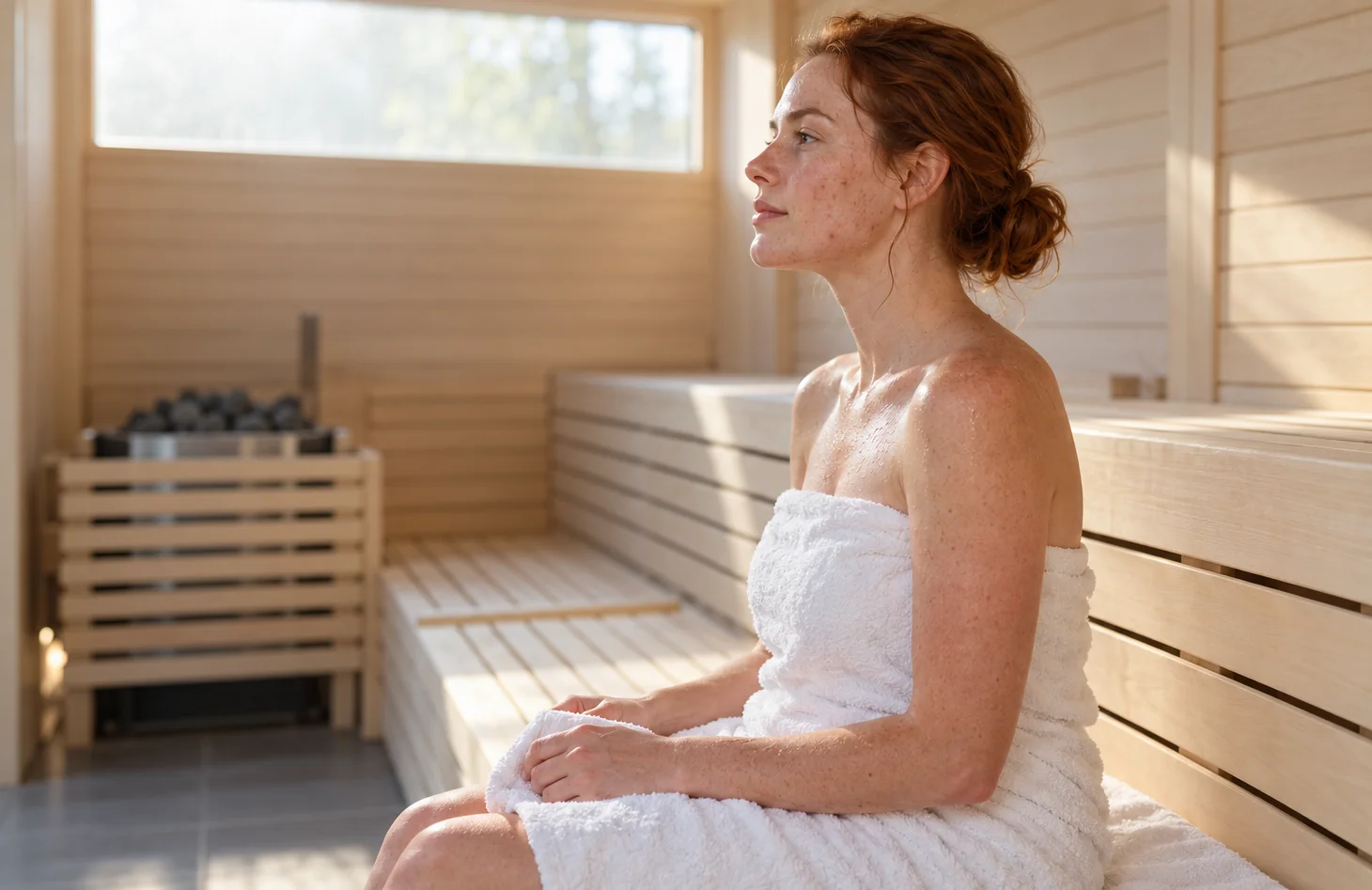
Stepping into a sauna sounds like it would be the ultimate skin detox, especially when wellness trends promise heat will simply "open your pores" and "flush out toxins,” when the reality is that saunas mostly help you excrete water and salt to cool your body down.
Heat and heavy sweating can loosen trapped oil and boost circulation, but they can also create a hotbed for bacteria and skin irritation. Research published in the Journal of Clinical Medicine shows that saunas significantly increase skin hydration and microcirculation, yet excessive heat and sweat trapped against the skin can easily trigger inflammation and new breakouts.
Quick Answer: Do Saunas Help With Acne?
It is a mixed bag. Saunas can boost circulation, but they aren't an acne cure—and the idea that heat "opens and flushes" your pores is actually a myth. In reality, heat and heavy sweat can trap bacteria and trigger new breakouts. If you love the sauna, Honeydew recommends rinsing your face right after to wash away sweat, followed by a light moisturizer to protect your skin barrier. Enjoy the heat for relaxation, but stick to proven medical treatments for clearing acne.
Before using heat exposure to clear your skin, you need to know how high temperatures interact with your specific acne type and how to protect your skin barrier before you step inside. Here is what dermatologists say about whether saunas actually help with acne, what the clinical science shows, and the exact steps to prevent sauna-induced breakouts.
Let us break down what actually happens to acne-prone skin in a sauna, separate the myths from the evidence, and give you practical guidance so you can make an informed decision.
Potential Benefits of Saunas for Your Skin
While saunas are not an acne treatment, there are a few evidence-backed ways that heat exposure can support overall skin health. It is important to keep these in perspective, though. None of these benefits directly target the root causes of acne.
Improved Blood Circulation
One of the most well-studied effects of sauna use is increased blood flow. When your body heats up, blood vessels dilate to help cool you down, significantly increasing circulation to the skin. A 2018 review in Evidence-Based Complementary and Alternative Medicine found that regular sauna use was associated with improved vascular function and circulation.
Better blood flow means more oxygen and nutrients reaching your skin cells, which supports overall skin health and the natural repair process. In theory, this could help your skin recover from existing breakouts slightly faster. However, improved circulation alone does not address the core factors driving acne: excess oil production, bacterial overgrowth, clogged pores, and inflammation.
Stress Reduction
Stress is a well-established acne trigger. When you are stressed, your body produces more cortisol, which in turn stimulates your sebaceous glands to produce more oil. Research has consistently linked psychological stress to acne flares.
Sauna use has been shown to promote relaxation and reduce cortisol levels. A study published in Psychosomatic Medicine and Psychotherapy found that regular sauna bathing was associated with reduced stress and improved feelings of well-being. If sauna sessions genuinely help you relax, the downstream effect on your stress hormones could theoretically have a modest positive impact on your skin.
That said, there are many other effective ways to manage stress-related acne than sitting in a sauna. And if the sauna itself triggers anxiety about your skin getting worse, the stress-reduction benefit is likely negated.
General Inflammation Reduction
Some research has explored the anti-inflammatory effects of regular heat exposure. A 2018 study in the European Journal of Epidemiology found that frequent sauna use over an extended period of time was associated with lower levels of C-reactive protein (CRP), a key marker of systemic inflammation. Since inflammation is a central component of acne, this sounds promising on paper.
But here is the catch: this anti-inflammatory effect is systemic and long-term. It does not mean that a single sauna session reduces inflammation in your skin. And in the short term, the heat from a sauna can actually increase localized inflammation, potentially making existing pimples more red, swollen, and irritated.
The "Saunas Open Your Pores" Myth
Let’s bust this popular myth: pores aren't muscles, so heat cannot "open" them to flush out acne - a fact confirmed by a 2016 review in Clinical, Cosmetic and Investigational Dermatology. While sauna heat softens trapped oil to make cleansing easier, it won't clear breakouts on its own. Skimping on proven medical treatments because you think heat is doing the heavy lifting only leaves your skin vulnerable to worse breakouts.
What to expect: The potential skin benefits of sauna use are indirect and modest. Improved circulation and stress reduction can support overall skin health, but they are not a substitute for targeted acne treatment. If you are dealing with persistent acne, proven treatments like retinoids, antibiotics, or isotretinoin will be far more effective than any number of sauna sessions.
How Saunas Can Make Acne Worse
Now for the part that matters most if you are breakout-prone. There are several ways saunas can actually aggravate acne, and if you’re taking score: these risks tend to outweigh the indirect benefits for most people with active breakouts.
Sweat and Bacterial Growth
Sweating itself does not cause acne. But when sweat sits on your skin, especially mixed with oil, dead skin cells, and bacteria, it creates a recipe for clogged pores. This is particularly true in a sauna environment where you are sweating heavily for an extended period.
Cutibacterium acnes (C. acnes), the primary bacterium involved in acne development, thrives in warm, moist environments. A sauna provides exactly those conditions. Research published in the Journal of Investigative Dermatology has shown that C. acnes multiplies more readily in environments with excess sebum and moisture, both of which are abundant during a sauna session.
If you do not cleanse your skin promptly after leaving the sauna, that sweat-bacteria-oil mixture dries on your face and body, sealing it into your pores. This is one of the most common ways saunas lead to post-session breakouts.
Increased Sebum Production
Heat stimulates your sebaceous glands. When your skin temperature rises in a sauna, your oil glands become more active, producing more sebum. A study in the Journal of Investigative Dermatology demonstrated that higher skin temperatures are associated with increased sebum secretion rates.
If you already have oily or combination skin, this is the opposite of what you need. More oil means more fuel for the acne cycle: excess sebum mixes with dead skin cells, clogs pores, and feeds acne-causing bacteria. For someone already prone to breakouts, even a temporary spike in oil production can trigger new lesions.
Heat-Induced Inflammation
While long-term sauna use may reduce systemic inflammation markers, the immediate effect of heat on your skin is inflammatory. Exposure to high temperatures causes vasodilation (blood vessel expansion), redness, and swelling in the skin. For existing acne lesions, this can make them look and feel worse.
If you have inflammatory acne — meaning red, swollen papules, pustules, or cystic bumps — the heat from a sauna can temporarily worsen the inflammation in those lesions. What was a manageable pimple before your sauna session may become more painful, red, and prominent afterward.
Shared Surfaces and Cross-Contamination
Public saunas introduce an additional concern: shared surfaces. Benches, towels, and even the air in a communal sauna can harbor bacteria, fungi, and other microorganisms. If you are lying on a sauna bench with your face or body directly touching the surface, you are exposing your acne-prone skin to whatever the previous user left behind.
"Shared heat environments are a big hotbed for cross-contamination," notes Megan Schramm, a physician’s assistant with years of experience in dermatology. "This is especially relevant for an acne look-alike called folliculitis. It shows up as acne-like bumps and pustules usually on the chest, back, and shoulders and can be triggered by bacteria and fungi picked up directly from communal sauna surfaces."
Red flag: If you notice your acne consistently flares up after sauna sessions, your skin is telling you something. Persistent post-sauna breakouts are a sign that the heat, sweat, and oil production are aggravating your acne, and no amount of post-sauna cleansing will fully offset the damage if your skin reacts this way.
Traditional Sauna vs. Infrared Sauna: Does the Type Matter?
You may have seen claims that infrared saunas are better for acne than traditional saunas. Here is how they compare.
| Factor | Traditional Sauna | Infrared Sauna |
|---|---|---|
| Temperature | 150-195F (65-90C) | 120-150F (49-65C) |
| How it heats you | Heats the air around you | Infrared light penetrates skin directly |
| Sweat production | Heavy | Moderate to heavy |
| Humidity | High (especially steam saunas) | Low (dry heat) |
| Oil production effect | Increased | Increased (slightly less intense) |
| Bacterial growth risk | Higher (warm, moist environment) | Somewhat lower (drier environment) |
Infrared saunas operate at lower temperatures and produce a drier heat, which means somewhat less sweat production and a less hospitable environment for bacterial growth compared to a traditional steam sauna. Some proponents claim that the infrared light itself has therapeutic benefits for the skin, but the evidence for this is limited and mostly comes from studies on near-infrared and red light therapy, which are different from the far-infrared wavelengths used in most infrared saunas.
The bottom line: an infrared sauna may be slightly gentler on acne-prone skin than a traditional steam sauna, but neither is a treatment for acne. The same precautions apply regardless of the type of sauna you use.
Tips for Using a Sauna If You Have Acne
If you enjoy saunas and do not want to give them up entirely, there are steps you can take to minimize the impact on your skin. The goal is to reduce the pore-clogging, bacteria-spreading, oil-boosting effects as much as possible.
Before Your Sauna Session
- Cleanse your face: Go in with clean skin. Remove any makeup, sunscreen, or skincare products so they do not mix with sweat and clog your pores during the session
- Skip heavy skincare products: Do not apply serums, oils, or thick moisturizers before a sauna. These can trap sweat and bacteria against your skin in the heat
- Hydrate: Drink water before your session. Proper hydration supports your skin's barrier function and helps with healthy sweating
During Your Sauna Session
- Keep it short: Limit sessions to 15-20 minutes. Longer sessions mean more sweat, more oil production, and more time for bacteria to thrive
- Sit on a clean towel: Always place a clean towel between your skin and the sauna bench, especially if you have body acne on your back, chest, or shoulders
- Avoid touching your face: Your hands accumulate sweat and bacteria during a session. Keep them away from your face
- Gently blot sweat: Use a clean towel to periodically pat away sweat rather than letting it pool on your skin
After Your Sauna Session
- Shower immediately: This is the most important step. Rinse off sweat, oil, and bacteria as soon as possible after leaving the sauna
- Use a gentle cleanser: Wash your face (and body, if you have body acne) with a mild, non-stripping cleanser. Avoid harsh scrubs, which can irritate heat-sensitized skin
- Apply a lightweight moisturizer: Heat and sweating can leave your skin dehydrated despite the oil on the surface. Use a non-comedogenic moisturizer to restore your skin's barrier
- Wait before applying active treatments: If you use prescription topicals like tretinoin or benzoyl peroxide, wait at least 30 minutes after your sauna to apply them. Heat-flushed, sensitized skin is more reactive and prone to irritation from active ingredients
What to expect: Even with all the right precautions, some people with acne-prone skin will still break out after sauna use. If you consistently notice flare-ups within a day or two after a session, your skin may simply be too sensitive to heat exposure. That is okay. There is no health benefit from a sauna that you cannot get in other ways, and prioritizing clear skin is a valid choice.
Honeydew Recommends
Saunas can be a relaxing part of your wellness routine, but as mentioned the idea that heat "opens your pores" and flushes away breakouts is a myth. In reality, the combination of heat, sweat, and humidity can actually worsen acne for many people.
"While saunas may offer relaxation and other systemic benefits," explains Schramm, "saunas are definitely not a 'treatment' but I do keep in my arsenal as one of the many things that can help my patients fight acne - when used properly"
So if you enjoy sauna sessions, Honeydew recommends taking proper precautions like rinsing immediately afterward so as to minimize friction and prevent sweat-induced breakouts.
That said, lifestyle adjustments alone cannot replace targeted medical care. If you are struggling with persistent breakouts, the most effective step is consulting a dermatology provider who can evaluate your skin type and design a personalized, evidence-based treatment plan.
Learn more about how Honeydew treats acne or start your virtual consultation today to get medical-grade care tailored to your skin.


Medically Reviewed by
Megan Schramm, PA-C
Physician Assistant