Key Takeaways

If you have been dealing with unexplained breakouts and recently discovered mold in your home, bathroom, or workplace, the question is natural: can mold cause acne? You might have noticed your skin getting worse after moving into a new apartment, during a particularly humid season, or after finding black mold behind your shower tiles. And when traditional acne treatments are not working as well as they should, it makes sense to look at your environment.
The short answer is that mold does not directly cause acne the way hormones or bacteria do. Mold spores do not clog your pores or infect your sebaceous glands. But the story does not end there. Mold exposure can trigger a cascade of immune and inflammatory responses in your body that create conditions favorable for breakouts — especially if you are already acne-prone. For some people, mold may be the hidden variable that explains why their skin is not responding to treatment the way they expected.
This article will walk you through the science behind mold exposure and skin health, explain the specific biological pathways that connect mold to acne-like breakouts, and help you determine whether your environment might be contributing to your skin problems.
Quick Answer: Does Mold Cause Acne?
Mold does not directly cause acne, but mold exposure can contribute to breakouts through several indirect mechanisms. Here is the key picture:
- Mold triggers systemic inflammation — the same type of inflammation that drives acne formation
- Immune system disruption from mold exposure can impair your skin's ability to fight acne-causing bacteria
- Mycotoxins (toxic compounds released by certain molds) can cause skin rashes and irritation that resemble or worsen acne
- Stress from mold-related illness elevates cortisol, a known acne trigger
- Humid environments that foster mold growth also promote excess oil production and bacterial growth on skin
If your acne is not responding to standard treatments, environmental factors like mold exposure are worth investigating. A dermatologist can help you identify what is driving your breakouts. Learn more about acne treatment options.
How Mold Exposure Affects Your Body
Before we get into the specific skin effects, it helps to understand what mold exposure does to your body overall. Mold is a type of fungus that reproduces by releasing microscopic spores into the air. These spores are virtually everywhere — outdoors, indoors, and in the dust you breathe every day. In small amounts, they are generally harmless. The problems start when mold grows in concentrated amounts indoors, typically in damp, poorly ventilated spaces like bathrooms, basements, kitchens, and areas with water damage.
When you are exposed to elevated levels of mold spores, your body responds in several ways. According to the Centers for Disease Control and Prevention (CDC), common health effects of mold exposure include nasal congestion, throat irritation, coughing, eye irritation, and skin irritation. People with mold allergies or compromised immune systems can experience more severe reactions, including chronic sinus infections, respiratory issues, and widespread inflammatory responses.
Certain molds — particularly Stachybotrys chartarum (commonly known as black mold), Aspergillus, and Penicillium species — produce mycotoxins, which are toxic secondary metabolites. Research published in Toxicology Letters has documented how mycotoxin exposure can cause immunosuppression, oxidative stress, and multi-organ inflammatory responses. These systemic effects set the stage for skin problems, including breakouts.
Can Mold Cause Acne? The Inflammatory Connection
Acne is, at its core, an inflammatory disease. The red, swollen, painful lesions that characterize moderate to severe acne are the result of an inflammatory response in the skin. And this is where the mold-acne connection becomes relevant: mold exposure is a potent trigger of systemic inflammation.
Mold and the Inflammatory Cascade
When you inhale or come into contact with mold spores, your immune system recognizes them as foreign invaders and mounts a response. This involves the release of pro-inflammatory cytokines — signaling molecules like interleukin-1 (IL-1), interleukin-6 (IL-6), and tumor necrosis factor-alpha (TNF-alpha). A 2011 study published in Applied and Environmental Microbiology demonstrated that exposure to mold spores and their metabolites significantly elevated inflammatory cytokine levels in human cells.
These same cytokines play a central role in acne development. Research published in the Journal of Investigative Dermatology has established that IL-1 and TNF-alpha are key drivers of the inflammatory process in acne lesions. They promote the recruitment of immune cells to hair follicles, amplify the inflammatory response to Cutibacterium acnes (the bacteria associated with acne), and contribute to the formation of papules, pustules, and cysts.
In other words, mold exposure raises the same inflammatory markers that make acne worse. If your body is already dealing with low-grade inflammation from mold exposure, your skin has less capacity to manage the normal inflammatory triggers that acne-prone skin faces daily.
Oxidative Stress and Skin Damage
Mycotoxins produced by certain molds are also potent generators of oxidative stress — an imbalance between free radicals and antioxidants in your body. A review in International Journal of Molecular Sciences documented how mycotoxins deplete glutathione (your body's primary antioxidant) and increase reactive oxygen species (ROS) in tissues.
Oxidative stress is directly implicated in acne. A study published in the Journal of the European Academy of Dermatology and Venereology found that patients with acne had significantly higher levels of oxidative stress markers and lower antioxidant levels compared to controls. The excess free radicals damage skin cells, oxidize sebum (making it more comedogenic), and amplify inflammation — all of which promote breakouts.
What to expect: The inflammatory effects of mold exposure do not happen overnight. Chronic, low-level exposure over weeks or months is more likely to contribute to persistent acne than a single encounter with mold. If your breakouts have gradually worsened since moving to a new home or during a damp season, this timeline is worth noting when talking to your dermatologist.
Mold, Your Immune System, and Acne
Your immune system is your skin's primary defense against acne-causing bacteria. When mold exposure compromises that defense, breakouts can follow.
Immunosuppression from Mycotoxins
Some of the most concerning effects of mycotoxin exposure involve the immune system. Research published in Toxicology and Applied Pharmacology has shown that mycotoxins — particularly aflatoxins and trichothecenes — can suppress key immune functions, including reducing the activity of natural killer cells, impairing phagocytosis (the process by which immune cells engulf and destroy pathogens), and decreasing antibody production.
When your immune system is suppressed, your skin becomes less effective at managing the normal microbial populations that live on it. Cutibacterium acnes, the bacterium most closely associated with acne, is a normal resident of your skin. In a healthy immune state, your body keeps its population in check. But when immune function is impaired, C. acnes can proliferate more readily, trigger exaggerated inflammatory responses in follicles, and contribute to the formation of new acne lesions.
Allergic Sensitization and Skin Reactivity
Mold is one of the most common allergens. According to the Asthma and Allergy Foundation of America, mold allergies affect millions of people and can manifest not only as respiratory symptoms but also as skin reactions — including contact dermatitis, hives, and generalized skin irritation. These allergic skin responses can look similar to acne or occur alongside existing acne, making it harder to identify what is causing your breakouts.
Chronic allergic responses also prime your immune system to be hyper-reactive. This state of heightened immune activation means your skin may overreact to minor triggers — a slightly clogged pore that might have resolved quietly instead becomes a red, inflamed lesion. If you have noticed that your acne has become more inflammatory (more red, painful bumps rather than simple whiteheads or blackheads) and you have also been experiencing allergy-like symptoms, the two could be connected.
Red flag: If you are experiencing skin rashes, respiratory symptoms (chronic cough, nasal congestion, wheezing), headaches, and fatigue alongside worsening acne, these could be signs of significant mold exposure. Address the mold problem directly — no amount of acne treatment will be fully effective if your body is under ongoing environmental stress. See both a healthcare provider and consider a professional mold inspection of your living space.
The Stress-Mold-Acne Triangle
There is another pathway connecting mold to acne that often gets overlooked: stress. Living with mold-related health issues — chronic fatigue, respiratory problems, brain fog, the anxiety of dealing with a contaminated home — is genuinely stressful. And stress is a well-documented acne trigger.
When you are stressed, your adrenal glands produce more cortisol. Elevated cortisol increases sebum production, impairs skin barrier function, and promotes the kind of systemic inflammation that fuels acne. A 2017 study in Clinical, Cosmetic and Investigational Dermatology confirmed a significant correlation between perceived stress levels and acne severity.
The stress connection creates a frustrating feedback loop. Mold exposure causes health issues. Those health issues create stress. Stress worsens acne. Worsening acne adds more stress. Breaking this cycle requires addressing the root environmental cause, not just treating the skin symptoms.
Can Shower Mold Cause Acne?
This is one of the most specific questions people ask about mold and skin, and it deserves its own discussion. Bathrooms are prime territory for mold growth — the combination of warmth, moisture, and poor ventilation creates ideal conditions. Mold commonly grows on shower grout, caulking, curtains, ceilings, and in areas around the tub.
Can shower mold cause acne directly? The concern here is twofold:
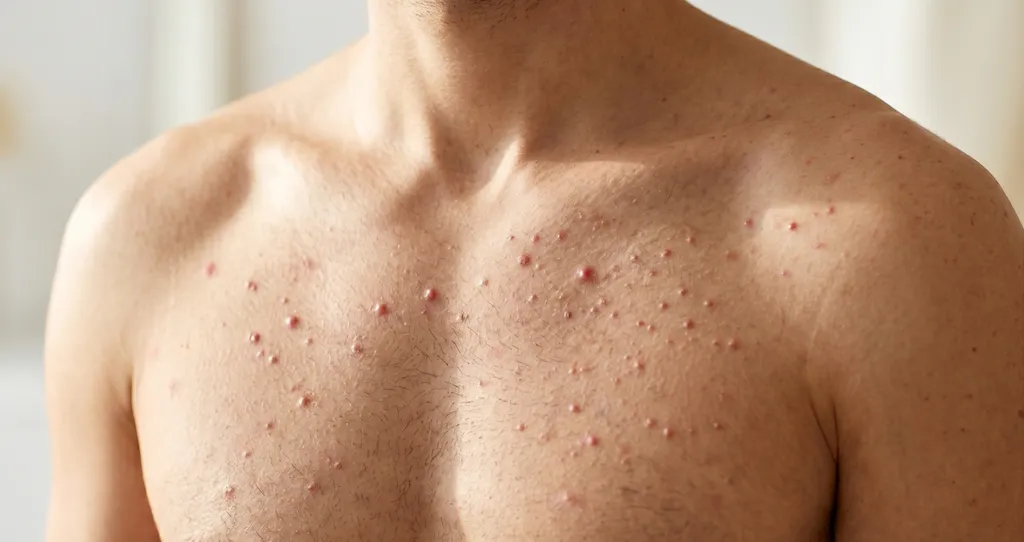
- Direct contact: Mold spores on shower surfaces can come into contact with your skin during bathing. While mold spores are unlikely to cause classic acne (they do not colonize pores the way C. acnes does), they can cause skin irritation, contact dermatitis, and folliculitis — a condition where hair follicles become infected or inflamed, producing bumps that closely mimic acne
- Airborne exposure: Running hot water creates steam that can disperse mold spores into the air you breathe during every shower. This daily inhalation exposure, even in small amounts, maintains the chronic inflammatory state described earlier
The humidity that causes bathroom mold is also independently problematic for acne-prone skin. High humidity increases sweat production, can lead to excess sebum on the skin's surface, and promotes the growth of bacteria and fungi on the skin. If your bathroom is moldy, it is a sign the humidity levels are too high — and that humidity alone can make breakouts worse.
What to expect: If you have visible mold in your shower or bathroom, cleaning it with appropriate mold-killing products and improving ventilation (using an exhaust fan, leaving the door open after showering) can reduce both the mold and the humidity that contributes to breakouts. This is a practical step you can take today while you work with a dermatologist on your acne treatment plan.
Mold-Related Skin Conditions That Mimic Acne
One of the complications of the mold-acne question is that mold exposure can cause skin conditions that look like acne but are not actually acne at all. Mistaking one for the other leads to ineffective treatment.
| Condition | What It Looks Like | How It Differs from Acne | Mold Connection |
|---|---|---|---|
| Fungal folliculitis | Itchy, uniform bumps often on chest, back, and shoulders | Itchier than acne; bumps are more uniform in size; does not respond to standard acne treatments | Humid, mold-prone environments promote fungal overgrowth on skin |
| Contact dermatitis | Red, itchy, sometimes blistering patches of skin | Usually itchy rather than painful; may have a distinct pattern matching contact exposure | Direct skin contact with mold can trigger allergic contact dermatitis |
| Urticaria (hives) | Raised, red, itchy welts that can appear anywhere | Welts come and go within hours; not centered on hair follicles | Allergic reaction to inhaled or contacted mold spores |
| Eczema flare | Dry, red, scaly patches that may weep or crust | Dry and scaly rather than oily; intense itch; often in skin folds | Mold allergens are a known trigger for eczema in sensitized individuals |
Fungal folliculitis (sometimes called "fungal acne") is the condition most commonly confused with acne in mold-exposed environments. It is caused by an overgrowth of Malassezia yeast on the skin — a condition that thrives in the same warm, humid environments where mold flourishes. Standard acne medications like benzoyl peroxide and topical antibiotics will not clear fungal folliculitis. It requires antifungal treatment. A dermatologist can distinguish between the two conditions and prescribe the right approach.
How to Tell If Mold Is Contributing to Your Breakouts
Determining whether mold exposure is a factor in your acne requires looking at the full picture. No single test will tell you "mold is causing your acne," but several clues can help you and your dermatologist connect the dots.
Signs That Mold May Be Contributing to Your Acne
- Your acne started or noticeably worsened after moving to a new home, apartment, or office
- You have visible mold in your bathroom, kitchen, basement, or other living spaces
- You live in a humid climate or an older building with known moisture issues
- You also experience allergy-like symptoms: nasal congestion, sneezing, itchy eyes, cough
- You experience fatigue, headaches, or brain fog alongside skin issues
- Your skin clears up when you travel or stay somewhere else for an extended period
- Your acne is not responding to standard treatments as expected
- Your breakouts are unusually itchy or appear in areas not typical for your acne pattern
The most telling indicator is a temporal pattern — your skin problems clearly correlate with being in a specific environment and improve when you are away from it. If your acne clears up on vacation or when staying at a friend's place for a week, that points strongly toward an environmental trigger at home.
What to Do About Mold-Related Breakouts
If you suspect mold exposure is contributing to your acne, the approach needs to be two-pronged: address the mold and treat the skin.
Address the Mold
- Identify the source: Check bathrooms, under sinks, around windows, basements, and any areas with past water damage. Mold can also grow behind walls and under flooring where it is not immediately visible
- Control humidity: The EPA recommends keeping indoor humidity below 60%, ideally between 30% and 50%. Use dehumidifiers, ventilation fans, and air conditioning to manage moisture
- Clean small areas: Small mold patches (less than 10 square feet) can be cleaned with commercial mold removers or a solution of detergent and water. Wear protective gloves and a mask
- Get professional help for larger problems: Extensive mold growth, especially black mold, should be handled by professional remediation services. The EPA and your local health department can provide guidance
- Improve ventilation: Run exhaust fans during and after showering, open windows when weather permits, and avoid drying clothes indoors
Treat the Skin
Removing mold exposure alone may not be enough to clear acne that has become established. Acne is a multifactorial condition — even if mold was the trigger that tipped the balance, the underlying process involves oil production, bacterial colonization, inflammation, and skin cell turnover that need to be addressed directly.
Depending on your acne type and severity, a dermatologist may recommend:
- Topical retinoids (like tretinoin) to normalize skin cell turnover and prevent clogged pores
- Topical or oral antibiotics (like doxycycline) to reduce C. acnes bacteria and calm inflammation
- Antifungal treatment if fungal folliculitis is part of the picture
- Spironolactone if there is a hormonal component
- Isotretinoin (Accutane) for persistent acne that has not responded to other treatments
At Honeydew, our providers treat all types of acne and consider environmental and lifestyle factors as part of a comprehensive evaluation. We offer same-day or next-day virtual appointments with board-certified dermatologists and other qualified providers, so you do not have to wait weeks to get answers. Learn more about our pricing and membership options.
What to expect: If mold has been a significant contributing factor, you may notice your skin starts improving within a few weeks of removing the exposure — but full clearing typically requires a combination of environmental remediation and targeted acne treatment. A dermatologist can help you build a plan that addresses both the environmental trigger and the acne itself.
Mold vs. Other Acne Triggers: Putting It in Context
It is important to keep mold exposure in perspective relative to other known acne triggers. Mold is a contributing factor that can make acne worse, but it is rarely the sole cause of breakouts.
| Acne Trigger | Strength of Evidence | How It Causes Acne |
|---|---|---|
| Hormonal fluctuations | Strong (primary cause) | Androgens directly stimulate sebum production and follicular hyperkeratinization |
| Genetics | Strong (primary predisposition) | Determines pore size, oil production, immune response, and susceptibility |
| Stress | Moderate-strong | Cortisol increases sebum production and systemic inflammation |
| Diet (dairy, high-glycemic foods) | Moderate | Increases IGF-1, insulin, and mTORC1 signaling |
| Mold exposure | Indirect (contributing factor) | Systemic inflammation, immune disruption, oxidative stress, and associated stress response |
| Skincare products | Moderate (for comedogenic products) | Pore-clogging ingredients directly obstruct follicles |
As you can see, mold occupies a specific niche as an environmental modifier rather than a primary cause. It amplifies existing acne through inflammation and immune disruption, and it creates conditions (humidity, stress) that favor breakouts. But the primary drivers — hormones, genetics, and bacteria — are usually the factors that need to be addressed directly with medical treatment.
That said, if mold is an active contributor, removing the exposure can be the missing piece that allows your acne treatment to work properly. Think of it this way: if you are bailing water out of a boat, fixing the leak matters just as much as having a good bucket.
The Bottom Line
Mold does not cause acne in the traditional sense. It does not clog your pores, and mold spores do not colonize your sebaceous glands. But mold exposure can absolutely contribute to breakouts by driving systemic inflammation, compromising your immune system, increasing oxidative stress, and amplifying stress-related hormonal changes. For people who are already acne-prone, these effects can be enough to push skin from manageable to out of control.
If you suspect mold is playing a role in your acne, take a two-pronged approach: address the mold problem in your environment and work with a dermatologist to treat your skin directly. Environmental remediation removes the ongoing trigger, while targeted acne treatment addresses the breakouts that have already established themselves. Neither step alone is likely to be as effective as doing both.
You deserve clear skin and a healthy living environment. If your acne has been stubborn despite doing everything right with your skincare routine, it may be time to look beyond your products and consider what is in the air around you.
.webp)

Medically Reviewed by
Joel Spitz, MD
Co-Founder & Chief Medical Officer, Board Certified Dermatologist


.webp)