Key Takeaways

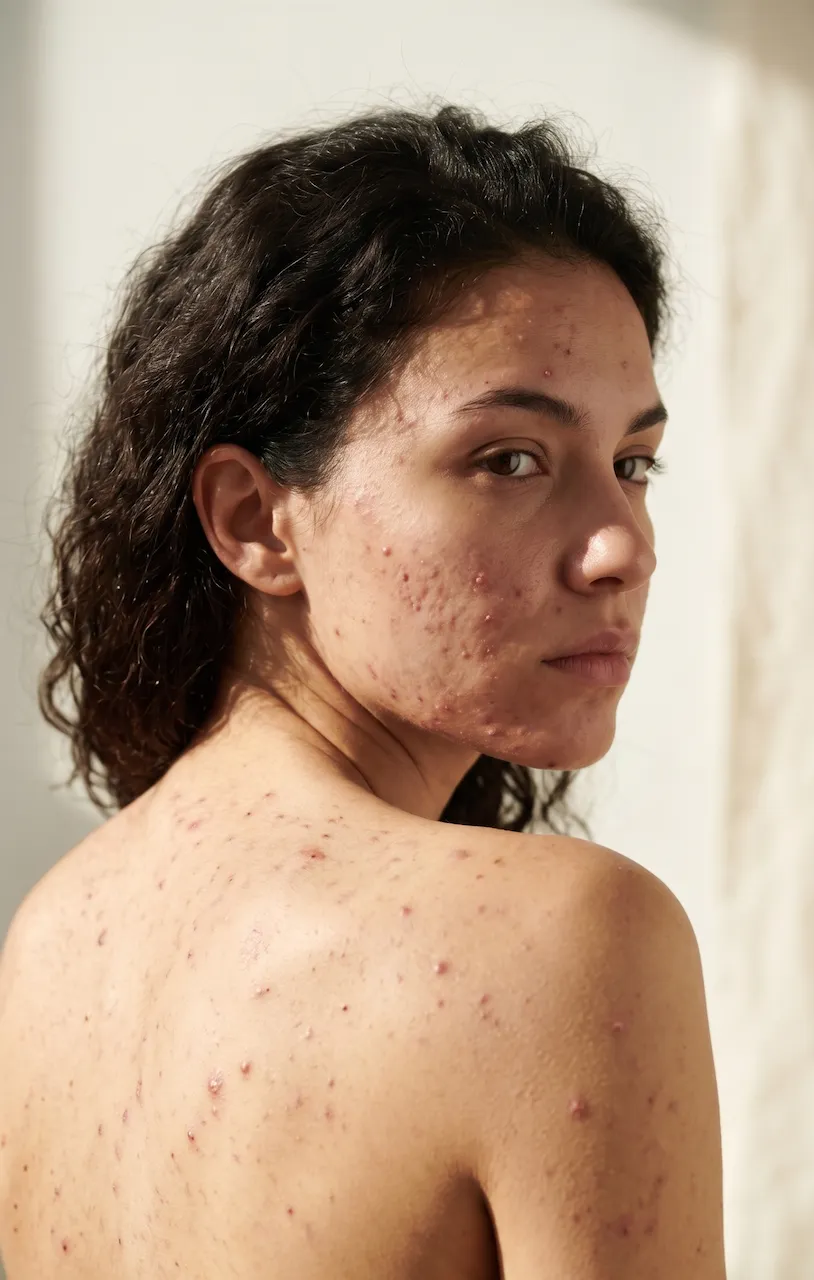
You did the hard work of clearing your back acne. But now you're left with a frustrating reminder — scars, dark spots, and uneven texture that make you self-conscious about showing your back. If you're wondering how to get rid of back acne scars, you're not alone. Back acne scarring is one of the most common concerns patients bring to our dermatologists.
The back is particularly prone to scarring because the skin there is thicker, breakouts tend to be deeper (often cystic or nodular), and it's harder to treat early since you can't always see what's happening. According to a study published in the Journal of Clinical and Aesthetic Dermatology, up to 95% of acne patients develop some degree of scarring, with the back being one of the most affected areas.
The reality is that clearing back acne scars takes time and the right approach — but with today's treatments, significant improvement is absolutely achievable. Let's walk through your options, from things you can start at home tonight to professional procedures that deliver dramatic results.
Quick Answer: How to Clear Back Acne Scars
Best approach: Combine at-home topical treatments with professional procedures for the fastest, most noticeable results.
- At-home: Retinoids (tretinoin), azelaic acid, vitamin C serums, AHAs, and SPF
- Professional: Chemical peels, microneedling, laser resurfacing, or subcision
- Timeline: Expect 3-6 months for topicals; professional treatments show results after 3-6 sessions
- Prevention: Treat active acne early — the best scar treatment is stopping scars from forming
Understanding Back Acne Scars: Types and Why They Form
Before you choose a treatment, it helps to understand what kind of scars you're dealing with. Back acne scars generally fall into two categories: textural scars (changes in the skin's surface) and pigmentation changes (dark or discolored marks). Some people have one type; many have both.
Textural (Atrophic and Hypertrophic) Scars
These are the scars that change the physical contour of your skin:
- Rolling scars: Broad, shallow depressions with sloping edges that give the skin a wave-like appearance. Common on the back due to the larger skin surface.
- Boxcar scars: Wider depressions with sharply defined vertical edges, resembling chickenpox scars.
- Ice pick scars: Deep, narrow pits that extend into the dermis. Less common on the back than on the face, but they do occur.
- Hypertrophic scars: Raised, firm scars that stay within the boundaries of the original breakout. The back is one of the most common sites for these.
- Keloid scars: Raised scars that grow beyond the original wound area. The back, chest, and shoulders are among the most keloid-prone areas of the body.
Pigmentation Changes (Post-Inflammatory)
- Post-inflammatory hyperpigmentation (PIH): Dark spots left after a pimple heals. More common in darker skin tones. These aren't true scars — the skin surface is smooth — but they can persist for months or years without treatment.
- Post-inflammatory erythema (PIE): Pink, red, or purple marks caused by damaged blood vessels. More visible on lighter skin tones.
What to expect: Pigmentation changes (PIH and PIE) generally respond faster to treatment than textural scars. If your back acne "scars" are flat and just darker or redder than your surrounding skin, you may see significant fading within 3-6 months with the right topicals. True atrophic or raised scars usually require professional intervention for the best results.
At-Home Treatments for Back Acne Scars
Topical treatments are your first line of defense. While they won't erase deep atrophic scars entirely, they can meaningfully improve pigmentation, mild textural irregularities, and overall skin quality. Many of these are available by prescription through our dermatologists.
Retinoids (Tretinoin)
Retinoids are the gold standard topical for acne scars. Tretinoin (prescription-strength retinoid) accelerates cell turnover, stimulates collagen production, and helps fade hyperpigmentation. A study in the Journal of Cosmetic Dermatology found that topical retinoids significantly improved atrophic acne scars over 24 weeks.
For back application, gel formulations tend to work better than creams since the back is oilier and less prone to the dryness that retinoids can cause on the face. Start with a lower concentration (0.025%) and work up as your skin tolerates it.
Azelaic Acid
Azelaic acid (15-20% prescription strength) is particularly effective for post-inflammatory hyperpigmentation. It inhibits tyrosinase — the enzyme responsible for melanin production — making it a strong choice for fading dark marks left by back acne. Research published in the Indian Dermatology Online Journal supports its use for PIH in all skin tones, including darker complexions where hydroquinone may carry more risk.
Alpha Hydroxy Acids (AHAs)
Glycolic acid and lactic acid are the most studied AHAs for scar improvement. They work by exfoliating the top layer of skin, promoting cell renewal, and gradually smoothing texture. A 2010 study in Dermatologic Surgery demonstrated that serial glycolic acid peels (even at-home concentrations of 10-15%) produced measurable improvement in acne scarring.
Body washes and lotions containing glycolic or lactic acid (8-12%) are a practical way to treat a large area like the back without needing help to apply a targeted serum.
Vitamin C (L-Ascorbic Acid)
Topical vitamin C acts as an antioxidant and melanin inhibitor, making it useful for fading PIH and PIE. A concentration of 10-20% L-ascorbic acid is typically recommended. It also boosts collagen synthesis, which can help with shallow atrophic scars over time. Look for stable formulations — vitamin C degrades quickly when exposed to light and air.
Niacinamide
Niacinamide (vitamin B3) at 4-5% concentration can reduce hyperpigmentation and strengthen the skin barrier. It's gentle, well-tolerated, and works well as a complement to stronger actives like retinoids. Research in the British Journal of Dermatology showed that 4% niacinamide significantly reduced hyperpigmentation after 8 weeks of use.
Sunscreen
This is non-negotiable. UV exposure darkens post-inflammatory pigmentation and can make scars more visible. If your back is exposed to the sun — at the beach, during outdoor workouts, or in a tank top — apply a broad-spectrum SPF 30 or higher. Without sunscreen, every other scar treatment you use will be partially undermined.
| Treatment | Best For | Timeline | Rx Needed? |
|---|---|---|---|
| Tretinoin | PIH, mild atrophic scars | 3-6 months | Yes |
| Azelaic acid (15-20%) | PIH, especially darker skin | 2-4 months | Yes (at higher %) |
| Glycolic acid (10-15%) | Texture, mild PIH | 2-3 months | No |
| Vitamin C (10-20%) | PIH, PIE, collagen support | 2-4 months | No |
| Niacinamide (4-5%) | PIH, skin barrier | 2-3 months | No |
Professional Treatments for Back Acne Scars
When at-home topicals aren't enough — particularly for deeper atrophic scars, stubborn pigmentation, or raised scars — professional procedures can deliver more significant improvement. These are typically performed by a dermatologist or under dermatological supervision.
Chemical Peels
Professional-strength chemical peels use higher concentrations of acids (glycolic, salicylic, TCA) to remove damaged skin layers and stimulate new collagen formation. Medium-depth TCA peels (15-35%) are often used for back acne scars because the back's thicker skin can tolerate stronger peels than the face. A study in The Journal of Clinical and Aesthetic Dermatology found that TCA cross (applying trichloroacetic acid directly into individual scars) significantly improved ice pick and boxcar scars.
Most patients need 3-6 sessions spaced 2-4 weeks apart for optimal results.
Microneedling
Microneedling uses tiny needles to create controlled micro-injuries in the skin, triggering your body's natural wound-healing response and boosting collagen and elastin production. It's one of the most effective and well-studied treatments for atrophic acne scars. A systematic review in the Journal of the American Academy of Dermatology confirmed significant improvement in acne scarring with microneedling, noting it works across all skin types with a lower risk of post-inflammatory hyperpigmentation compared to laser treatments.
For back acne scars, deeper needle depths (1.5-2.5mm) are often used given the thicker skin. Most patients see meaningful improvement after 3-6 microneedling sessions spaced 4-6 weeks apart.
Laser Resurfacing
Laser treatments are divided into two main categories:
- Fractional ablative lasers (CO2 or erbium) remove thin columns of skin to stimulate deep collagen remodeling. They produce the most dramatic single-session results but have longer downtime (1-2 weeks for the back).
- Fractional non-ablative lasers (like Fraxel) heat the underlying skin without removing the surface, stimulating collagen with less downtime. Multiple sessions are typically needed.
A landmark study in Dermatologic Surgery demonstrated that fractional CO2 laser produced 25-75% improvement in acne scars in most patients. The back responds well to laser treatment due to its thicker dermis, though practitioners must account for the higher risk of hypertrophic scarring on the trunk compared to the face.
Important consideration: Laser treatments on the back carry a higher risk of hypertrophic scarring and pigmentation changes than facial treatments, particularly in darker skin tones. Always work with a board-certified dermatologist experienced in treating body acne scars, and discuss your skin type and risk factors before proceeding.
Subcision
Subcision is a minimally invasive procedure where a needle is inserted beneath a scar to break up the fibrous bands tethering the scar to deeper tissue. This releases the skin, allowing it to lift and become level with the surrounding area. It's particularly effective for rolling scars, which are common on the back.
Subcision is often combined with other treatments — such as microneedling or filler injection — for enhanced results. Research in the International Journal of Dermatology showed significant scar improvement in over 90% of patients treated with subcision.
Corticosteroid Injections (for Raised Scars)
If your back acne left hypertrophic or keloid scars, intralesional corticosteroid injections (typically triamcinolone acetonide) are the first-line treatment. The injections flatten the scar by reducing collagen synthesis and inflammation. According to the American Academy of Dermatology, corticosteroid injections can flatten keloids in approximately 50-80% of cases, though multiple sessions may be needed.
| Procedure | Best For | Sessions Needed | Downtime |
|---|---|---|---|
| Chemical peels (TCA) | Shallow atrophic scars, PIH | 3-6 | 3-7 days |
| Microneedling | Rolling and boxcar scars | 3-6 | 2-3 days |
| Fractional CO2 laser | Moderate-severe atrophic scars | 1-3 | 7-14 days |
| Subcision | Tethered rolling scars | 1-3 | 1-2 days |
| Corticosteroid injections | Hypertrophic and keloid scars | 2-6 | None |
Can You Tattoo Over Back Acne Scars?
This is one of the most common questions we hear — and the answer is: yes, in most cases you can tattoo over back acne scars, but there are important considerations.
Tattooing over flat scars (PIH, PIE) is generally straightforward. The ink deposits into the dermis just as it would in unscarred skin, and the color change from the scar may actually become less noticeable beneath the tattoo design.
Tattooing over textural scars requires more nuance:
- Atrophic scars (indented): Ink can be applied, but the indentation may still be visible through the tattoo. The tattooed skin will follow the contour of the scar. Experienced tattoo artists can sometimes use shading techniques to minimize this effect.
- Hypertrophic scars: These can be tattooed, but raised scar tissue holds ink differently — colors may appear slightly altered, and the texture remains raised.
- Keloid scars: Tattooing over keloids is generally not recommended. The trauma of tattooing can trigger further keloid growth, making the scarring worse. If you are keloid-prone, discuss this with a dermatologist before proceeding.
Red flag: If you have a history of keloid scarring anywhere on your body, tattooing over back acne scars carries a real risk of triggering new keloid formation. The needle trauma from tattooing is similar to the type of injury that causes keloids to develop. Consult with a board-certified dermatologist before booking a tattoo appointment.
If you decide to move forward with a tattoo, wait until your scars are fully mature — at least 1-2 years old — and choose a tattoo artist who has experience working with scarred skin. Consider treating deeper scars with microneedling or laser beforehand to improve the skin's texture and create a smoother canvas.
Is Bio-Oil Good for Back Acne Scars?
Bio-Oil is a popular over-the-counter product marketed for scars and stretch marks. Its key ingredients include mineral oil, vitamins A and E, calendula oil, lavender oil, and rosemary oil — along with its proprietary PurCellin Oil.
Here's what the evidence says: Bio-Oil may help improve the appearance of newer, flatter scars and hyperpigmentation by keeping the skin moisturized and supporting barrier function. A manufacturer-sponsored study published in the International Journal of Cosmetic Science found improvement in scar appearance after 8 weeks of use. However, independent dermatological evidence for Bio-Oil specifically is limited.
The bottom line: Bio-Oil is unlikely to cause harm and may provide modest improvement in newer, superficial scars through its moisturizing and occlusive properties. But for established atrophic scars, deep pigmentation, or raised scars on the back, it won't deliver the kind of results that prescription retinoids, professional chemical peels, or procedural treatments can achieve. Think of it as a supportive step — not a standalone solution.
What to expect: If you want to try Bio-Oil, apply it to scars twice daily for at least 3 months before judging results. For more meaningful improvement — especially with textural scars — a prescription retinoid like tretinoin will deliver stronger, evidence-backed results. Our dermatologists can help you determine which approach makes sense for your specific scars.
How to Prevent Back Acne Scars
The single most effective strategy for preventing back acne scars is to treat active acne early and aggressively. Scars form when inflammatory acne damages the deeper layers of skin — and the longer or more severe the inflammation, the greater the chance of permanent scarring.
Back Acne Scar Prevention Checklist
- Treat acne early: Don't wait for breakouts to "resolve on their own." The sooner you treat inflammatory acne, the less scarring you'll have. Our dermatologists can build a personalized treatment plan.
- Don't pick or squeeze: This is critical on the back where cystic pimples are tempting to pop. Picking extends inflammation deeper into the skin and dramatically increases scar risk.
- Shower after sweating: Sweat, friction, and occlusion worsen back acne. Shower promptly after workouts and change out of sweaty clothing.
- Use non-comedogenic products: Body lotions, sunscreens, and even laundry detergents can contribute to back breakouts.
- Protect healing skin from UV: Apply sunscreen to your back whenever it's exposed. UV radiation worsens post-inflammatory pigmentation.
- Consider isotretinoin for persistent acne: If your back acne keeps coming back or is leaving scars despite topical treatment, Accutane (isotretinoin) can stop the cycle. It dramatically reduces the chance of future scarring by clearing acne at its source.
Building a Back Acne Scar Treatment Plan
The most effective approach to how to get rid of back acne scars combines multiple treatments tailored to your specific scar types. Here's a practical framework:
- First, control active acne. There is no point treating scars while new ones are still forming. If you still have active breakouts on your back, address those first with a dermatologist-guided treatment plan.
- Start with prescription topicals. Tretinoin and azelaic acid are the workhorses. They improve pigmentation, boost collagen, and prime the skin for procedural treatments. Our dermatologists can prescribe these through a virtual visit.
- Add professional procedures as needed. For deeper or more extensive scarring, microneedling, chemical peels, or laser resurfacing can deliver results that topicals alone cannot. Your dermatologist can refer you to an in-person provider for these treatments.
- Be consistent and patient. Back acne scars respond to treatment, but improvement is gradual. Most patients see meaningful results within 3-6 months of consistent treatment, with continued improvement over 12 months.
For a deeper look at how long scar fading takes, read our guide on how long it takes for acne scars to fade. And for a comprehensive overview of all scar treatment options, see our complete guide on how to get rid of acne scars.
What to expect: Your back has thicker skin than your face, which means treatments may take slightly longer to show results — but it also means the back tolerates stronger concentrations of acids and deeper microneedling depths, which can lead to more dramatic improvement per session.
.webp)

Medically Reviewed by
Joel Spitz, MD
Co-Founder & Chief Medical Officer, Board Certified Dermatologist