Key Takeaways

If you are dealing with persistent breakouts and wondering whether testosterone is the cause, you are asking the right question. Hormones are the single most important factor in acne development, and testosterone sits at the center of that equation. Whether you are going through puberty, experiencing hormonal fluctuations as an adult, or taking testosterone as part of hormone replacement therapy (TRT), elevated androgen levels can absolutely drive acne.
But here is what makes the testosterone-acne connection frustrating: not everyone with high testosterone gets acne, and not everyone with acne has high testosterone. Two people can have identical testosterone levels and completely different skin. That is because acne is not caused by testosterone alone — it is caused by how your body processes testosterone, how sensitive your skin is to androgens, and a cascade of downstream effects that vary from person to person.
Understanding this relationship is the first step toward treating hormonal breakouts effectively. In this article, we will walk you through the science behind how testosterone causes acne, the critical role of DHT conversion, why testosterone replacement therapy often triggers breakouts, and what treatment options are available when hormones are driving your skin problems.
Quick Answer: Does Testosterone Cause Acne?
Yes, testosterone is one of the primary hormonal causes of acne. Here is how it works:
- Testosterone is converted to DHT (dihydrotestosterone) by the enzyme 5-alpha reductase in your skin
- DHT stimulates sebaceous glands to produce excess sebum (oil), which clogs pores and creates the conditions for acne
- Your genetics determine sensitivity — some people's skin responds dramatically to normal testosterone levels, while others are unaffected by high levels
- TRT commonly triggers acne in 40-50% of patients, especially in the first several months
- Effective treatments exist that target the hormonal pathway without necessarily lowering your testosterone
If hormonal acne is affecting your skin, a dermatologist can create a treatment plan tailored to your specific situation. Learn more about acne treatment options.
How Testosterone Causes Acne: The Biology
To understand why testosterone causes acne, you need to understand the chain of events that happens between a hormone circulating in your blood and a pimple forming on your face. It is not a single step — it is a multi-stage process, and each stage matters.
Step 1: Testosterone to DHT Conversion
Testosterone itself is not the most potent androgen when it comes to your skin. The real driver is dihydrotestosterone (DHT), a more powerful androgen that is created when testosterone is converted by an enzyme called 5-alpha reductase. This conversion happens in several tissues throughout the body, including the skin's sebaceous glands — the oil-producing glands attached to your hair follicles.
DHT binds to androgen receptors in the sebaceous glands with five to ten times greater affinity than testosterone. This means that even a modest increase in DHT production has a disproportionately large effect on your oil glands compared to the same increase in testosterone. It is one of the reasons why two people with similar testosterone levels can have drastically different acne severity — the amount of 5-alpha reductase activity in their skin, and the density of androgen receptors on their sebaceous glands, varies significantly based on genetics.
Step 2: Sebum Overproduction
When DHT binds to androgen receptors on your sebaceous glands, it signals them to grow larger and produce more sebum. Sebum is the waxy, oily substance your skin naturally produces to keep itself lubricated and protected. In normal quantities, it is essential for healthy skin. But when DHT drives overproduction, the excess sebum becomes a problem.
Research published in the Journal of Clinical and Aesthetic Dermatology has demonstrated that acne patients consistently produce more sebum than people with clear skin, and that sebum production rates correlate strongly with acne severity. This is not a coincidence — it is a direct consequence of androgen activity in the skin.
Step 3: Clogged Pores and Inflammation
Excess sebum does not just sit on the surface of your skin. It mixes with dead skin cells inside the hair follicle, forming a plug called a microcomedone. This is the precursor to every visible pimple, blackhead, and cyst. Once the follicle is plugged, several things happen:
- Bacterial overgrowth: Cutibacterium acnes (C. acnes), the bacteria naturally present in your pores, thrives in the sebum-rich, oxygen-deprived environment of a clogged follicle
- Inflammatory response: Your immune system detects the bacterial overgrowth and mounts an inflammatory response, producing the redness, swelling, and pain associated with inflamed acne
- Follicular rupture: In severe cases, the pressure inside the clogged follicle causes it to rupture beneath the skin surface, triggering deeper inflammation and leading to painful cystic or nodular acne
This entire cascade — from testosterone to DHT to excess sebum to clogged pores to inflammation — is the core mechanism of hormonal acne. Understanding it helps explain why effective treatments target different points along this chain.
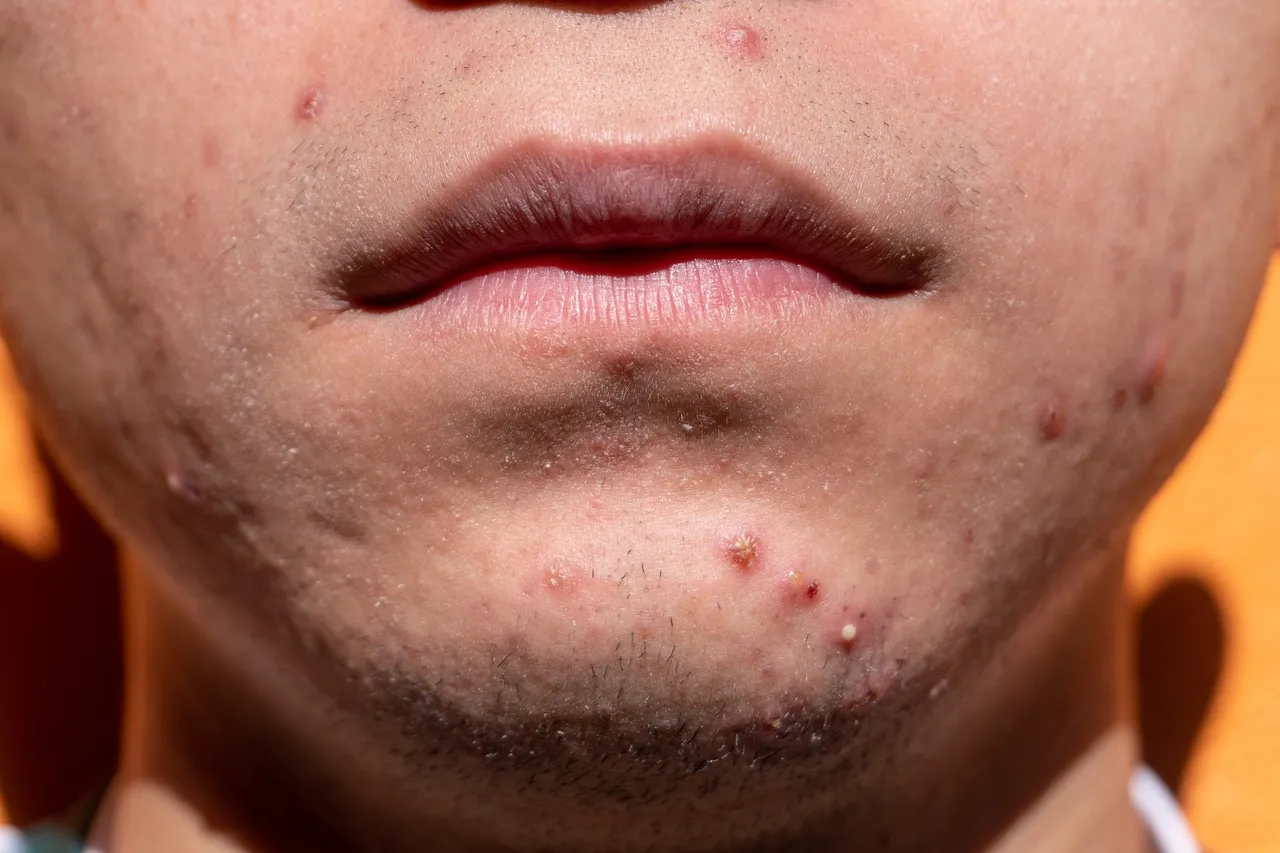
What to expect: If your acne tends to show up along the jawline, chin, and lower face, with deep, cystic lesions that flare in patterns, hormonal factors like testosterone and DHT are very likely playing a role. This type of acne responds well to treatments that address the hormonal pathway directly. Read more about how to tell if your acne is hormonal or bacterial.
Does High Testosterone Always Mean More Acne?
This is one of the most common misconceptions about hormonal acne, and it is worth addressing directly. High testosterone does not automatically cause acne. Many people with elevated testosterone levels have perfectly clear skin, while others develop severe acne with testosterone levels well within the normal range.
The determining factors are not just how much testosterone you have, but how your body processes it:
| Factor | What It Means for Acne |
|---|---|
| 5-alpha reductase activity | Higher enzyme activity means more testosterone is converted to DHT in the skin, amplifying the acne-causing signal |
| Androgen receptor density | More receptors on sebaceous glands mean those glands respond more aggressively to the same amount of DHT |
| Androgen receptor sensitivity | Genetic variations in androgen receptor structure can make some people's glands hyper-responsive even at normal hormone levels |
| SHBG levels | Sex hormone-binding globulin binds to testosterone and makes it inactive. Low SHBG means more free testosterone is available to be converted to DHT |
| Sebaceous gland size | Some people naturally have larger, more productive oil glands — meaning even normal androgen stimulation produces more sebum |
A study published in Dermato-Endocrinology found that local androgen metabolism within the skin itself — not just circulating hormone levels — is a critical determinant of who develops acne. Your sebaceous glands can produce their own androgens through enzymes present in the skin, which means that even with normal blood testosterone levels, the hormonal environment at the level of your pores can be highly androgenic.
This is why blood tests for testosterone often come back "normal" in people with clearly hormonal acne. The issue is not always how much testosterone your body makes — it is how much DHT your skin makes from that testosterone, and how responsive your oil glands are to the signal.
Testosterone and Acne During Puberty
The most dramatic demonstration of testosterone's effect on acne happens during puberty. When the adrenal glands and gonads begin producing androgens in higher quantities, sebaceous glands respond by enlarging and increasing oil production — often dramatically. This is why acne is nearly universal during adolescence, affecting an estimated 85% of teenagers to some degree.
During puberty, testosterone levels can increase tenfold or more over a relatively short period. The sebaceous glands, which have been relatively dormant during childhood, suddenly receive a powerful hormonal stimulus that they are not accustomed to. The result is often a rapid onset of acne — sometimes severe — that gradually stabilizes as hormone levels plateau and the skin adapts.
For many people, acne improves naturally in the late teens or early twenties as hormonal fluctuations stabilize. But for a significant number — particularly those with genetically sensitive sebaceous glands — hormonal acne persists well into adulthood. If you are dealing with acne that started during puberty and never fully resolved, the hormonal component is almost certainly still playing a role. Read our full guide on hormonal acne treatment for a deeper look at managing ongoing hormonal breakouts.
Does Testosterone Replacement Therapy (TRT) Cause Acne?
If there is any remaining doubt about whether testosterone causes acne, testosterone replacement therapy provides one of the clearest real-world demonstrations of the connection. When people begin TRT — whether for hypogonadism, gender-affirming hormone therapy, or anti-aging purposes — acne is one of the most commonly reported side effects.
How Common Is TRT-Related Acne?
Studies consistently show that acne affects a significant proportion of people on TRT. A 2017 review published in the American Journal of Clinical Dermatology found that acne is reported in approximately 40-50% of people receiving testosterone therapy. The risk is particularly high in the first several months of treatment, when the body is adjusting to the new hormonal environment. Some research suggests that the acne risk with TRT may be even higher in people who had acne as teenagers — further evidence that genetic susceptibility to androgen-driven acne is a persistent trait.
Why TRT Triggers Breakouts
TRT-related acne occurs through the same DHT-mediated pathway described above, but with an important distinction: the increase in testosterone is externally driven and often more abrupt than natural hormonal changes. This sudden elevation can overwhelm the sebaceous glands, which have to rapidly upregulate their response to the new androgen levels.
Several factors specific to TRT influence acne severity:
- Dose and formulation: Higher doses and formulations that create larger testosterone spikes (like injections versus gels) tend to cause more acne. Injectable testosterone creates cyclical peaks and troughs in hormone levels, and the peaks can drive more aggressive sebum production
- Supraphysiologic levels: If TRT pushes testosterone above the normal physiological range, acne risk increases substantially. Proper dose titration by a clinician is essential
- Rate of change: A rapid increase from low to normal or high testosterone triggers more acne than a gradual adjustment. This is why breakouts are often worst in the first three to six months of therapy
- Individual DHT conversion rate: Some people are "high converters" — their 5-alpha reductase enzymes are highly efficient at turning testosterone into DHT. These individuals tend to experience more androgenic side effects, including acne, on TRT
Red flag: If you are on TRT and experiencing severe or rapidly worsening acne — especially deep, cystic lesions that are painful or leaving scars — do not wait for it to resolve on its own. Severe acne can cause permanent scarring, and effective treatments are available that can be used alongside your testosterone therapy. See a dermatologist early rather than hoping it will pass.
Gender-Affirming Testosterone Therapy and Acne
Acne is also a common concern for transgender and nonbinary people beginning masculinizing hormone therapy. Research published in the Journal of the American Academy of Dermatology found that acne develops in a significant majority of people starting testosterone as part of gender-affirming care, with peak severity typically occurring in the first one to two years of therapy. The acne patterns closely mirror those seen during typical male puberty — which makes sense, since the hormonal changes are analogous.
It is important for people undergoing gender-affirming testosterone therapy to know that acne is a manageable and expected side effect, not an indication that something is going wrong. A dermatologist experienced with hormone-related acne can help develop a treatment plan that controls breakouts without interfering with your gender-affirming goals. If you are navigating this situation, you may also find our article on whether HRT causes acne helpful.
Other Androgens That Contribute to Acne
While testosterone and DHT get the most attention, they are not the only androgens involved in acne. A complete picture of hormonal acne includes several other players:
- DHEA-S (dehydroepiandrosterone sulfate): Produced by the adrenal glands, DHEA-S is the first androgen to rise during puberty and is often elevated in people with early-onset acne. It serves as a precursor that can be converted to more potent androgens in the skin
- Androstenedione: Another precursor hormone that can be converted to either testosterone or estrogen. Elevated androstenedione is sometimes found in people with persistent hormonal acne
- Insulin and IGF-1: While not androgens themselves, insulin and insulin-like growth factor 1 amplify androgen signaling in the skin. High insulin levels increase free testosterone (by reducing SHBG), stimulate androgen production, and directly promote sebum production through independent pathways. This is why high-glycemic diets and conditions like insulin resistance are closely linked to acne
The interplay between these hormones explains why acne is often multifactorial — it is rarely just one hormone acting alone. Conditions like polycystic ovary syndrome (PCOS), which involves elevated androgens and insulin resistance, illustrate how multiple hormonal imbalances can converge to cause persistent, treatment-resistant acne.
How to Treat Testosterone-Related Acne
The good news is that hormonal acne — including acne driven by testosterone and DHT — is highly treatable. Treatment approaches target different points along the hormonal-acne pathway, and the most effective plans often combine multiple strategies.
Topical Retinoids (Tretinoin, Adapalene)
Retinoids remain the foundation of acne treatment, including hormonal acne. They work by normalizing skin cell turnover inside the follicle, preventing the formation of microcomedones — the initial plugs that start the acne process. Tretinoin and adapalene also have anti-inflammatory properties and can reduce the size of sebaceous glands over time. While they do not address the hormonal root cause directly, they effectively interrupt the downstream effects of excess sebum production.
Spironolactone
Spironolactone is an anti-androgen medication that blocks testosterone and DHT from binding to androgen receptors in the skin. It is one of the most effective treatments for hormonal acne because it addresses the root cause — androgen activity — rather than just managing symptoms. By reducing the androgenic signal reaching your sebaceous glands, spironolactone decreases sebum production and can dramatically improve acne that has not responded to topical treatments alone.
A systematic review published in the Journal of the American Academy of Dermatology found that spironolactone reduced acne lesions by 50-100% in the majority of patients studied. It is typically used for people who are not trying to conceive and who have acne patterns consistent with androgen sensitivity. Learn more about this treatment in our article on spironolactone for hormonal acne.
Isotretinoin (Accutane)
For persistent acne that has not responded to other treatments — including hormonal acne — isotretinoin is often the most effective option. It works by dramatically shrinking sebaceous glands (by up to 90%), reducing sebum production to a fraction of its pre-treatment levels, and normalizing follicular keratinization. Because it reduces the size and activity of the glands that androgens act on, isotretinoin can be effective even when the hormonal driver remains in place — making it a powerful tool for people on TRT or with conditions like PCOS where androgen levels cannot easily be reduced.
Topical and Oral Antibiotics
Antibiotics like doxycycline target the bacterial and inflammatory components of acne. While they do not address the hormonal root cause, they can be very effective for managing inflammatory acne while other treatments (retinoids, anti-androgens) take effect. They are typically used as a bridge therapy rather than a long-term solution, since prolonged antibiotic use raises concerns about bacterial resistance.
Lifestyle Modifications
While lifestyle changes alone rarely resolve moderate to severe hormonal acne, they can support your treatment and improve outcomes:
- Reduce high-glycemic foods: Cutting back on refined carbohydrates and sugar can lower insulin levels, which in turn reduces free testosterone and decreases androgenic stimulation of sebaceous glands
- Manage stress: Chronic stress elevates cortisol, which can increase androgen production and worsen acne. Evidence-based stress reduction strategies (exercise, adequate sleep, mindfulness) can help
- Use non-comedogenic skincare: Choosing products that will not clog pores reduces one variable in the acne equation, giving your other treatments a better chance to work
| Treatment | How It Targets Hormonal Acne | Typical Timeline for Results |
|---|---|---|
| Topical retinoids | Prevents clogged pores, reduces inflammation, shrinks oil glands | 8-12 weeks |
| Spironolactone | Blocks androgen receptors, reduces sebum production at the hormonal level | 3-6 months |
| Isotretinoin (Accutane) | Dramatically shrinks sebaceous glands, reduces sebum by up to 90% | 4-6 months (full course) |
| Oral antibiotics | Targets bacteria and inflammation (does not address hormones directly) | 4-8 weeks |
| Low-glycemic diet | Lowers insulin and free testosterone, reduces androgenic stimulation | Several weeks (supportive) |
What to expect: Most hormonal acne treatments take time to work. Topical retinoids typically show improvement at eight to twelve weeks, spironolactone at three to six months, and isotretinoin over a full four-to-six-month course. If you are not seeing results yet, give your treatment adequate time before concluding it is not working. Your dermatologist can adjust your plan as needed along the way.
Managing Acne While on TRT
If you are on testosterone replacement therapy and dealing with breakouts, the challenge is clear: you need to manage acne without discontinuing a therapy that is important for your health or well-being. The good news is that this is entirely possible. Here is an approach that works for many of our patients.
Acne Management Checklist for TRT Patients
- Talk to your prescribing clinician about dose optimization — supraphysiologic levels increase acne risk
- Consider more frequent, smaller doses to reduce hormonal peaks and troughs
- Start a topical retinoid (tretinoin or adapalene) early — ideally when beginning TRT, before severe acne develops
- Use a gentle, non-comedogenic cleanser twice daily
- Ask your dermatologist about spironolactone or other anti-androgen options if appropriate for your situation
- Discuss isotretinoin with a dermatologist if acne is persistent, severe, or scarring
- Keep your diet low-glycemic to avoid amplifying androgenic effects through insulin
- Be patient — TRT-related acne often improves after the first six to twelve months as your body adjusts
The key principle is early intervention. It is much easier to prevent severe acne from developing than to treat it after cystic lesions and scarring have already occurred. If you are starting TRT and have a history of acne, consider proactively setting up a dermatology appointment. At Honeydew, we work with patients on TRT and other hormone therapies regularly, and we understand how to balance acne management with your broader treatment goals. View our pricing and membership options.
When to See a Dermatologist for Hormonal Acne
Not all hormonal acne requires prescription treatment — mild breakouts that respond to a good skincare routine may not need medical intervention. But there are clear signals that it is time to see a professional:
- Your acne is deep, cystic, or painful — these lesions are more likely to cause permanent scarring and rarely respond to over-the-counter products alone
- You have tried consistent topical treatment for 8-12 weeks without meaningful improvement
- Your breakouts are leaving scars or dark marks that affect your confidence and quality of life
- You suspect a hormonal component (jawline/chin distribution, cyclical flares, onset with TRT or other hormonal changes)
- Acne is affecting your mental health — causing anxiety, social withdrawal, or depression
At Honeydew, our board-certified dermatologists and other qualified providers specialize in treating all types of acne, including persistent hormonal breakouts. We offer same-day or next-day virtual appointments, so you do not have to wait weeks to get the help you need. Learn more about how we treat acne.
The Bottom Line
Testosterone is a fundamental driver of acne, but the relationship is not as simple as "more testosterone equals more pimples." What matters most is the downstream conversion to DHT, the sensitivity of your sebaceous glands to that DHT, and the complex interplay between androgens, insulin, genetics, and your skin's own local hormone production. This is why two people with identical testosterone levels can have completely different skin — and why treating hormonal acne effectively requires understanding the specific factors at play in your case.
Whether your acne is related to puberty, natural hormonal fluctuations, TRT, gender-affirming hormone therapy, or another cause, effective treatments exist. Topical retinoids, spironolactone, isotretinoin, and other prescription options can target the hormonal-acne pathway at different points, and most people see significant improvement with the right approach. The key is not to wait — especially if your acne is severe, scarring, or affecting your quality of life.
You do not have to figure this out alone. A dermatologist who understands hormonal acne can evaluate your specific situation and build a treatment plan that addresses the root cause of your breakouts.
.webp)

Medically Reviewed by
Joel Spitz, MD
Co-Founder & Chief Medical Officer, Board Certified Dermatologist