Key Takeaways

A 1% retinol serum might sound stronger than a 0.025% tretinoin cream. However, it’s quite the opposite.
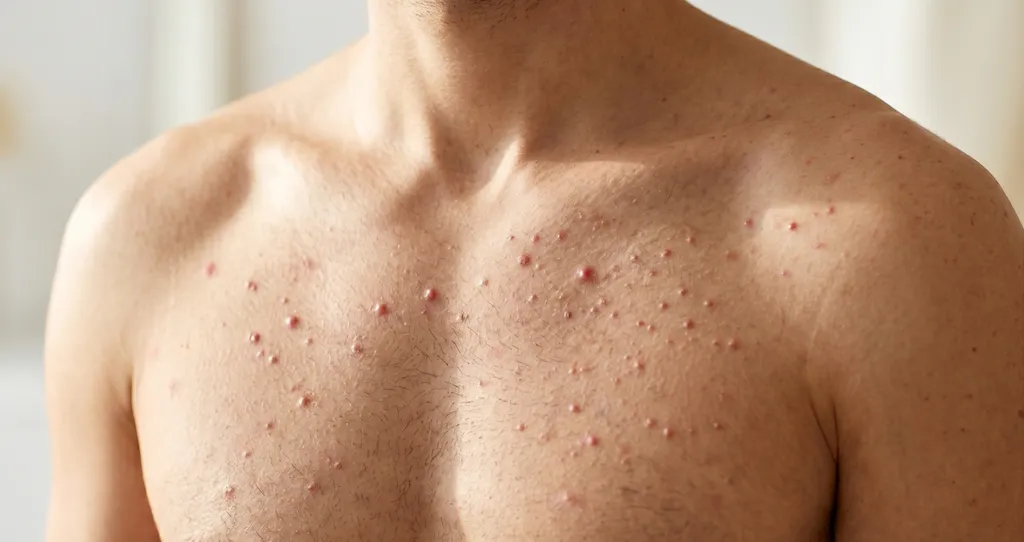
Retinol has an appealing pitch for people trying to treat acne. It promises many of the benefits associated with prescription retinoids while sounding considerably easier and more tolerable. It is over the counter and avoids the irritation and inconvenience associated with prescription treatment.
Nonetheless, over-the-counter retinol and prescription tretinoin are not interchangeable. Although both products belong to the same family of vitamin A derivatives, they sit at opposite ends of the same chemical pathway..
Tretinoin Is Ready to Work
Retinol does not act on the skin directly. Enzymes in the skin first have to convert it into its active form, retinoic acid, before the molecule can have any effect on skin cells. Only a small percentage of the retinol applied to the skin is converted into the active form of retinoic acid.
The pathway approximately looks like this:
Retinyl esters to Retinol to Retinaldehyde to Retinoic acid
Unlike retinol, tretinoin is already 100% the active form of retinoic acid. It starts at the end of the chain, so there’s no chemical conversion required and no potency lost along the way. One hundred percent of the molecule is active on the skin’s cells.
In a study published in the Journal of Investigative Dermatology, researchers compared retinol, retinaldehyde, retinyl palmitate, and retinoic acid. They described retinol as a weaker retinoid than retinoic acid. Retinol could produce similar kinds of cellular and molecular changes, but it required substantially higher concentrations to do so.
This is why the percentage on the bottle can be misleading. For example, a 1% retinol serum sounds much stronger than tretinoin 0.025%. It is not. One product contains a relatively high concentration of a precursor that still needs to be metabolized into the active form. The other contains a much lower concentration of the molecule that the pathway is trying to produce.
The AAD Recommends Tretinoin for Acne, not Retinol
Retinol is capable of changing skin, but patients often treat cosmetic retinol and prescription tretinoin as interchangeable acne treatments. The evidence for the two is quite different.
The American Academy of Dermatology’s acne guidelines strongly recommend topical retinoids for acne based on a systematic review of the clinical evidence. Prescription tretinoin belongs to that group and has been studied as an acne medication for decades.
Cosmetic retinol does not have an equivalent evidence base for acne.
In fact, a systematic review of randomized trials of over-the-counter retinol found that even the evidence for facial skin aging, where cosmetic retinol has been studied much more extensively, was limited by small studies, inconsistent formulations, and methodological problems.
As a corollary, buying a retinol serum involves more uncertainty. The concentration varies. The formulation affects stability and penetration. The skin then has to convert the ingredient into its active form.
With tretinoin, the conversion problem has already been solved. You are using the most effective form of this medicine.
Gentleness Is the Tradeoff
There is a reason patients like retinol: It is a gentle treatment.
Tretinoin can cause dryness, redness, peeling, and irritation, especially when treatment begins. By contrast, retinol generally produces less irritation because it delivers weaker retinoid activity.
For someone primarily interested in gradual improvements to texture or signs of aging, or someone whose skin cannot tolerate prescription retinoids, that can be a perfectly reasonable tradeoff.
For acne, however, gentleness and effectiveness have to be weighed against each other.
A patient who cannot tolerate tretinoin will not benefit from a tube sitting unused in a bathroom drawer. Nonetheless, tretinoin does not have to be used at the highest concentration every night. Dermatologists can adjust concentration, formulation, frequency, and the surrounding skincare routine to make treatment more tolerable.
The $15 Rx Cream Beats the $21 Over-the-Counter Serum
One might expect the weaker option to at least be cheaper. In this case, it is not.
Take CeraVe’s Resurfacing Retinol Serum, a common over-the-counter retinol product. As of late August 2026, it was listed at $21.99. More premium retinol serums can cost considerably more.
Meanwhile, as of late August, Amazon Pharmacy estimated approximately $15 for a 20-gram tube of generic tretinoin 0.025% cream. Prices vary by pharmacy, insurance, formulation, and discount program, of course, and obtaining a prescription may involve its own cost. Even so, the medication that works more effectively can cost less than an ordinary drugstore retinol serum.
Consequently, patients may spend $20, $50, or $80 on a cosmetic precursor because prescription tretinoin sounds like the more aggressive and expensive option. In practice, the prescription medication may cost the same or less while delivering the active retinoid directly.
Choosing the Right Tool
Retinol has a legitimate place in skincare. It is gentler, easy to purchase, and can produce meaningful improvements in skin for patients willing to accept a slower and less potent approach.
However, acne is a medical condition that is more complicated than a simple skincare concern. If the goal is treating acne, tretinoin has a straightforward advantage. It begins at the end of the retinoid pathway rather than relying on the skin to get it there. The clinical evidence is stronger, the dose can be adjusted with a dermatologist, and the generic medication often costs about what patients already spend on OTC retinol, if not less.
In a rare combination of affordability and greater effectiveness, a $15 tube of prescription tretinoin does more than a $20 or more bottle of OTC retinol to address acne, fine lines, and skin texture.


.webp)