Key Takeaways
 Popping a pimple trades a few days of a visible bump for higher odds of infection, dark marks, and scars.
- Dermatologists generally advise against popping pimples at home, including whiteheads.
- Squeezing pushes bacteria and inflammation deeper, which can make a pimple more noticeable and invite infection.
- Dark marks after picking can be more prominent and persistent on darker skin tones.
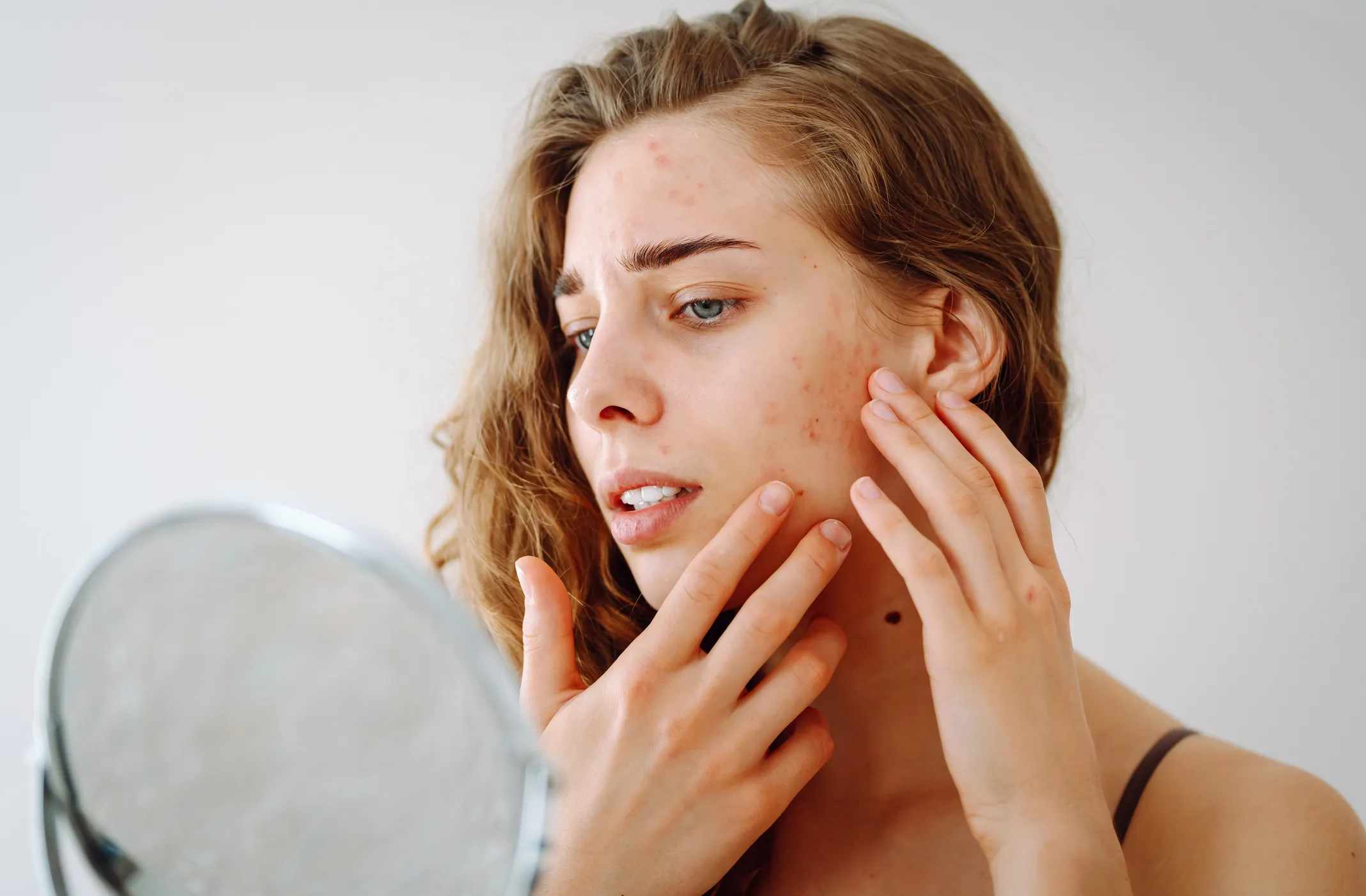
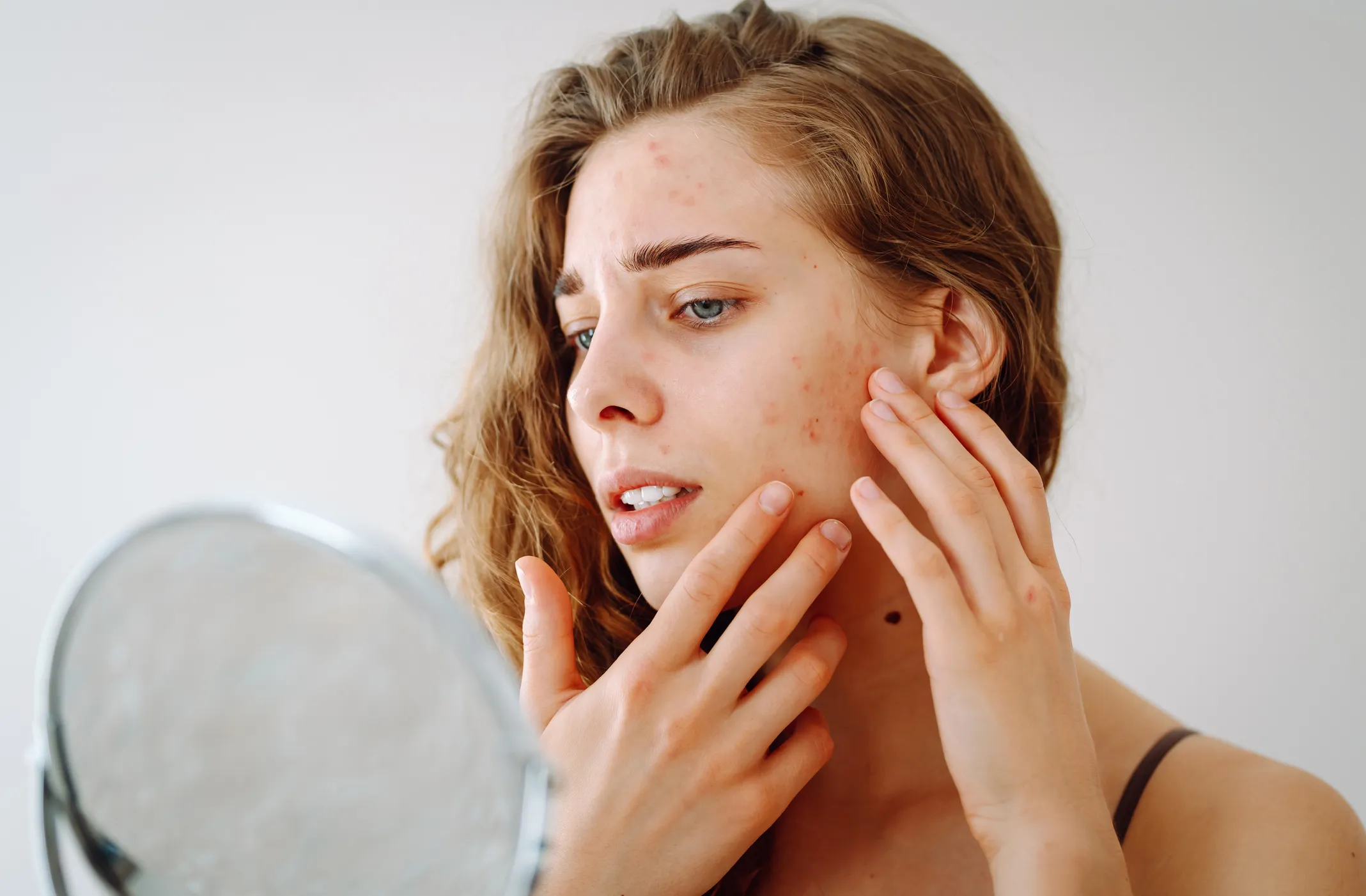
We’ve all been there: you look in the mirror, see a pimple or three, and instantly feel the urge to squeeze it away. You’re definitely not alone in that compulsion. TIME magazine highlighted our collective fixation with pimple popping videos in their deep dive on why internet audiences are so fascinated by them.
But while watching some stranger pop their pimples on a screen is harmless, taking matters into your own hands is another story. Clinical data from a 2024 study revealed that even occasional pimple popping multiplies your odds of permanent acne scarring by nearly 2.7 times.
A stubborn zit will usually fade on its own in a matter of days, but scarring can alter your skin permanently. Is popping ever actually safe if you're careful, or are you playing roulette with your skin?
Quick Answer: Is it bad to pop pimples?
Yes, popping a pimple usually does more harm than good. Squeezing can push bacteria and inflammation deeper into the skin, raising the risk of infection, dark marks, and scars. Honeydew's providers favor hands off, plus early prescription treatment if pimples keep coming back.
Here are the eight reasons dermatologists give, which pimples are riskiest to squeeze, and what to do instead.
What happens under your skin when you pop a pimple?
Most of the damage from popping happens below the surface, where you can't see it.
1. It pushes the gunk deeper and makes the pimple worse
A squeeze can force some of a pimple's contents out, but it often drives pus and bacteria deeper into the skin as well. According to the American Academy of Dermatology, that deeper push increases inflammation, making the bump more painful and noticeable than before you touched it. Even if you don't see pus, squeezing often brings out a clear or yellowish liquid. That liquid is serous fluid and white blood cells rushing to repair the damage you just caused, not a sign that the pimple is healed.
2. It turns a pimple into an open wound
Popping means creating open wounds. Bacteria from your hands can get through the broken skin and cause an infection.
3. It can spread into new breakouts
Pus and bacteria don't always stay where they started. Popping can spread them and potentially lead to new breakouts.

“Picking or squeezing a pimple can worsen inflammation, damage surrounding skin, and contribute to additional breakouts.”
— Sarah Kenis, DCNP | Board-Certified Dermatology Nurse Practitioner
A 2026 paper in the Journal of Cosmetic Dermatology notes that picking at acne results in dark marks, scars, and more acne.
4. In rare cases, a face infection turns serious
You may have seen videos warning about the “triangle of death,” the area from the bridge of your nose to the corners of your mouth. The anatomy is real: veins there connect into the cavernous sinus, a system of larger veins that leads into the brain. But an infected clot there, called cavernous sinus thrombosis, is extremely rare. More than half of cases start with a sinus infection, not a pimple, and modern antibiotics have made bad outcomes rare.
Red flag: Fever, pain, rapidly worsening swelling, or spreading redness around a popped pimple are red flag signs to get medical care promptly. A bulging eye, trouble moving the eye, or vision loss can be signs of that clot and need care right away.
Those are the short-term costs. The ones that last show up after the pimple is gone.
What can a popped pimple leave behind?
The longest-lasting harm from popping is what stays after the pimple heals: scars, marks, and sometimes a habit that's hard to drop.
5. It raises your odds of a permanent scar
Acne scars are more common than most people think. A 2023 analysis of 37 studies and 24,649 people with acne found that 47% had scars. In the 2024 study from the top of this article, people who sometimes squeezed or picked had 2.69 times the odds of scarring, even after other risk factors were accounted for.
The evidence isn't unanimous. A 2024 Ecuador study of 404 people found picking wasn't a significant risk factor, while acne severity, male sex, and oily skin were. Severity is the factor that shows up most consistently, and a 2026 review in Australian Prescriber ties scar risk to severity, delayed control, and picking. If you already have some, our guide to acne scars explains which kinds fade.
6. It can leave dark marks that outlast the pimple
Even without a scar, a squeezed pimple can leave a flat mark behind. The dark version is called post-inflammatory hyperpigmentation (PIH): extra pigment your skin makes in response to inflammation. Some patients can also develop lingering pink or red marks, known as post-inflammatory erythema (PIE). Squeezing or scratching acne is one of the important risk factors for post-acne pigmentation changes.
These marks can be more prominent and persistent in darker skin tones, according to the same Australian Prescriber review. Our guide to fading dark spots covers what helps them clear.
“One thing I always explain to my patients is that the dark marks left behind after acne aren’t necessarily scars, but PIH/PIE, and picking at a pimple can really make that pigmentation worse. These marks can take several months to fade, especially in patients with darker skin tones. The good news is that with consistent sun protection, the right skin care routine, and time, discoloration will eventually improve.”
— Sarah Kenis, DCNP | Board-Certified Dermatology Nurse Practitioner
7. It can turn into a habit that's hard to stop
For some people, popping isn't a one-off. In a 2025 survey of 180 university students, 52.2% squeezed their acne, and about 1 in 5 said that once they start, it's difficult to stop.
When picking becomes repetitive and damages the skin, it can be skin picking disorder (also called excoriation disorder). Research suggests it affects about 1% to 5% of people, and acne is one of its best-known triggers. It's treatable: cognitive behavioral therapy (CBT), which can include habit reversal training, is considered the first-line treatment.
8. It does nothing about the next pimple
Popping deals with one bump. It does nothing about the clogged pores already forming the next one. That's why dermatologists focus on controlling acne rather than individual pimples: early effective therapy reduces the risk of permanent scarring. The 2024 AAD guidelines make strong recommendations for treatments like benzoyl peroxide, topical retinoids, and oral doxycycline. Not every pimple carries the same risk, though.
Which pimples are the riskiest to squeeze?
The deeper and more inflamed a pimple is, the more a squeeze tends to cost. Here's how the common types of acne, pimples and zits compare.
| Pimple type | What it is | What squeezing tends to do | What a provider can do |
|---|---|---|---|
| Blackhead | A clogged pore that's open at the surface | Can break the skin and leave an open wound | Remove it with sterile instruments |
| Whitehead | A clogged pore closed under a thin layer of skin | Can push contents deeper and inflame the area | Remove it with sterile instruments |
| Red bump or pustule | An inflamed pimple, sometimes with a pus-filled top | Pushes pus and bacteria deeper, raising infection and scar risk | Prescribe treatment for the acne behind it |
| Nodule or cyst | A deep, painful lump under the skin | Makes it more noticeable and raises the risk of infection, discoloration, and scarring | Inject a corticosteroid, or open and drain it with sterile tools |
Dermatologists do remove blackheads and whiteheads, using sterile instruments. At home, even a careful squeeze still leaves broken skin. For deep, painful lumps, the AAD's advice is blunt: hands off, because squeezing can make them more noticeable and raise the risk of infection and scarring, especially in darker skin.
So what do you do with a pimple you can't stop looking at?
What should you do instead of popping a pimple?
A pimple you leave alone is generally considered less likely to scar or darken than one you squeeze, and a few simple steps can help it along.
- Use a warm compress on deep pimples: The AAD suggests a clean washcloth soaked in comfortably warm water, held on the spot for 10 to 15 minutes, three times a day.
- Spot-treat with a thin layer: Over-the-counter adapalene, azelaic acid, benzoyl peroxide, or salicylic acid can help. A thin layer is enough, since more can irritate your skin.
- Cover it with a patch: A pimple patch keeps the spot covered and your fingers away. The evidence is still early: one review found limited published research, though a small study saw improvement in pimples that had already been extracted.
- Wear sunscreen while it heals: Daily sunscreen helps lower the risk of light-induced dark marks after a breakout.
Already popped one? Stop squeezing, keep it clean, and cover it while it heals.
What to expect: A Cleveland Clinic dermatologist notes that a scar needs about a year to mature into its final look. A mark that looks rough in week two often gets better with time.
If you’ve already popped a pimple, Sarah Kenis, DCNP, offers some reassurance.
“Not every popped pimple will scar, so don’t panic! Once the skin is broken, we want to treat it like a small wound rather than an active breakout. Gently cleanse the area, apply a thin layer of Vaseline or Aquaphor and keep your hands off while it heals. Sun protection is especially important to help prevent PIH. Once the skin has fully healed, you can resume your usual acne treatments with ingredients like retinoids and azelaic acid, which can also help target any discoloration left behind.”
— Sarah Kenis, DCNP | Board-Certified Dermatology Nurse Practitioner
When a pimple is too deep for home care, or new ones keep coming, that's a job for a provider.
What can a dermatology provider do that you can't?
Dermatology providers can deal with a stubborn pimple safely and, more importantly, treat the acne that keeps making new ones. In the office, a dermatologist can remove blackheads and whiteheads with sterile tools, inject a corticosteroid (a fast-acting anti-inflammatory) into a painful cyst, or open and drain one with a sterile needle or blade.
Those are in-person procedures. The bigger lever is prescription treatment that stops pimples from forming. The 2024 AAD guidelines strongly recommend Accutane (isotretinoin) for acne that's severe, weighing on you emotionally, or causing scarring. And if over-the-counter products haven't helped within 4 to 6 weeks, the AAD says a dermatologist can help you clear your skin.
That's where we come in. You can see one of our dermatology providers without a waiting room, with same-day consults available and care managed 100% online. Honeydew is trusted by 30,000+ patients. Our providers prescribe acne treatment from topicals to isotretinoin, delivered to your door or sent to your local pharmacy.
Honeydew Recommends
Our providers recommend keeping your hands off your pimples, even the whiteheads that look ready to go, and treating your acne early with prescription care if you keep getting pimples worth popping.
“I see this a lot with my patients. They’ll notice a small bump or clogged pore and feel the need to squeeze it. Unfortunately, picking creates more inflammation and prolongs healing, turning something that may have been resolved in a few days into a mark that can last for months. I recommend keeping hydrocolloid patches handy and avoiding magnifying mirrors. Sometimes the best thing to do for a breakout is leave it alone and give your skin a chance to heal.” says Sarah Kenis, DCNP.
It’s a risky tradeoff. A squeeze trades a few days of a visible bump for higher odds of infection, dark marks, and scars. And because scar risk climbs with how severe and how long-lasting acne is, preventing the next pimple does more for your skin than handling any single one perfectly.
This matters most if you get new pimples most weeks, already see dark marks or scars, get deep and painful lumps, or have used over-the-counter products for 4 to 6 weeks without results. If picking feels hard to stop, tell your provider; it's common and treatable. Two honest limits: not every popped pimple scars, so one slip isn't a disaster, and online care can't drain or inject a single cyst. What we can do is treat the acne behind it.
Your first consultation is free. Membership for most care starts at $25/month with an annual plan, and Accutane care starts at $50/month with an annual plan. Medications aren't included in the membership; they're prescribed to outside pharmacies and may be covered by insurance. The membership is HSA/FSA eligible.
Start your free online consultation and get a plan that stops pimples before you're tempted to squeeze.
References Cited
- Why are people so obsessed with watching pimple popping videos? TIME, 2018.
- Squeezing and picking behaviors and acne scarring (cross-sectional, 225 patients). PMC, 2024.
- Pimple popping: why only a dermatologist should do it. American Academy of Dermatology, updated 2023.
- Why clear liquid comes out of a pimple (and what to do about it). Honeydew.
- How to treat a deep, painful pimple. American Academy of Dermatology, updated 2023.
- Why is it bad to pop a pimple? Cleveland Clinic, 2024.
- Popping pimples in the triangle of death. Henry Ford Health, 2026.
- Cavernous sinus thrombosis. MSD Manual, reviewed 2026.
- Acne, excoriation and post-acne hyperpigmentation. Journal of Cosmetic Dermatology via PMC, 2026.
- Excoriation (skin picking) disorder: Symptoms, causes & treatment. The Recovery Village.
- Prevalence of acne scars (systematic review, 37 studies, 24,649 patients). PMC, 2023.
- Risk factors for acne scarring (404 participants). PLOS ONE, 2024.
- Acne review. Australian Prescriber via PMC, 2026.
- Acne self-picking survey (180 students). PMC, 2025.
- Skin picking disorder review. PMC, 2024.
- AAD guidelines of care for the management of acne vulgaris. Journal of the American Academy of Dermatology, 2024.
- Hydrocolloid dressings for acne (review). PMC, 2025.

Medically Reviewed by
Sarah Kenis, DCNP
Board Certified Dermatology Nurse Practitioner