
Dermatologist-guided care,
personalized to your skin.

GET STARTED

Acne treatment comparison

Oral vs topical spironolactone

Oral spironolactone works throughout the body and has the stronger evidence base for persistent hormonal acne in adult women. Topical spironolactone is a compounded, off-label option for specific areas, with lower expected systemic exposure but much more limited evidence. Sharing an ingredient does not prove equal results or risk.

Get Started

A licensed provider decides whether either formulation is appropriate after reviewing your skin, health history and pregnancy plans.

Person considering acne treatmentOne goal. Different paths.
The short answer

Oral therapy may fit a persistent or widespread hormonal pattern. A compounded topical may fit localized breakouts or a preference to avoid a pill. “Topical” does not mean zero absorption, pregnancy concern or follow-up.

At a glance

Systemic reach or treatment limited to the skin you cover

Use the selector to surface the first tradeoff to discuss. This comparison cannot diagnose your acne or predict a compounded formula’s performance.

Compare by priority

Select what matters most to your decision.

Choose a priority to highlight the most relevant treatment profile.

Spironolactone treatmentSystemic antiandrogen

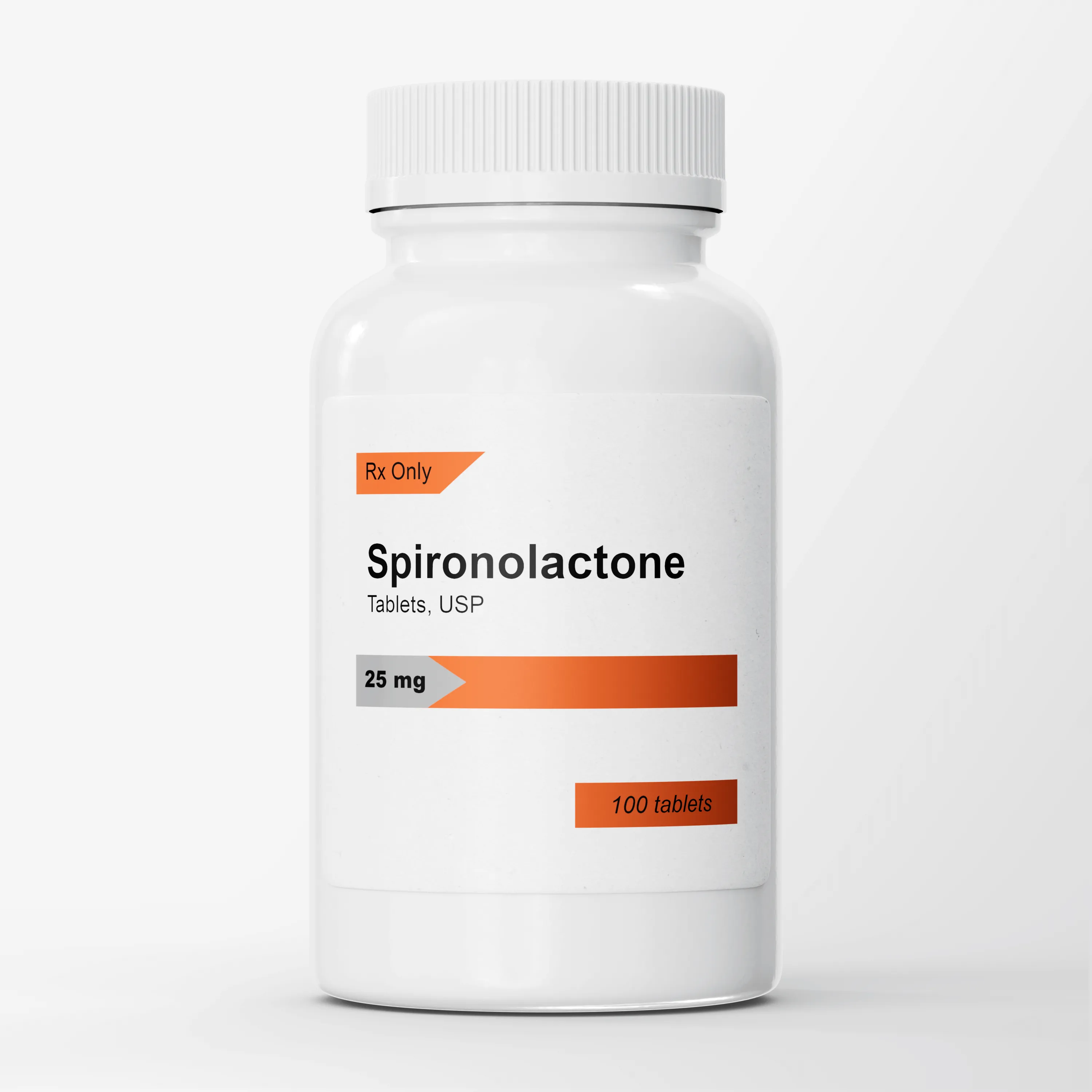
Oral spironolactone

An off-label tablet that blocks androgen effects throughout the body and can reduce the oil signal behind recurring hormonal breakouts.

  • Often discussed forPersistent, cyclical or widespread hormonal acne in appropriate adult women
  • EvidenceRecommended as a systemic option by current AAD guidance, with modern randomized trial support
  • First assessmentOften around 8–12 weeks; improvement may become clearer over several months
  • TradeoffBroader reach comes with systemic contraindications, interactions and side effects
Topical spironolactone treatmentCompounded topical antiandrogen

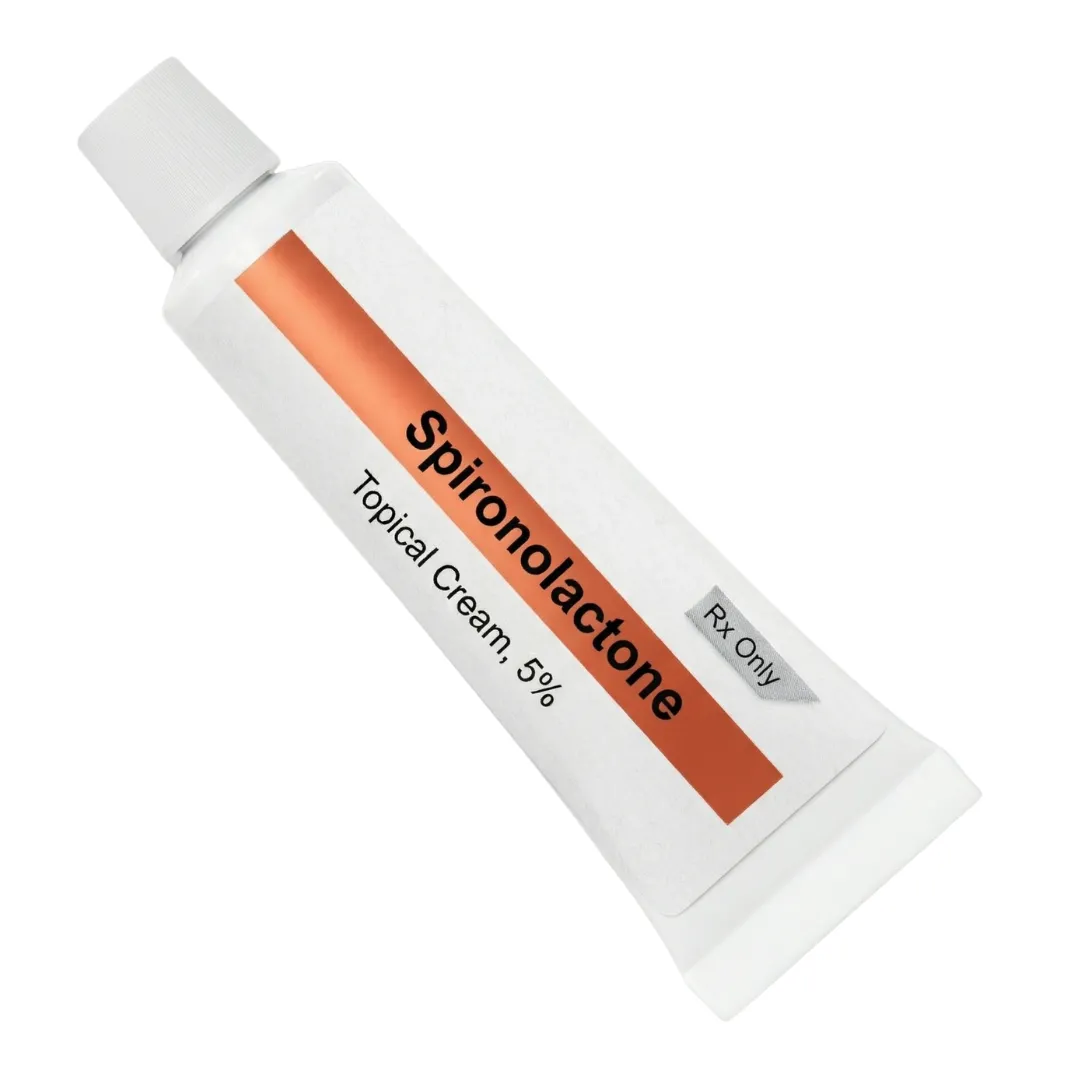
Topical spironolactone

An off-label prescription applied to acne-prone skin. It targets androgen effects locally, but no topical spironolactone acne product is FDA-approved.

  • Often discussed forLocalized mild-to-moderate hormonal breakouts or a preference for non-oral care
  • EvidenceSignals from small studies with varied strengths, vehicles and designs
  • First assessmentOften after 8–12 weeks of consistent use, with formulation-specific expectations
  • TradeoffLower expected systemic exposure, but less standardized evidence and possible skin irritation

Best suited for

Choose by acne pattern, treatment area and medical context

Neither route replaces a complete acne routine. Other treatments may still address clogged pores, inflammation or maintenance.

Oral spironolactone may fit when…

  • Cyclical jawline, chin or lower-face breakouts
  • Persistent hormonal acne extending beyond a small treatment area
  • Breakouts that have not improved enough with a topical routine alone
  • A hormonal strategy that avoids open-ended antibiotic use

It may not fit when

  • Pregnancy is current, planned or possible
  • Kidney disease, high potassium, low blood pressure or interactions raise risk
  • The patient wants to avoid a daily systemic medicine
  • The acne pattern does not suggest an androgen-responsive role

Topical spironolactone may fit when…

  • Mild-to-moderate hormonal breakouts affect selected facial areas
  • A patient prefers a non-oral prescription and can apply it consistently
  • Oral side effects make a more localized strategy worth discussing
  • A provider wants to add an antiandrogen role to a broader topical plan

It may not fit when

  • Acne is deep, rapidly scarring or widespread enough to require another strategy
  • Compounded cost, texture, availability or coverage is a barrier
  • Skin is already irritated by several active topical products
  • The patient expects evidence or formulation standardization equal to an approved product
Switching is not a dose conversion: A cream concentration cannot translate into a tablet dose. If a provider switches routes or uses both, the application and follow-up plan must be prescribed.

Same ingredient, different evidence package

“Spironolactone” on the label does not make the routes equivalent

Route changes where exposure occurs, what has been studied and how standardized the product is.

What is established

Oral acne use has guideline and randomized-trial support

Acne is an off-label tablet use: the oral label covers other conditions. The AAD recommends spironolactone as a systemic acne option, and a large trial in adult women found improvement versus placebo. Providers therefore have a more mature basis for discussing response and systemic risks.

What remains uncertain

Topical results may depend on the exact compound

Small topical trials suggest benefit, but concentrations, vehicles and methods differ. Compounded drugs are not FDA-approved, so FDA does not verify their safety, effectiveness or quality before marketing. One 5% study cannot prove performance for every formula or a head-to-head win over oral treatment.

Evidence limit: Lower expected systemic exposure does not establish zero absorption, hormonal effects or pregnancy risk, or universal freedom from bloodwork. Decisions belong to the prescriber who knows the patient and formula.

Side effects and safety

Known systemic warnings versus less-defined topical safety

The oral label establishes warnings and interactions. A compounded topical has no FDA-approved label to settle every safety question.

Oral spironolactone

Commonly discussed effects

  • More frequent urination
  • Dizziness or lower blood pressure
  • Breast tenderness
  • Menstrual changes

Important safety considerations

Oral spironolactone can raise potassium and affect blood pressure or kidney function. Kidney disease, potassium products and certain medicines increase risk. A provider individualizes any labs.

Pregnancy: The oral label advises avoiding spironolactone in pregnancy because its antiandrogenic activity may pose a risk to a male fetus. Discuss pregnancy plans and contraception before treatment.
Topical spironolactone

Commonly discussed effects

  • Dryness
  • Redness or stinging
  • Irritation when layered with other active products
  • Texture or pilling that varies with the vehicle

Important safety considerations

Small studies report few systemic effects but cannot guarantee none across formulations and patients. Tell the prescriber about kidney or blood-pressure concerns, hormonal symptoms, medicines and base-ingredient reactions.

Pregnancy: Do not assume the oral warning disappears topically. No FDA-approved topical pregnancy section establishes safety; review pregnancy, conception and breastfeeding questions with the prescriber.

Treatment timeline and role

Two gradual treatments, two kinds of follow-through

Neither is a spot fix. Consistency and a review point matter.

Oral spironolactone

Screen

Review pregnancy plans, kidney history, blood pressure, medications and any need for potassium or renal testing.

Build

Take the prescribed dose consistently. Review tolerance and progress around 8–12 weeks.

Maintain

Continue while it is effective and appropriate. A provider may adjust the dose or topical support as the pattern changes.

Topical spironolactone

Map the area

Confirm the strength, vehicle, frequency, amount, treated areas and layering plan.

Protect consistency

Use it as directed and report persistent irritation. Improvement may take 8–12 weeks and can continue over several months.

Reassess the formula

Compare photos and tolerance. A limited response may call for a different vehicle, another treatment role or systemic therapy.

Interactive cost comparison

The membership can match. The medication channel may not.

Both options use Honeydew’s basic membership when prescribed. Switch the billing schedule below; medication and any lab costs stay separate.

Our basic membership

Oral spironolactone care

$25/month equivalent

Billed $299 once per year

Medication: Separate. Insurance, pharmacy, dose and quantity affect generic-tablet price.

Labs: Separate when indicated.

Our basic membership

Topical spironolactone care

$25/month equivalent

Billed $299 once per year

Medication: Separate. Price and coverage vary by pharmacy, concentration and vehicle.

Labs: The provider decides based on the patient and formula.

The practical difference

Generic tablet or custom compound

Varies

Medication access can change the decision even when the care fee is the same

Oral: Generic retail and insurance options may be easier to compare.

Topical: Ask for the exact formula, fill amount, refill interval and out-of-pocket price.

Price snapshot reviewed August 3, 2026. Honeydew lists basic membership at $25/month equivalent billed $299 annually. Medication, labs and over-the-counter products are separate. Coverage, pharmacy price and compounds vary.

How your care works

A route decision grounded in your actual pattern

Your provider weighs preference alongside reach, evidence and monitoring.

1

Show the pattern

Upload photos and share location, timing, cycle relationship and prior treatment.

2

Review the whole history

Discuss pregnancy plans, kidney and blood-pressure history, medication interactions, skin sensitivity and preferences.

3

Define the route

If prescribed, receive an oral dose or an exact topical concentration, vehicle, frequency and layering plan.

4

Track, then adjust

Compare progress photos and side effects so the provider can continue, change the formula or choose another role.

Frequently asked questions

Oral and topical spironolactone, answered

Is topical spironolactone as effective as oral spironolactone?

That is not established. Oral treatment has guideline and larger randomized evidence. Small topical studies suggest benefit, but formulas and methods vary and do not prove equality with oral treatment.

Is topical spironolactone FDA approved for acne?

No. Topical spironolactone is generally compounded and is not an FDA-approved acne product. FDA does not review a compounded drug’s safety, effectiveness or quality before marketing. Clascoterone, sold as Winlevi, is an FDA-approved topical antiandrogen for acne, but it is a different active ingredient.

Does topical spironolactone affect potassium, blood pressure or periods?

Systemic effects are expected to be less likely than with oral treatment. That is not proof of zero absorption or risk. Your provider may still review kidney health, blood pressure, hormonal symptoms and interactions.

Can I switch from oral to topical spironolactone?

A provider may discuss a switch for side effects, treatment area or preference. A topical concentration is not equivalent to a tablet dose. Do not substitute it without a prescribed transition and follow-up.

Can oral and topical spironolactone be used together?

They may be combined in selected provider-directed plans. The prescriber should account for the full regimen, systemic risks, skin irritation and whether the second route adds a useful role.

Which formulation works faster?

No reliable head-to-head evidence proves one works faster. Both are often assessed around 8–12 weeks, with continued improvement over months. Topical timing can vary by concentration, vehicle, area and adherence.

A clearer next step

Match the route to the pattern, not just the ingredient name

Start online and ask a dermatology provider whether systemic reach or a localized compounded option makes sense for your acne, health history and daily routine.

Get Started

Medical disclaimer: This page provides general U.S.-focused education and cost examples, not a diagnosis or personalized treatment recommendation. Both oral and topical spironolactone use for acne are off-label; compounded topical spironolactone is not FDA-approved. Do not start, stop, switch or combine prescription medicines without a licensed clinician. Seek urgent care for severe symptoms or a medical emergency.