Key Takeaways
 The six acne types are blackheads, whiteheads, papules, pustules, nodules, and cysts.
- There are also several categories of acne including baby, excoriée, vulgaris and fungal.
- Pimples and zits are very real but aren’t actually medical terms.
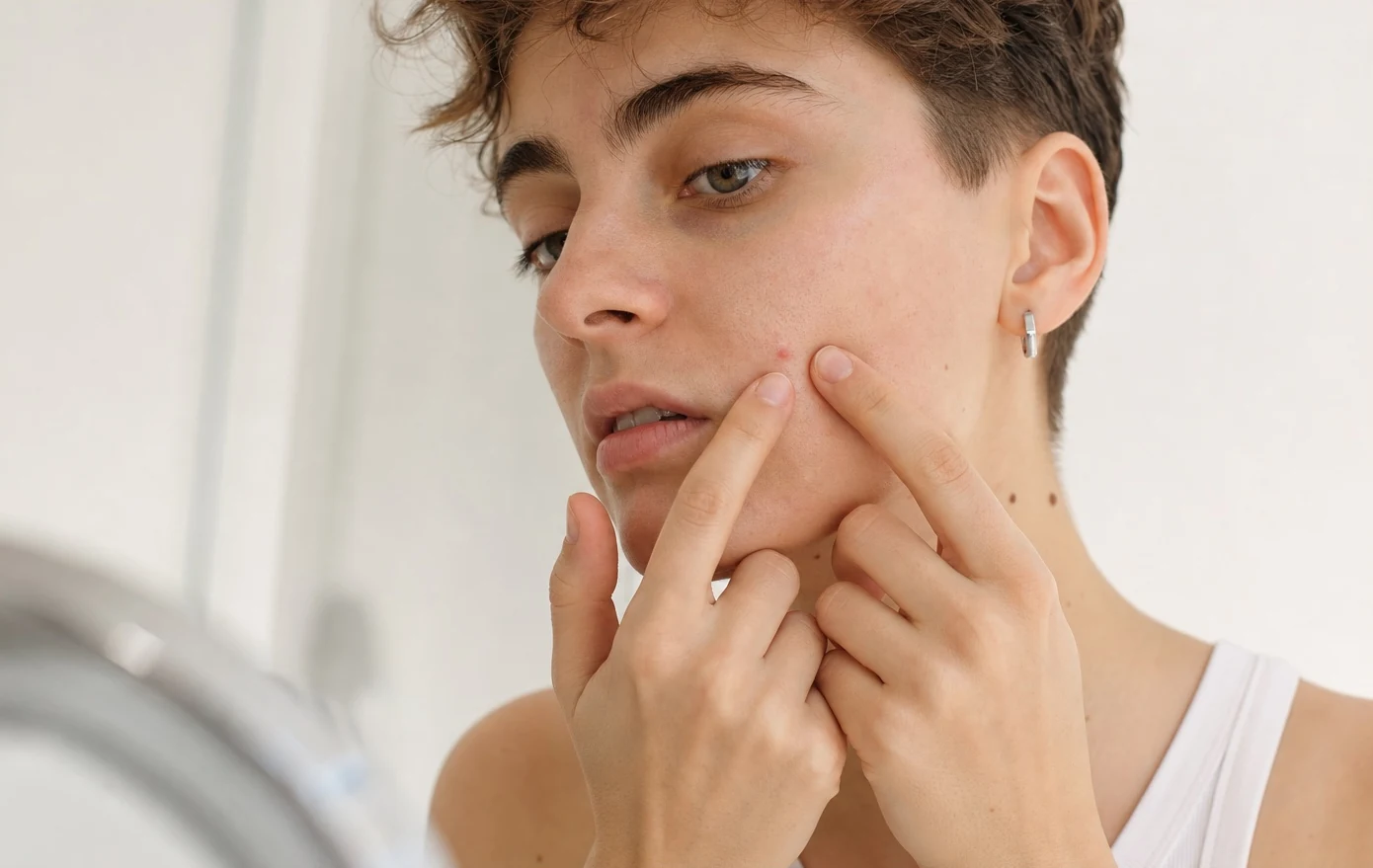
Acne isn't one kind of bump. Not every blackhead is created equal, nor does a simple whitehead require the same treatment strategy as a deep, painful cyst. Dermatologists categorize acne into distinct types based on whether breakouts are non-inflammatory (clogged pores) or inflammatory (bacterial and immune responses). Identifying where your skin lands across these 11 main categories allows you to target the root cause, whether that means clearing excess sebum, fighting acne bacteria, or balancing hormonal signals.
The National Institutes of Health lists six kinds of acne lesions, from whiteheads that stay beneath the skin to nodules lodged deep within it. They sit at different depths, which is why a wash that clears blackheads often can't reach a painful lump.
Quick Answer: What are the most common types of acne?
Officially, dermatologists group all breakouts into six core classifications: blackheads, whiteheads, papules, pustules, nodules, and cysts.
Terms like "adult acne" or "fungal acne" refer to specific categories based on age, lifestyle, or underlying triggers, rather than the physical structure of the breakout itself.
Here are the six official types of acne spots first, then the 11 categories in three subcategories, with each category tied back to the types it brings.
What Are the Six Types of Acne Spots?
These six are the official types of acne, sorted by what a single spot looks like: noninflammatory comedones, or clogged pores, and inflamed bumps that run from small pimples to deep nodules.
Blackheads and whiteheads
Blackheads and whiteheads are clogged pores without redness or pain, which dermatologists call open and closed comedones. The NIH explains that whiteheads stay beneath the skin, while blackheads open at the surface. Their dark color comes from air hitting the oil, not dirt, so scrubbing harder won't help.
A topical retinoid works to clear pores, and the AAD notes it can treat blackheads, whiteheads, and some pimples. Adapalene is a retinoid sold online and in stores without a prescription, so it's a common first step. If pores stay clogged after 6 to 8 weeks, a prescription retinoid such as tretinoin is the usual next step.
“Topical retinoids are one of the most reliable and effective treatments for many types of acne. There are several options available so we can tailor your treatment to your skin’s needs and find the one that works best for you.”— Elizabeth Cooper, DNP | Board-Certified Dermatology Nurse Practitioner
You'll see these in infantile acne, acne cosmetica, and chloracne, and in the early stages of teen and adult acne. If clogged pores turn red and sore, they've become the next type.
What About Pimples and Zits?
"Pimple" and “zit” are informal catch-all terms rather than a clinical classification. What most people call a pimple or a zit is the layman name that typically refers to one of two acne types: papules (small, red, tender bumps) or pustules (red bumps with a visible pus head) - more on both official classifications in the next section. Pinpointing whether your pimple is a papule, pustule, or deep cyst helps you target it with the right active ingredient instead of popping it.
Papules and pustules
Papules and pustules are the bumps most people call pimples. Papules are small, red, tender bumps, and pustules are the same bumps topped with white or yellow pus. They form when bacteria multiply in a clogged pore and the immune system reacts, so they're sore and more likely than blackheads to leave marks.
Treatment has to unclog the pore and calm the swelling. The 2024 AAD guideline strongly supports benzoyl peroxide, topical retinoids, topical antibiotics like clindamycin, and oral doxycycline. Antibiotics are paired with benzoyl peroxide to lower the risk of antibiotic resistance, and oral courses are kept short.
These show up in infantile, teen, and adult acne and lead in Tropical / Mallorca acne, and they're what fungal acne imitates. If red bumps start forming deep, painful lumps, you're dealing with the most serious type.
Nodules and cysts (nodular acne)
Nodules and cysts are large, painful lumps deep in the skin that can last for weeks. Nodules feel hard, while cysts are softer and filled with pus. When these dominate, it's called nodular acne, which the AAD calls the most severe type of acne. It can leave scars. You'll see them in acne conglobata, acne fulminans, chloracne, and severe teen or adult acne.
You'll also hear "cystic acne," but it isn't a separate category: the NIH lists it as another name for severe nodular acne, and the Merck Manual adds that acne cysts are pus-filled nodules without the structure of a true cyst. Our nodular acne guide covers both.
Don't squeeze them: Cleveland Clinic warns that popping a nodule can make it worse and lead to severe scars. Instead, a provider may inject a corticosteroid to shrink a large nodule or prescribe Accutane (isotretinoin), a capsule taken daily.
You don't need "severe" acne to qualify. The 2024 guideline strongly recommends isotretinoin for acne that's severe, scarring, weighing on your quality of life, or not clearing with standard treatment. Our providers prescribe both standard-dose isotretinoin, which typically takes 6 to 12 months, and low-dose courses that run 18 months or longer.* They also guide you through iPLEDGE, the required safety program.
“You also don’t need to feel like you have to try every treatment available or go through years of trial and error. If your acne is negatively affecting your self confidence or quality of life, Accutane can potentially be the right treatment option to consider earlier in your acne journey.”— Elizabeth Cooper, DNP | Board-Certified Dermatology Nurse Practitioner
What Are the Main Categories of Acne?
A type is what a single spot looks like. A category is who gets the breakout, what sets it off, or which form it takes, and every category is built from the six types above. This table lists all 11 in the order they appear below.
| Category | Spots you usually see (of the six types) | Common first step |
|---|---|---|
| Infantile acne (baby) | Blackheads, whiteheads, papules, and pustules | Gentle washing and a dermatologist's exam |
| Adolescent (teen) acne | Any of the six | A retinoid, plus benzoyl peroxide for pimples |
| Persistent vs. late-onset adult acne | Any of the six; in women, often the chin and mouth area | Retinoid plus benzoyl peroxide |
| Acne cosmetica | Blackheads and whiteheads | Non-comedogenic products |
| Acne excoriée | Any type, picked open and scarred | A provider visit for the acne and the picking |
| Chloracne | Nodules, cysts, pustules, and comedones | A provider visit to trace the exposure |
| Tropical / Mallorca acne | Papules and pustules, few blackheads | A provider visit to confirm it |
| Acne vulgaris | All six | Treatment matched to the type |
| Acne conglobata | Nodules with abscesses and sinus tracts | Prescription care, often isotretinoin |
| Acne fulminans | Nodules that break open into ulcerated sores | Urgent care from a dermatology provider |
| Fungal acne* | Look-alike of papules and pustules, no blackheads | An antifungal wash |
“*Fungal acne is the nick name, Malessezia folliculitis is the medical term. It is not considered true form acne because it affects the hair follicle and is considered an infection, whereas acne affects the whole upper part of the pilosebaceous unit and does not always include a bacterial component.”
What to expect: Whatever acne treatment you start, the AAD says it takes at least 6 to 8 weeks before you see fewer breakouts.
Age-based categories
- Infantile acne: Infantile acne starts after 6 weeks of age, and the AAD says it's likely to begin between 3 and 6 months. It's distinct from neonatal (baby) acne, which appears in the first few weeks, affects about 20% of newborns, and tends to clear on its own. It involves true comedones, papules, and pustules (the first four types above), usually on the face, according to StatPearls, and is driven by temporary surges in adrenal androgen production. Androgens are hormones that tell oil glands to make more oil.
Red flag: Infantile acne can leave permanent scars and can signal a health problem, so it needs a dermatologist's exam. For either kind, the AAD advises washing gently with lukewarm water and using no acne medicine unless a dermatologist or pediatrician recommends it.
- Adolescent (teen) acne: Driven by pubertal surges in androgens that increase sebum (skin oil) production across the T-zone (forehead, nose, and chin), chest, and back. It can bring any of the six types, so the treatment steps above apply to whichever spots you have.
- Persistent vs. late-onset adult acne: Persistent acne continues uninterrupted from adolescence into adulthood, whereas late-onset acne develops for the first time after age 25. “Adult acne often looks a little different from teenage acne.” says Cooper. “While teens tend to break out more on the forehead, nose, and chin, adults often experience deeper, more inflamed acne on the cheeks and jawline.” A 2024 review reports that adult acne affects about 12% to 22% of US women, compared with 3% of men, and that in women it tends to sit on the chin and around the mouth.
“These aren’t hard-fast-rules, but they’re a pattern we see. In women, breakouts can flare around their menstrual cycles, while men tend to experience more acne on chest and back. Adult acne can also be stubborn, requiring systemic prescriptions like spironolactone or Accutane.”— Elizabeth Cooper, DNP | Board-Certified Dermatology Nurse Practitioner
Any of the six types can show up. Androgens drive many of these breakouts, and the review ties flares to the days before a period and to hormone shifts around menopause, which is why many people call it hormonal acne. Treatment follows the papule and pustule steps above, and providers can add a medicine that works on the hormone side:
- Spironolactone: a daily pill that blocks androgens' effect on oil glands, prescribed off-label (outside its approved uses) for acne. In a 2023 trial, 82% of women taking it reported improvement by week 24, versus 63% on placebo.
- Clascoterone: a prescription cream that blocks androgen receptors in the skin, approved for acne in people 12 and older.
Spironolactone can take a few months to work and isn't used during pregnancy. Our hormonal acne guide goes deeper on spironolactone. Hormones aren't the only trigger, though: products, habits, and exposures can set acne off too.
Trigger- and exposure-driven categories
- Acne cosmetica: Acne caused by comedogenic (pore-clogging) ingredients in makeup, heavy creams, skin care, or hair products. A 2025 study of 151 women found comedogenic facial cleansers were an independent risk factor for acne. It shows up as clogged pores, so the care above applies, along with non-comedogenic products. It's sometimes called pomade acne when localized along the hairline, mainly on the forehead and temples.
“Don’t get too caught up in apps or lists that label certain skincare ingredients as ‘acne-causing. The amount of the ingredient in a product matters, and just because an ingredient has a potential to clog pores, doesn’t mean it will at the concentration used. Everyone’s skin is different, so what causes breakouts for one person may be fine for another.”— Elizabeth Cooper, DNP | Board-Certified Dermatology Nurse Practitioner
- Acne excoriée: Acne marked by lesions that are repeatedly picked, scratched, or squeezed, turning minor comedones into open sores and raising the risk of scarring. A 2026 case series describes an uncontrollable urge to pick that worsens acne. Any of the six types can be picked, and each is treated as described above. Talk with a provider if picking feels hard to stop.
- Chloracne: An occupational or environmental skin condition triggered by systemic exposure to halogenated aromatic hydrocarbons, like dioxins. A 2026 StatPearls entry lists cysts, nodules, pustules, and comedones, classically on the cheeks and behind the ears. It's a subset of occupational acne, so tell your provider about any chemicals you work with.
- Tropical / Mallorca acne (acne aestivalis): Flares brought on by a combination of high heat, humidity, UV exposure, and oily sunscreens or lotions, though a 2026 report classes it as actinic folliculitis, an acne-like eruption set off by sunlight. It brings papules and pustules, so the pimple steps above apply. In that report, topical treatments such as retinoids cleared all 18 patients within 4 months, though recurrences are common.
Subtype and variant categories
- Acne vulgaris: The general clinical term for common acne, subdivided by primary lesion type into non-inflammatory (blackheads, or open comedones, and whiteheads, or closed comedones) and inflammatory (papules, pustules, nodules, and cysts), per the Merck Manual. That covers all six types above, so teen and adult acne are usually acne vulgaris.
- Acne conglobata: A severe, aggressive form of inflammatory acne marked by interconnected abscesses (pockets of pus), deep nodular lesions, sinus tracts (tunnels under the skin), and prominent scarring. It builds on the nodules above, and a 2025 review calls isotretinoin the first-line treatment.
- Acne fulminans: A rare, sudden-onset medical emergency. StatPearls describes severe, ulcerative acne that can come with systemic symptoms such as fever, joint pain, and bone lesions. A 2024 case report stresses that urgent dermatology consultation is crucial. It builds on the nodules above, so get prompt care from a dermatology provider if sudden, painful open sores come with fever or joint pain.
- Fungal acne (Pityrosporum / Malassezia folliculitis): Technically an overgrowth of yeast within hair follicles rather than true acne vulgaris, though it presents as uniform, itchy, acne-like bumps on the forehead, chest, back, and shoulders. A 2025 review says the bumps are all about the same size, with no clogged pores, nodules, or cysts mixed in, so it imitates papules and pustules. Oral antibiotics almost never help and can make it worse. It's usually treated with an antifungal wash such as ketoconazole, with a prescription antifungal pill for stubborn cases. Because it often comes back, the wash is usually continued less often once it clears. Our guide to fungal acne covers it in more depth. If you still can't tell which type you have, that alone is a reason to get help.
When Should You See a Dermatology Provider?
Mild blackheads and pimples often respond to store-bought care, but some acne is too deep or stubborn for it, and waiting can mean scars. See a provider for any of these:
- Deep, painful lumps: nodules or cysts, which often scar
- Sudden, severe flare: painful open sores, especially with fever or joint pain
- No progress: no improvement after 6 to 8 weeks of steady self-care
- New marks: scars or dark spots left by breakouts
- Unclear bumps: spots you can't identify, or breakouts that got worse on antibiotics
- Acne in an infant: if it started after 6 weeks of age
Before your visit, note where breakouts show up, whether they itch or track with your cycle, what you have tried, and any new products or work chemicals. Those details help a provider pin down your type and category, even from photos.
“If you have been consistently using OTC acne treatments for 2-3 months without any improvement, it is time to explore prescription treatments.” says Cooper. “This applies to the common types of mild to moderate acne like black heads, white heads, and papules/pustules. If you’re developing deep, painful breakouts or you start to notice scarring, don’t wait. Prescription acne treatments can help prevent more scarring.”
Honeydew Recommends
Our providers strongly recommend getting your skin evaluated before spending more money on over-the-counter products. The trick is identifying your specific breakouts and targeting the most severe type you're dealing with. As Cooper from Honeydew's provider team confirms: "This is how we all practice” says Cooper. “Building treatment around the most severe type of acne."
Tackling your most aggressive breakouts first gets the main culprit under control with proper medical care, while naturally clearing up milder surface congestion along the way.
"You don’t need to know your exact type of acne coming in," Cooper adds. "That’s what we’re here for, and we’ll do a thorough assessment during your visit."
Once your skin is evaluated for your acne type and other factors, your provider will tailor a plan directly to your needs. For instance, a retinoid can clear clogged pores, but deeper nodules require prescription care, and fungal acne requires an antifungal instead. (For baby acne, start with your pediatrician, and see a dermatologist if it begins after six weeks of age.)
So whatever type, classification, or category of acne you’re experiencing, getting a clear diagnosis early prevents wasted time on over-the-counter products that aren't designed for your specific skin condition. If you're ready to get to the root of your breakouts, connect with a a dermatologist to get a personalized treatment plan tailored to your acne type and what’s best for your skin.
Your first consultation is free. Medications aren't included in the membership, but they're prescribed to outside pharmacies and may be covered by insurance, and we will happily handle prior authorizations, pharmacy communication, and refills.. The membership is also HSA/FSA eligible.
In a survey of 80 patients who used our online acne care for over 4 months, 90%+ saw clearer skin. You fill out a short questionnaire and upload photos of your skin, and in many cases treatment can begin without a video visit. Start your free online consultation to find out which type you have.
References Cited
- National Institute of Arthritis and Musculoskeletal and Skin Diseases. (2023). Acne. U.S. Department of Health and Human Services, National Institutes of Health.
- Merck Manual Professional Edition. (2026). Acne vulgaris. Merck & Co., Inc.
- American Academy of Dermatology. (2024). Acne: Diagnosis and treatment.
- Journal of the American Academy of Dermatology. (2024). Guidelines of care for the management of acne vulgaris.
- Cleveland Clinic. (2022). Nodular acne.
- International Journal of Women's Health. (2024). Unveiling the nuances of adult female acne.
- DailyMed. (2025). ALDACTONE (spironolactone) tablet prescribing information. National Library of Medicine.
- BMJ. (2023). Effectiveness of spironolactone for women with acne vulgaris (SAFA): Multicentre, randomised, double blind, placebo controlled trial.
- DailyMed. (2022). WINLEVI (clascoterone) cream prescribing information. National Library of Medicine.
- American Academy of Dermatology. (2023). Baby acne.
- Journal of Fungi. (2025). Malassezia folliculitis: An underdiagnosed mimicker of acneiform eruptions.
- StatPearls. (2023). Infantile acne. StatPearls Publishing.
- Indian Journal of Dermatology. (2022). An observational study of clinical, metabolic and hormonal profile of pediatric acne.
- Journal of Cosmetic Dermatology. (2026). Truncal acne: Pathophysiology, clinical features, and management strategies.
- Clinical, Cosmetic and Investigational Dermatology. (2025). Acne cosmetica and facial cleansers case-control study.
- Archives of Dermatology. (1970). Pomade acne.
- Journal of Cosmetic Dermatology. (2026). Integrated CO2 laser treatment and cognitive-behavioral therapy for postadolescent acne excoriée.
- Frontiers in Toxicology. (2023). Development of skin diseases following systemic exposure: Example of dioxins.
- StatPearls. (2026). Chloracne. StatPearls Publishing.
- Indian Dermatology Online Journal. (2024). Occupational acne: A case series.
- Acta Dermato-Venereologica. (2026). Actinic folliculitis (formerly acne aestivalis and Mallorca acne).
- Dermatology and Therapy. (2025). Acne conglobata review.
- StatPearls. (2025). Acne fulminans. StatPearls Publishing.
- Frontiers in Medicine. (2024). Acne fulminans treatment: Case report and literature review.

Medically Reviewed by
Elizabeth Cooper, DNP
Nurse Practitioner