Key Takeaways
 Most pimples last three to seven days; deep ones can take a few weeks or longer.
- In trials, 2.5% benzoyl peroxide reduced inflamed pimples as well as 10%, with less peeling and burning.
- OTC acne labels warn that using two acne products at once makes irritation and dryness more likely.
- Pimple patches have early evidence and suit draining spots; added ingredients haven’t been shown to help.
- A dermatologist’s cortisone shot can calm one large pimple fast but isn’t a fix for frequent breakouts.
A pimple rarely shows up at a good time. Even Kendall Jenner walked the Golden Globes red carpet with visible acne (and still stunned!) For the rest of us, it’s the night before a big presentation, a first date, or a friend’s wedding. And the instinct is to grab the strongest spot treatment you can find.
But in three double-blind trials, 2.5% benzoyl peroxide reduced inflamed pimples as well as 10% did, with less peeling and burning. So, the strongest tube on the shelf isn’t automatically the best pick for the bump on your face. The right fix depends on what kind of pimple you have, and on whether it’s a pimple at all.
So which is worth your time?
Quick Answer: What are the best ways to get rid of a pimple?
The best ways are gentle, starting with low-strength benzoyl peroxide, a hydrocolloid patch once it drains, or a warm compress for a deep one. Most pimples last three to seven days, so calming one beats attacking it. If new ones keep coming, Honeydew's providers prefer a daily prescription retinoid over chasing spots.
Here are eight ways to get rid of a pimple, from spot treatments and patches to warm compresses and cortisone shots, plus the skin conditions that can pass for one.
What kind of pimple do you have?
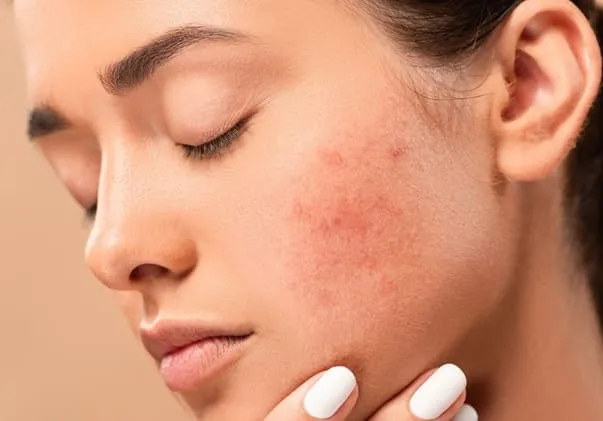
How deep a pimple sits decides what will clear it. Whiteheads and red bumps form close to the surface, where spot treatments work best, so a benzoyl peroxide spot treatment generally helps them clear. A deep nodule or cyst is harder for a cream to reach, and it tends to respond better to warm compresses, time, or sometimes a dermatologist’s cortisone shot.
Pimples usually last three to seven days. Deep ones with no visible head can take a few weeks to go away, if not longer, because nodules and cysts form deep under your skin, not at the surface.
Here's how the three common types compare:
| TYPE | WHAT IT LOOKS LIKE | TYPICAL COURSE | WHAT GENERALLY HELPS |
|---|---|---|---|
| Whitehead or pustule | A raised bump with a white or yellow center | Usually 3 to 7 days | A low-strength benzoyl peroxide; a hydrocolloid patch once it drains |
| Red bump (papule) | A tender pink or red bump with no head | Usually 3 to 7 days | A low-strength benzoyl peroxide; a cold compress for brief relief |
| Deep nodule or cyst | A large, painful lump under the skin | A few weeks or longer | A warm compress; an in-office cortisone shot for a large one |
Most pimples you'll treat at home are the first two kinds, and that's where spot treatments earn their place.
1. Spot-treat with low-strength benzoyl peroxide
Benzoyl peroxide is the over-the-counter spot treatment with the strongest evidence behind it. The 2024 AAD guidelines give it a strong recommendation. Salicylic acid, the other drugstore staple, gets only a conditional one because of limited evidence of benefit.
Strength matters less than most people think. In the 153-subject trials above, 2.5% matched 10% with less irritation, and lower concentrations were generally better tolerated. The FDA sets the strengths allowed in over-the-counter acne products:
- Benzoyl peroxide (2.5% to 10%): Fights acne bacteria and mildly unclogs pores. Be careful when using it, though, because it can bleach hair, towels, and pillowcases.
- Salicylic acid (0.5% to 2%): Loosens clogged pores, though there’s limited evidence in the guidelines for it.
- Sulfur (3% to 10%): Also targets acne bacteria, but it shouldn’t go on broken skin or large areas, only where you have acne.
2. Don't layer spot treatments on one pimple
Layering several spot treatments on one pimple usually backfires. Using two acne products at once makes irritation and dryness more likely, a risk the FDA requires every over-the-counter acne label to mention. If your skin gets irritated, cut back to one product. When you try a new one, apply it sparingly to one or two small spots for the first three days.
Red flag: Burning, swelling, or peeling that keeps getting worse doesn't mean the product is working. Using it less often or switching to a lower strength can ease irritation, but if it becomes severe, stop and check with a doctor.
Even with a big occasion days away, Kimberly Rossi, MD, FAAD, sticks to one targeted treatment, chosen by how deep the pimple sits.
“When a patient has an important event, I recommend a low dose benzoyl peroxide patch to help attack the acne bacteria and shrink a new acne papule more quickly. However if the patient has a deeper acne cyst, the most effective treatment is a cortisone injection directly into the cyst. There is a small chance of fat shrinkage, which is usually temporary, resulting in a visible indention with cortisone injections,” says Kimberly Rossi, MD, FAAD.
3. Cover a draining pimple with a hydrocolloid patch
A hydrocolloid patch helps most once a pimple has come to a head and started to drain. The gel absorbs fluid and covers the spot, and the AAD notes a patch can protect your skin and improve healing. It also keeps your fingers off it.
The evidence is still early. A 2025 review found only two small acne studies: a 20-person pilot study, and a two-week trial reported only as a conference abstract, in which patches improved pimples that had already been emptied. The authors suggest patches may work by absorbing fluid, though that still needs testing, and they found no studies showing that patches with added ingredients work better than plain ones.
4. Skip the toothpaste and squeezing
Toothpaste can irritate your skin, a Cleveland Clinic dermatologist warns, and ice only briefly eases swelling because the effect wears off quickly. Squeezing is worse, especially with a deep pimple. It can make the bump more noticeable and raise the risk of infection, scarring, and discoloration, especially on darker skin. Our guide to popping pimples explains why.
5. Warm-compress a deep, painful pimple
A deep pimple needs heat and patience more than a spot cream. Dermatologists generally suggest a warm, damp washcloth for 10 to 15 minutes, three times a day, with a clean cloth each time, to help it come closer to the surface. Once it does, a thin layer of benzoyl peroxide, azelaic acid, or salicylic acid can help, since too much irritates. If a deep pimple can’t wait that long, a dermatologist has a faster option.
6. Ask a dermatologist about a cortisone shot
For a large, painful pimple that needs to go down fast, a dermatologist can inject a corticosteroid in the office. The 2024 guidelines list these shots as good practice for larger lesions, and Cleveland Clinic says one usually makes a visible difference within 24 hours. A 2024 review found the shots work for occasional pimples but not for managing many. Too much steroid at the site can also cause atrophy (a small dent) or color changes.
7. Protect your skin from dark marks
Any inflamed pimple, deep or not, carries a risk of post-inflammatory hyperpigmentation (PIH), the flat dark mark a pimple can leave behind. Azelaic acid may be more useful for darker or sensitive skin because it also reduces acne-related dark spots. Dermatologists also advise a broad-spectrum, water-resistant SPF 30 or higher, since sun exposure raises the risk of those marks and some acne ingredients make skin more sensitive to the sun.
8. Treat the whole area when pimples keep coming back
A spot treatment clears the pimple you can see, but it doesn't stop the next one from forming. That's where daily treatment comes in. The 2024 AAD guidelines strongly recommend benzoyl peroxide and topical retinoids, which are vitamin A-based creams and gels.
Adapalene 0.1%, a retinoid sold over the counter, isn’t meant for spot-treating at all. It goes on as a thin layer over the whole affected area once a day. Adapalene can be used alongside benzoyl peroxide, but tretinoin breaks down when benzoyl peroxide is present.
What to expect: Acne may look worse in the early weeks, and results can take up to 3 months of daily use.
If pimples keep coming after a few months of steady over-the-counter care, prescription options can go further. We're trusted by 30,000+ patients, and free same-day consultations are available with our dermatology providers. Our guide to clearing acne as a whole lays out the full plan.
A short video on whether your acne needs a prescription, from Honeydew Care on YouTube.
If a bump doesn't respond to any of this, it may not be a pimple at all.
When is a "pimple" not a pimple?
Some bumps look like pimples but are something else, and acne treatments won't clear them. These are common lookalikes:
- Fungal acne: Itchy, uniform bumps with no blackheads, nodules, or cysts, often on the chest, back, shoulders, or face. It's often mistaken for acne and treated with antibiotics, which can encourage the yeast behind it.
- Rosacea: Red or pus-filled bumps that resemble acne, usually on the nose and cheeks, often with a tendency to flush or blush. Unlike acne, rosacea doesn’t cause blackheads.
- A boil: A more painful bump, often around a cut or scratch, that doesn't respond to typical pimple treatments.
- A cold sore: Lesions along the edge of your lip may be a cold sore related to the herpes simplex virus. It can look like a pimple but it often announces itself first with itching, tingling or burning at the spot. Don’t touch or squeeze it, though, since the virus is easy to spread.
- Skin cancer: Basal cell carcinoma can show up as a sore that doesn't heal, or one that heals and comes back.
If the itchy, uniform pattern sounds familiar, our guide to fungal acne explains how it's treated.
Red flag: A "pimple" that won't heal for weeks, or keeps healing and coming back in the same spot, needs a provider's look. So do pimples that get large, discolored, or painful, or a large outbreak all at once.
Kimberly Rossi, MD, FAAD, explains how skin cancer can pass for a pimple, and the clues that set it apart.
“In my practice, skin cancer often gets mistaken for acne. Many skin cancers can resemble a pink shiny acne lesion initially. The biggest clue to know a lesion might be skin cancer, and not acne, is if it is lasting longer than 3-4 weeks. Other clues which suggest basal cell cancer include a shiny surface like a pearl and tiny broken blood vessels that are visible on the surface. Squamous cell cancer appears more like a wart but in some cases may resemble an acne lesion. Squamous cell carcinoma will often become scaly. Even rare tumors can mimic an acne lesion in the beginning. A good rule of thumb is to consult a dermatologist if the spot is lasting longer than one month,” says Kimberly Rossi, MD, FAAD.
Honeydew Recommends
Our providers recommend treating a single pimple with one gentle step, matched to its type, and then leaving it alone. If new pimples keep showing up, we’d rather treat the acne behind them with a daily prescription retinoid than have you spot-treat one breakout after another.
“Patients should not squeeze acne lesions at any stage, because it usually increases inflammation, infection, and scarring,” says Kimberly Rossi, MD, FAAD.
Gentle wins because 2.5% benzoyl peroxide works about as well as 10% with less irritation, and stacking products mostly adds irritation. But no spot treatment prevents the next pimple, while daily retinoids and benzoyl peroxide carry the strongest recommendations in the 2024 AAD guidelines.
If you get new pimples every week or two, deep painful ones, or dark marks that linger, it's time to see a provider. Our providers typically start with a topical retinoid such as prescription tretinoin and adjust from there. A bump that itches, spreads in uniform dots, or won't heal needs a diagnosis before any acne product.
“Unfortunately, we can’t give a cortisone shot or drain a cyst through a laptop screen, so a large, painful nodule you need flattened fast is a job for your provider,” says Dr. Rossi. “And no treatment, online or in the office, makes a pimple vanish overnight.”
If new pimples keep replacing the ones you just cleared, a dermatology provider can help you get ahead of them. With Honeydew, you share photos of your skin online, and a provider can tell you whether those bumps are acne or a lookalike, then prescribe a daily treatment if you need one. Unlimited follow-ups let you adjust the plan as your skin changes, and prescriptions are delivered to you or sent to your local pharmacy.
Your first consultation is free, and membership starts at $25/month with an annual plan. Medications aren't included in the membership. They're prescribed to outside pharmacies and may be covered by insurance, and we help with prior authorizations. The membership is HSA/FSA eligible.
Start your free online consultation and stop treating your skin one pimple at a time.
References Cited
- American Academy of Dermatology. (2023, October 18). How to treat a deep, painful pimple at home. https://www.aad.org/news/how-to-treat-painful-pimple-home
- Cantrell, W., Easley, L., & Squittieri, K. (2024). Steroids used to treat acne vulgaris: A review of efficacy, safety, and clinical considerations. Journal of Drugs in Dermatology, 23(6), 404–409. https://doi.org/10.36849/JDD.7846
- Chalupczak, N. V., & Lipner, S. R. (2025). Malassezia folliculitis: An underdiagnosed mimicker of acneiform eruptions. Journal of Fungi, 11(9), Article 662. https://doi.org/10.3390/jof11090662
- Cleveland Clinic. (2022, March 4). Pimples: Causes, types & treatment. https://my.clevelandclinic.org/health/diseases/22468-pimples
- Cleveland Clinic. (2023, May 8). How to get rid of a pimple—stat! https://health.clevelandclinic.org/a-dermatologists-advice-on-how-to-get-rid-of-a-pimple
- Galderma Laboratories, L.P. (2022, December). Differin (adapalene) gel [Package insert]. DailyMed, U.S. National Library of Medicine. https://dailymed.nlm.nih.gov/dailymed/drugInfo.cfm?setid=0739d631-171b-42a8-bd55-0022b8df2d8a
- Ludmann, P. (2025, October 1). Basal cell carcinoma: From symptoms to treatments. American Academy of Dermatology. https://www.aad.org/public/diseases/skin-cancer/types/common/bcc/symptoms
- Mills, O. H., Jr., Kligman, A. M., Pochi, P., & Comite, H. (1986). Comparing 2.5%, 5%, and 10% benzoyl peroxide on inflammatory acne vulgaris. International Journal of Dermatology, 25(10), 664–667. https://doi.org/10.1111/j.1365-4362.1986.tb04534.x
- National Institute of Arthritis and Musculoskeletal and Skin Diseases. (2024, May). Rosacea symptoms, causes, & risk factors. https://www.niams.nih.gov/health-topics/rosacea
- Nelson, M. (2025). Acne management: Guidelines from the American Academy of Dermatology. American Family Physician, 112(5), 574–576. https://www.aafp.org/afp/2025/1100/practice-guidelines-acne-management
- Nguyen, N., Dulai, A. S., Adnan, S., Khan, Z.-e.-h., & Sivamani, R. K. (2025). Narrative review of the use of hydrocolloids in dermatology: Applications and benefits. Journal of Clinical Medicine, 14(4), Article 1345. https://doi.org/10.3390/jcm14041345
- Reynolds, R. V., Yeung, H., Cheng, C. E., Cook-Bolden, F., Desai, S. R., Druby, K. M., Freeman, E. E., Keri, J. E., Stein Gold, L. F., Tan, J. K. L., Tollefson, M. M., Weiss, J. S., Wu, P. A., Zaenglein, A. L., Han, J. M., & Barbieri, J. S. (2024). Guidelines of care for the management of acne vulgaris. Journal of the American Academy of Dermatology, 90(5), 1006.e1–1006.e30. https://doi.org/10.1016/j.jaad.2023.12.017
- U.S. Food and Drug Administration. (2021). Over-the-counter monograph M006: Topical acne drug products for over-the-counter human use (Final Administrative Order OTC000013). https://www.accessdata.fda.gov/drugsatfda_docs/omuf/Order/Final%20Administrative%20Order%20OTC000013_M006-Topical%20Acne%20drug%20products%20for%20OTC%20Human%20Use.pdf

Medically Reviewed by
Kimberly Rossi, MD, FAAD
Board Certified Dermatologist