Dermatologist-guided care,
personalized to your skin.

GET STARTED

Acne treatment comparison

Topical spironolactone vs tretinoin

These prescriptions are not interchangeable creams. Compounded topical spironolactone is used off-label to reduce androgen effects in treated skin, but its evidence is limited and formula-specific. FDA-approved tretinoin prevents early clogged pores. A provider may pair them when hormonal oil and congestion overlap.

Get Started

A licensed provider decides whether either prescription fits, how to layer it and how pregnancy plans or skin sensitivity change the routine.

Person considering acne treatmentOne goal. Different paths.
The short answer

Choose by role, not by which tube sounds stronger. Topical spironolactone may add local antiandrogen support; tretinoin has more established evidence for microcomedones, blackheads and whiteheads. They are often complementary, while compounded-spironolactone evidence remains limited.

At a glance

Separate the oil signal from the clogged pore

Pick a priority to bring the relevant treatment role forward. This interaction cannot identify a hormonal cause, select a compound or replace a medical review.

Compare by priority

Start with the decision that matters most to your routine.

Choose a priority to highlight the most relevant treatment profile.

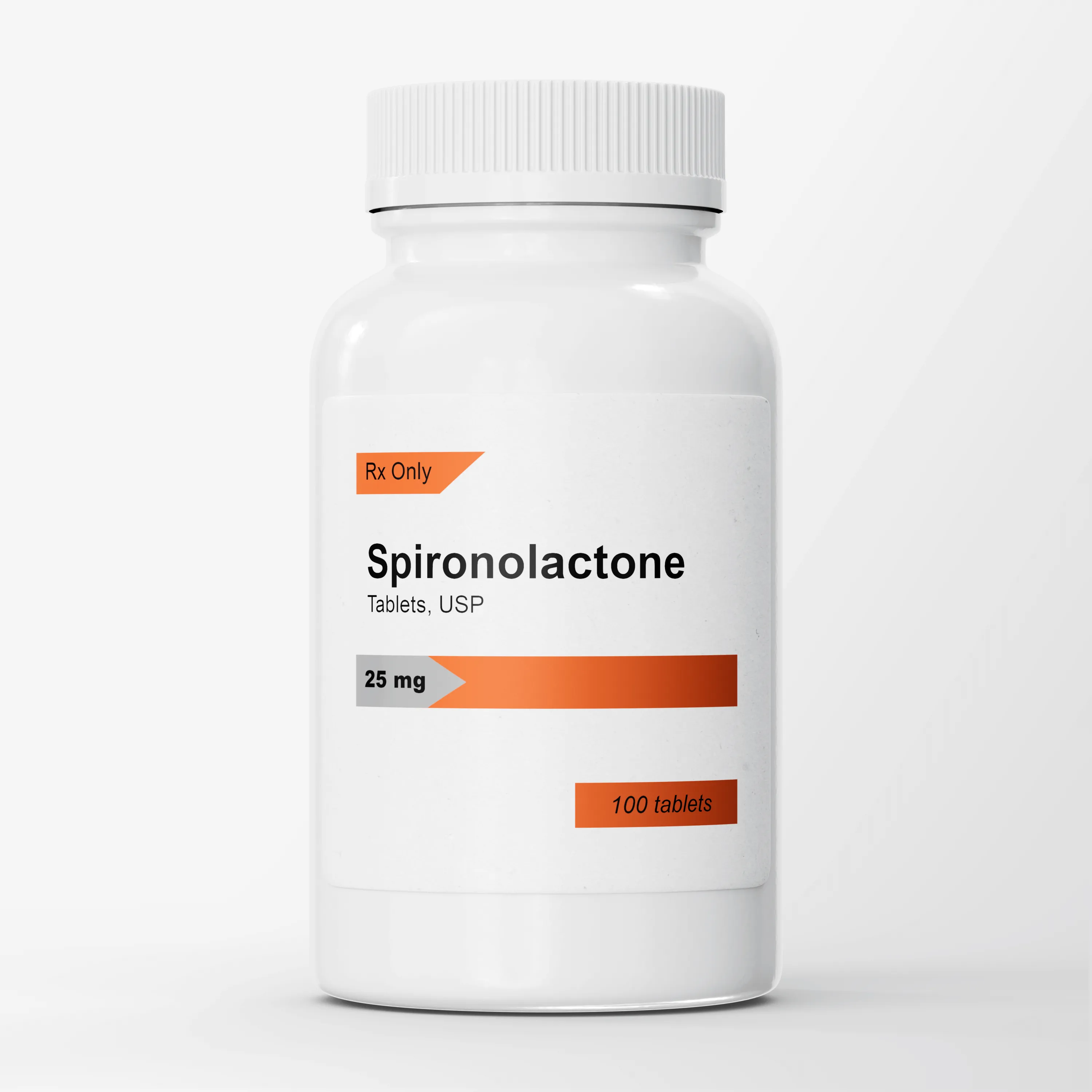
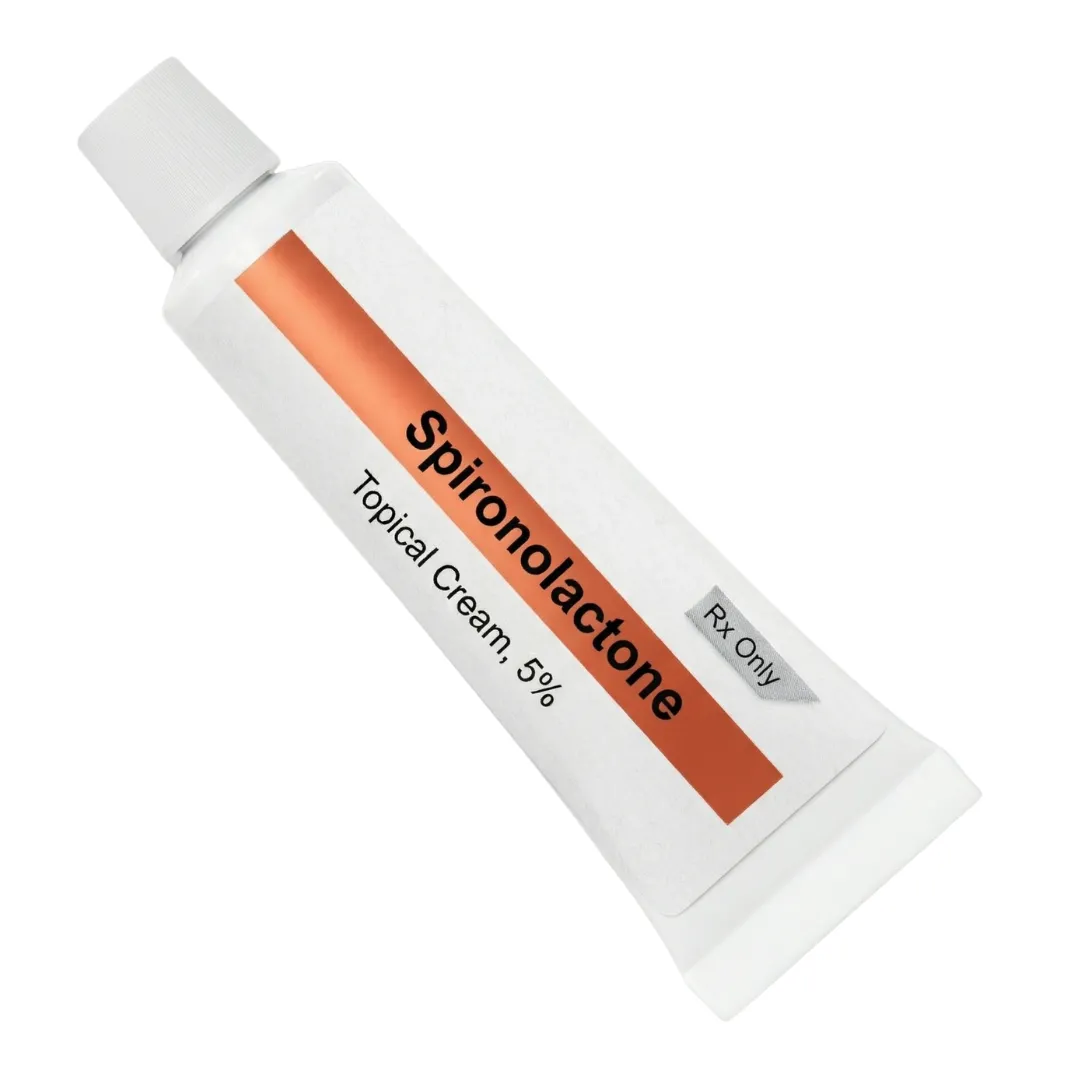
Topical spironolactone treatmentCompounded local antiandrogen

Topical spironolactone

A pharmacy-compounded prescription intended to reduce androgen signaling in the skin where it is applied. Acne use is off-label, and there is no FDA-approved topical spironolactone label or single standardized strength.

  • Often discussed forLocalized acne with a suspected hormonal or oil-driven pattern
  • EvidencePromising small trials using different formulas, with important risk-of-bias limits
  • RoutineApply the prescribed compound only as directed; concentration, vehicle and frequency can vary
  • LimitationLower expected systemic exposure does not prove zero absorption, zero hormonal effects or pregnancy safety
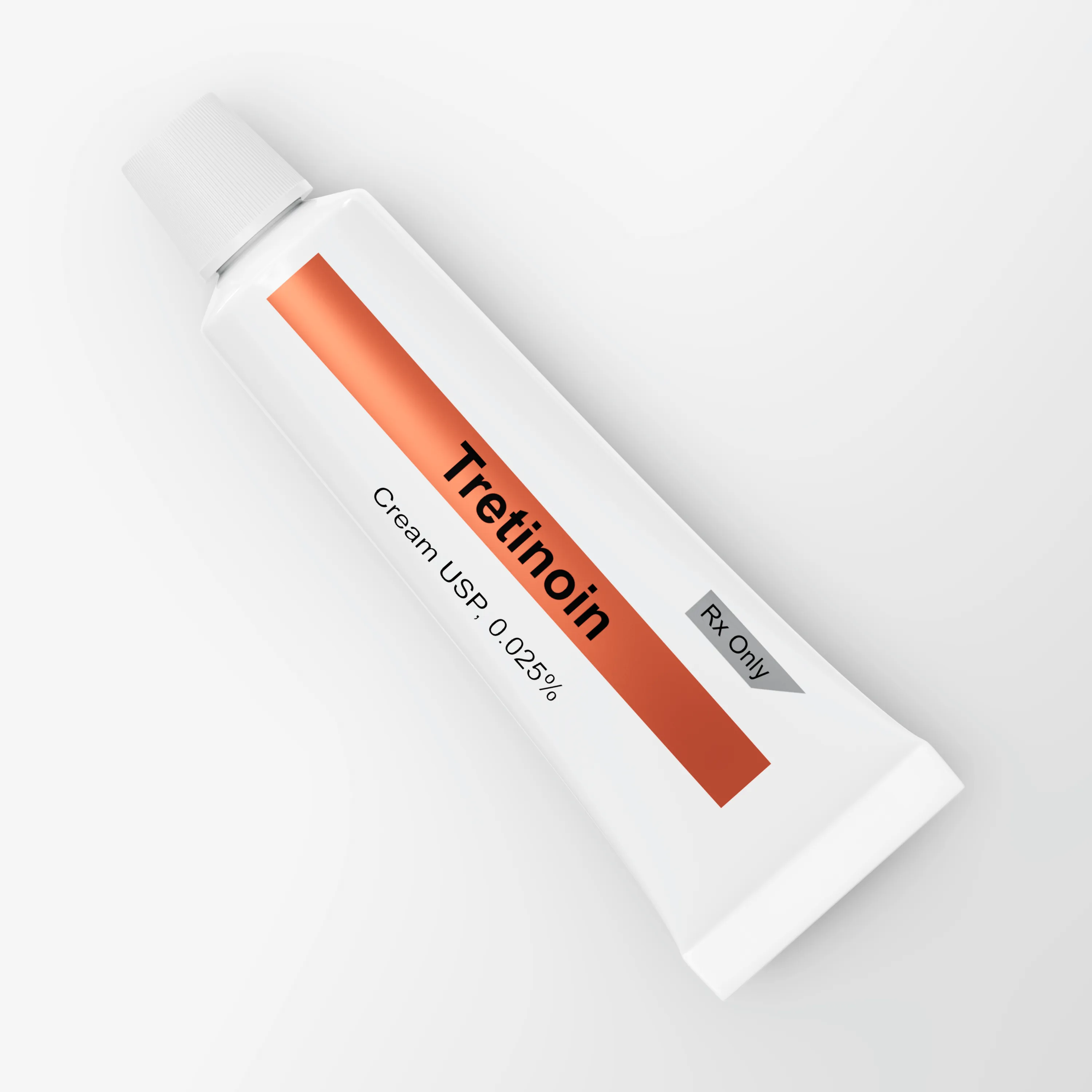
Tretinoin treatmentFDA-approved topical retinoid

Tretinoin

A prescription retinoid for acne that decreases microcomedo formation and increases follicular-cell turnover. Its clearest role is preventing and clearing the pore plugs that can become blackheads, whiteheads or inflamed lesions.

  • Often discussed forComedonal or mixed acne and long-term prevention
  • EvidenceGuideline-supported, with FDA acne labeling
  • RoutineA thin layer on the provider-directed schedule, supported by gentle cleansing, moisturizer and sun protection
  • LimitationIt can irritate skin and does not directly block androgen signaling

Best suited for

Match each topical to the acne feature it can address

Jawline or chin location can be a clue, but it does not prove a hormonal cause. Lesion type, timing, oiliness, prior response, current products and health history all shape the decision.

Topical spironolactone may fit when…

It may support

  • Breakouts and oil concentrated in a limited area
  • A cyclical or androgen-sensitive pattern after provider assessment
  • A preference to discuss a topical rather than oral option
  • A plan in which pore prevention has its own treatment

It may not fit when

  • Blackheads and whiteheads dominate without a hormonal pattern
  • Severe, widespread or scarring acne needs a broader strategy
  • An FDA-approved, standardized spironolactone topical is expected
  • The compound aggravates a reactive skin barrier

Tretinoin may fit when…

It may support

  • Blackheads, whiteheads and clogged pores are prominent
  • Microcomedones need ongoing prevention
  • Mixed acne needs pore turnover beside another prescription
  • A gradual schedule can accommodate sensitivity

It may not fit when

  • Skin is sunburned, eczematous or unable to tolerate retinoids
  • Pregnancy or trying to conceive requires a provider-directed alternative
  • Hormonal oil remains active despite consistent pore care
  • The routine already has too many irritating actives
Evidence boundary: Published topical-spironolactone trials studied particular concentrations and vehicles in small groups. A result for one 5% gel or cream cannot be assumed for a different compounded formula, and no large head-to-head trial establishes that topical spironolactone outperforms tretinoin.

Two topicals, two evidence packages

The ingredient list changes what can be promised

Route alone does not make two topical prescriptions equally standardized. The product, target and strength of evidence all deserve their own question.

The compounded path

Topical spironolactone is a formulation-specific decision

Small studies reported fewer lesions, but tested different creams or gels and were limited in size and design. A 2023 review found five trials totaling 195 patients and identified high risk of bias or some concerns. That supports cautious interest, not a universal performance claim.

Compounded drugs are not FDA-approved before marketing. Concentration, vehicle and instructions can differ. Ask what is prescribed rather than assuming every “spironolactone cream” is the same.

The labeled retinoid path

Tretinoin brings a defined acne role

Tretinoin labeling describes fewer microcomedones and increased follicular turnover. Those actions support pore prevention but do not directly answer an androgen-driven oil signal.

When both are used, the goal is not “double strength.” It is two jobs on a tolerable schedule. The provider may separate applications, reduce frequency or change the vehicle.

Do not confuse the names: Winlevi contains clascoterone, a different active ingredient with FDA approval for acne. A compounded topical spironolactone prescription is not a generic version of Winlevi.

Side effects and safety

Protect the skin barrier without assuming local means risk-free

Both products can irritate treated skin. Topical spironolactone also carries uncertainty because no approved topical label defines systemic exposure, reproductive safety or a universal monitoring plan across compounded formulas.

Topical spironolactone

Possible local effects

  • Dryness or tightness
  • Redness or irritation
  • Stinging from the active formula or its vehicle
  • Difficulty identifying the trigger when several actives start together

Important safety considerations

Small studies reported few serious problems, but cannot rule out rare, long-term or formula-specific harms. Share pregnancy plans, medications and relevant history. The provider decides whether the compound and any monitoring are appropriate.

Exposure language matters: A topical application is expected to create less systemic exposure than an oral tablet, but “less” is not “none.” Do not rely on the topical route as proof of zero potassium, blood-pressure, hormonal or pregnancy risk.
Tretinoin

Common effects

  • Dryness and peeling
  • Redness or burning
  • Greater sensitivity to sun, wind or cold
  • Temporary apparent worsening early in treatment

Important safety considerations

Applying more does not speed improvement and can intensify irritation. Avoid eyes, mouth and mucous membranes; use sun protection; and report eczema, sunburn or other active products. Honeydew advises against tretinoin during pregnancy or while trying to conceive.

When combining: Dryness can be harder to interpret. Follow the prescribed order and frequency, and report severe or persistent irritation.

Treatment timeline and role

Judge the pattern over weeks, then decide what each tube keeps doing

A visible change is not guaranteed on a fixed date. The topical-spironolactone timeline comes from limited formula-specific studies; tretinoin’s label says definite benefit may require more than six weeks.

Topical spironolactone

Define the compound

Confirm the concentration, vehicle, treatment area, frequency and what signs should trigger a message to the care team.

Track oil and lesions

Small studies evaluated specific 5% formulations over about eight weeks. Use photos and lesion trends without treating that window as a promise.

Reassess the role

If breakouts remain widespread, scarring or dominated by clogged pores, the provider may modify the compound or choose another treatment layer.

Tretinoin

Start deliberately

Use the provider-directed thin layer on clean, dry skin and build a moisturizer and daytime sunscreen into the routine.

Manage adjustment

Early peeling, redness or apparent worsening can occur. More than six weeks may be needed before benefit is definite.

Maintain clear pores

After a satisfactory response, the provider may continue tretinoin less frequently or otherwise adjust it as a prevention layer.

Interactive cost comparison

Compare the care fee, then price the exact prescriptions

Both treatments use Honeydew’s basic membership when prescribed. Switch the billing schedule to see the care fee. Medication, compounded preparation and any clinically indicated testing remain separate.

Our basic membership

Topical spironolactone care

$25/month equivalent

Billed $299 once per year

Medication: Separate. Because it is compounded, concentration, vehicle, quantity, pharmacy and coverage can change the price.

Labs: Separate if the provider decides they are clinically indicated.

Our basic membership

Tretinoin care

$25/month equivalent

Billed $299 once per year

Medication: Separate; strength, vehicle, quantity, pharmacy and insurance affect the amount. Eligible insured patients may pay as little as $0, but that is not guaranteed.

Labs: Not routinely part of topical tretinoin care.

Medication-price checklist

Ask what is actually dispensed

Variable

No single topical-spironolactone cash price

Compound: Ask about active strength, base, quantity, refill interval and insurance handling.

Tretinoin: Compare the prescribed strength and vehicle—not an unrelated coupon product.

Price snapshot reviewed August 3, 2026. Honeydew membership excludes medication, lab work and over-the-counter products. Insurance, pharmacy, prescription details and eligibility change the final amount. No medication price or coverage is guaranteed.

How your care works

Build a two-topical plan that can be evaluated

A clear baseline, defined application instructions and staged adjustments make it easier to tell whether the hormonal layer, the pore layer or the routine itself needs to change.

1

Map the pattern

Upload photos and share lesion type, location, timing, oiliness, sensitivity, current products, pregnancy plans and prior treatment response.

2

Assign each job

Discuss whether local antiandrogen support, microcomedo prevention or both mechanisms make sense for the observed pattern.

3

Stage the routine

Follow the specified formula, amount, order and frequency so irritation does not obscure which treatment is helping.

4

Review the evidence

Use progress photos and messages to report tolerance and lesion trends, then adjust the plan without assuming one fixed timeline.

Frequently asked questions

Topical spironolactone and tretinoin, answered

Is topical spironolactone better than tretinoin for hormonal acne?

Not universally. Topical spironolactone targets androgen effects; tretinoin prevents microcomedones. Tretinoin has established acne evidence and an FDA label, while topical-spironolactone studies are smaller and formula-specific. The needed role determines the choice.

Can topical spironolactone and tretinoin be used together?

A provider may use them together because their targets differ. The formula, sensitivity and other products determine whether applications should be separated or reduced. Starting both at once can make irritation harder to trace.

Is topical spironolactone FDA approved for acne?

No. It is compounded and used off-label. Studies suggest possible benefit but do not create one standardized product. Winlevi is FDA-approved for acne but contains clascoterone, not spironolactone.

Which treatment works faster?

No reliable head-to-head answer exists. Small spironolactone studies assessed specific 5% preparations around eight weeks. Tretinoin labeling says definite benefit may take more than six weeks. Neither timeline guarantees a result.

Which one is more likely to irritate my skin?

Tretinoin commonly causes dryness, peeling, redness or burning. Topical spironolactone can also irritate, and the vehicle changes tolerance. A provider can stagger frequency and simplify other active products.

What if I am pregnant or trying to conceive?

Tell the prescriber first. Honeydew advises against tretinoin during pregnancy or while trying. No approved topical-spironolactone label establishes pregnancy safety, and lower expected exposure is not zero reproductive risk.

A clearer next step

Give the oil signal and the pore plug separate answers

Start online and ask a dermatology provider whether your skin needs a localized hormonal layer, established retinoid maintenance or a carefully staged combination.

Get Started

Medical disclaimer: This page provides general U.S.-focused education and cost examples, not a diagnosis, pregnancy plan or personalized treatment recommendation. Evidence for compounded topical spironolactone is limited and does not establish zero systemic exposure or equivalence across formulations. Do not start, stop, combine or change prescription medications without a licensed clinician. Seek urgent care for severe symptoms or a medical emergency.