Key Takeaways

If you have been dealing with recurring breakouts, you already know the frustration. You clear up one round of pimples only for another wave to appear days or weeks later. It can feel like a cycle you will never escape — and the emotional toll is real. Acne affects your confidence, your comfort in social situations, and the way you move through the world.
The good news is that preventing acne is possible. While some factors — like genetics and hormones — are outside your direct control, the right combination of skincare habits, lifestyle adjustments, and (when needed) prescription treatments can dramatically reduce the frequency and severity of breakouts. According to the American Academy of Dermatology (AAD), a consistent prevention-focused routine is the foundation of long-term acne management.
In this guide, we will walk you through how to prevent acne at every level — from your daily cleanser to managing hormonal flares before your period — so you can stay ahead of breakouts instead of constantly chasing them.
Quick Answer: How to Prevent Acne Breakouts
The core strategy: Combine a gentle, consistent skincare routine with targeted active ingredients, lifestyle adjustments, and — when breakouts persist — professional dermatology care.
- Cleanse twice daily with a gentle, non-comedogenic cleanser
- Use proven actives like salicylic acid, benzoyl peroxide, or retinoids
- Moisturize and protect with oil-free moisturizer and SPF 30+ sunscreen
- Manage hormonal flares by adjusting your routine in the days before your period
- Avoid picking or popping to prevent acne scars from forming
- See a dermatologist if over-the-counter products are not keeping breakouts under control
Understanding Why Acne Happens (So You Can Stop It)
Before diving into prevention strategies, it helps to understand the basics of how acne forms. Every breakout traces back to four key processes happening inside your pores:
- Excess sebum production: Your sebaceous glands produce more oil than your pores can handle
- Follicular hyperkeratinization: Dead skin cells accumulate and clog the pore opening
- Bacterial overgrowth: Cutibacterium acnes (C. acnes) bacteria proliferate inside the blocked pore
- Inflammation: Your immune system reacts, creating redness, swelling, and pain
Effective acne prevention targets one or more of these mechanisms. A 2016 guidelines paper in the Journal of the American Academy of Dermatology emphasized that the best outcomes come from addressing multiple pathways simultaneously — which is why a multi-step approach works better than any single product. For a deeper dive into the biology, see our full guide on what causes acne.
How to Prevent Acne: Your Daily Skincare Routine
A consistent daily routine is the single most important thing you can do to prevent acne breakouts. The goal is simple: keep pores clear, control oil, reduce bacteria, and protect your skin barrier — without over-stripping or irritating it.
Step 1: Cleanse Gently, Twice a Day
Wash your face every morning and every evening with a gentle, non-comedogenic cleanser. The AAD recommends avoiding harsh scrubs and using lukewarm water — not hot — to prevent stripping your skin's natural moisture barrier. Over-cleansing can actually trigger more oil production and worsen breakouts.
Look for cleansers containing one of these active ingredients:
| Ingredient | How It Prevents Acne | Best For |
|---|---|---|
| Salicylic acid (0.5-2%) | Dissolves oil and dead skin inside pores (BHA) | Oily skin, blackheads, whiteheads |
| Benzoyl peroxide (2.5-5%) | Kills C. acnes bacteria and reduces inflammation | Inflammatory acne, red pimples |
| Glycolic acid (2-5%) | Exfoliates the skin surface to prevent pore clogging (AHA) | Combination skin, post-inflammatory marks |
| Niacinamide (2-5%) | Regulates oil production and calms inflammation | Sensitive or dry skin prone to breakouts |
Step 2: Apply a Treatment Product
After cleansing, apply a targeted treatment. For over-the-counter prevention, retinol (a form of vitamin A) is one of the most evidence-backed options. Retinoids increase skin cell turnover, keeping pores clear of the dead cell buildup that starts the acne process. A 2017 review in Dermatology and Therapy confirmed that topical retinoids are effective both for treating existing acne and preventing new lesions from forming.
If retinol causes irritation, start with every other night and build up to nightly use over several weeks. Prescription-strength retinoids like tretinoin offer even stronger prevention — our dermatologists can help determine if that step makes sense for your skin.
Step 3: Moisturize (Yes, Even If Your Skin Is Oily)
Skipping moisturizer is one of the most common mistakes people make when trying to prevent acne. When your skin is dehydrated, it compensates by producing more oil — creating the exact conditions that lead to breakouts. Choose an oil-free, non-comedogenic moisturizer and apply it after your treatment product. Look for ingredients like hyaluronic acid or ceramides that hydrate without clogging pores.
Step 4: Wear Sunscreen Every Day
UV exposure increases inflammation, darkens post-acne marks, and can interfere with your skin's healing process. Apply a broad-spectrum SPF 30 or higher sunscreen every morning. Mineral sunscreens with zinc oxide are a great choice for acne-prone skin because zinc itself has mild anti-inflammatory and antibacterial properties.
What to expect: A consistent skincare routine takes time to show results. Most dermatologists advise giving a new routine at least 6 to 8 weeks before judging its effectiveness. If you are not seeing improvement after that window, it is time to consult a dermatologist for a personalized plan.
How to Prevent Acne Before Your Period
If your breakouts predictably appear in the week before your period, you are dealing with hormonal acne. This is extremely common — a study published in the Archives of Dermatology found that 63% of acne-prone people experience premenstrual flares. The trigger is a predictable hormonal shift: progesterone and androgens rise in the luteal phase (roughly days 14-28 of a menstrual cycle), stimulating sebaceous glands to produce more oil.
Because this pattern is predictable, you can get ahead of it. Here is how to prevent acne before your period:
Adjust Your Routine 7-10 Days Before Your Period
- Add a benzoyl peroxide wash: If you normally use a gentle cleanser, switch to a 2.5% benzoyl peroxide wash in the evening during your luteal phase. This reduces the bacterial load before oil production ramps up.
- Increase retinoid frequency: If you use retinol every other night, consider moving to nightly use during this window (if your skin tolerates it) to keep cell turnover high.
- Spot-treat proactively: Apply a thin layer of benzoyl peroxide or salicylic acid to areas where you typically break out — jawline, chin, and lower cheeks — even before pimples appear.
How to Prevent Acne Before Your Period Naturally
If you prefer to limit product changes, several lifestyle strategies can help dampen hormonal breakouts naturally:
- Reduce refined sugar and high-glycemic foods: A randomized controlled trial in the American Journal of Clinical Nutrition found that a low-glycemic diet significantly reduced acne lesions. High-glycemic foods spike insulin and insulin-like growth factor 1 (IGF-1), which amplify androgen activity and oil production — exactly what you want to avoid before your period.
- Manage stress proactively: Stress drives cortisol production, which further stimulates sebaceous glands. Prioritize sleep, exercise, and relaxation techniques during the luteal phase.
- Consider zinc supplementation: A 2001 study in the British Journal of Dermatology found that oral zinc gluconate was nearly as effective as minocycline for reducing inflammatory acne. Zinc has anti-androgenic and anti-inflammatory properties that can take the edge off hormonal flares. Always discuss supplements with your dermatologist first.
- Change pillowcases more frequently: Oil, bacteria, and product residue build up on fabric. During your premenstrual week, switch to a clean pillowcase every two to three days.
Red flag: If your hormonal breakouts are deep, painful, and consistently leave marks, over-the-counter prevention may not be enough. Prescription treatments like spironolactone, topical retinoids like tretinoin, or Accutane (isotretinoin) may be needed. Our dermatologists can evaluate your pattern and build a prevention plan that addresses the hormonal root cause.
Lifestyle Factors That Prevent (or Trigger) Acne
Your skincare routine is only part of the equation. The choices you make throughout the day have a direct impact on whether your pores stay clear or become the next breakout zone.
Diet
The relationship between diet and acne is no longer controversial. Research has consistently linked two dietary factors to increased breakout risk:
- High-glycemic foods: White bread, sugary drinks, pastries, and processed snacks cause rapid blood sugar spikes that increase IGF-1 and androgen activity. A 2010 meta-analysis in the Journal of the American Academy of Dermatology confirmed the association between high-glycemic diets and acne severity.
- Dairy: Dairy products — particularly skim milk — have been linked to acne in multiple observational studies. The mechanism likely involves naturally occurring hormones and bioactive molecules in milk that stimulate oil production.
You do not need to eliminate entire food groups. Focus on adding more whole grains, vegetables, lean proteins, and omega-3 fatty acids (found in fatty fish, walnuts, and flaxseed), which have anti-inflammatory effects that support clearer skin.
Stress
Chronic stress is one of the most underappreciated acne triggers. When you are stressed, your adrenal glands release cortisol, which directly stimulates sebaceous glands to produce more oil. A 2017 study in Clinical, Cosmetic and Investigational Dermatology found a statistically significant correlation between stress levels and acne severity in university students. For a deeper dive into this connection, see our article on whether stress causes acne.
Effective stress-management strategies include regular exercise, adequate sleep (7-9 hours per night), mindfulness or meditation, and limiting caffeine intake — especially if coffee seems to worsen your breakouts.
Exercise and Sweat
Exercise itself is good for your skin — it improves circulation, reduces stress hormones, and supports overall health. The problem is what happens after. Sweat mixed with oil, bacteria, and friction from clothing creates the perfect environment for breakouts, especially body acne on the chest, back, and shoulders.
To prevent post-workout breakouts:
- Shower or at least rinse off within 30 minutes of exercising
- Wear moisture-wicking, loose-fitting workout clothes
- Avoid touching your face during workouts
- Use a gentle salicylic acid body wash on acne-prone areas
Sleep and Pillowcases
Your pillowcase collects oil, dead skin cells, and bacteria night after night. The AAD recommends washing pillowcases regularly to reduce bacterial transfer. Aim for a fresh pillowcase at least once or twice a week. Some dermatologists suggest silk or satin pillowcases, which are less absorbent and create less friction than cotton.
Hands Off Your Face
This may be the simplest and most difficult acne prevention advice. Every time you touch your face, you transfer oil, bacteria, and debris from your hands to your skin. Be mindful of unconscious habits like resting your chin on your hand, and clean your phone screen regularly — it presses against your cheek and jawline, exactly where many people break out.
How to Prevent Acne Scars
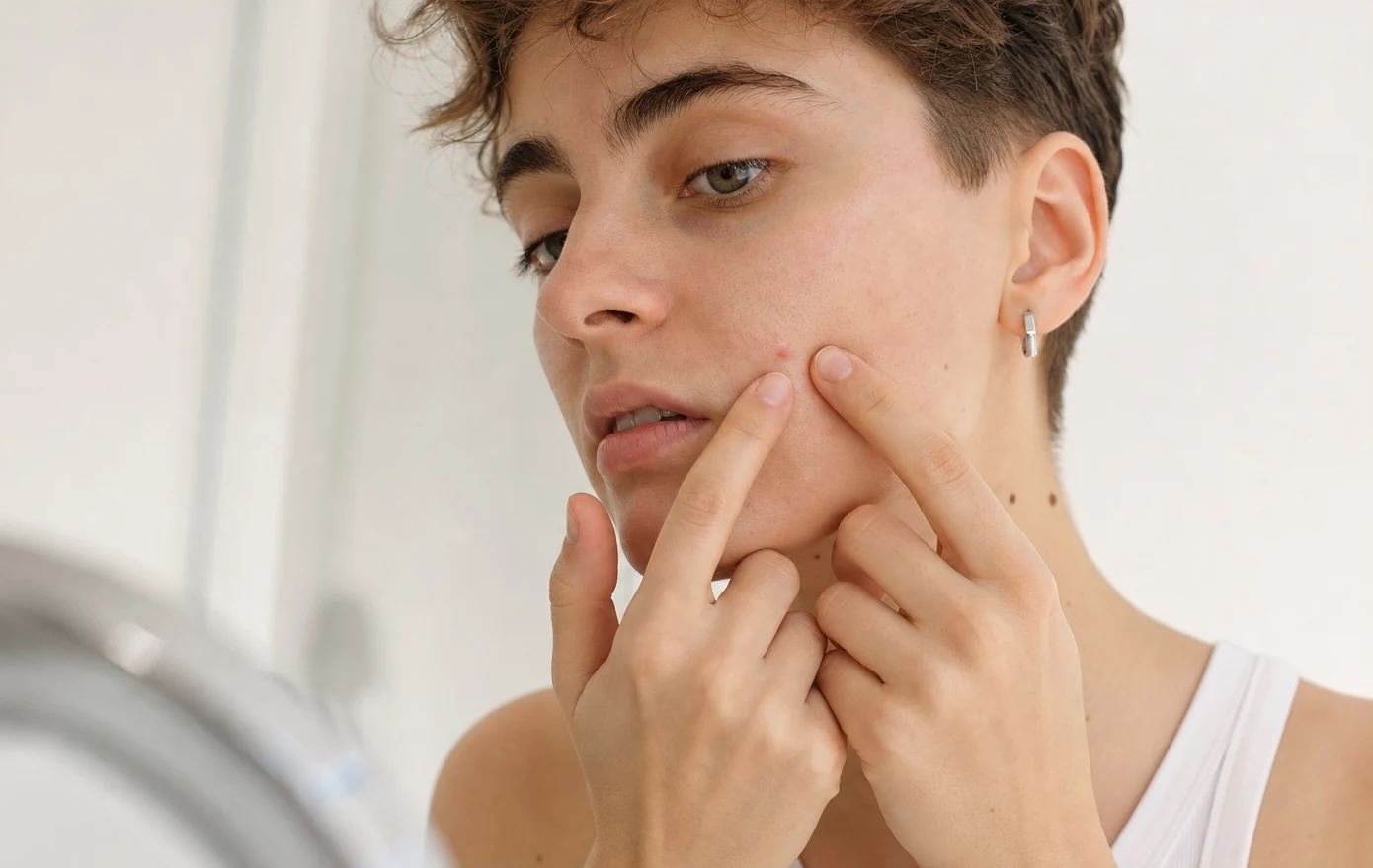
Even when you cannot completely prevent every pimple, you can prevent the scars that follow. Acne scars form when inflammation damages the deeper layers of skin (the dermis), disrupting collagen production during the healing process. The single most important rule is straightforward: do not pick, pop, or squeeze your pimples.
A 2015 review in the Journal of Clinical and Aesthetic Dermatology emphasized that early, aggressive treatment of inflammatory acne is the most effective way to prevent scarring. The longer and more intensely your skin is inflamed, the greater the risk of permanent scarring.
Strategies to Prevent Acne Scars
- Treat acne early and consistently: Do not wait for breakouts to become severe. Start a prevention-focused routine now, and see a dermatologist at the first sign that over-the-counter products are not working.
- Never pick or pop: Squeezing a pimple pushes bacteria deeper into the skin, increases inflammation, and dramatically raises the risk of scarring. If you have a pimple that needs extraction, let a professional handle it.
- Use anti-inflammatory treatments: Products containing niacinamide, azelaic acid, or prescription-strength topicals can reduce the intensity of inflammation, which directly reduces scarring risk.
- Wear sunscreen daily: UV exposure darkens post-inflammatory hyperpigmentation (those red or brown marks left behind after a pimple heals), making them last months or even years longer.
- Treat dark spots early: For post-inflammatory marks that have already formed, ingredients like vitamin C, azelaic acid, and tretinoin can speed fading. See our guide on how to get rid of dark spots from acne for more detail.
If you are already dealing with scarring, treatments are available — but prevention is always easier and more effective than correction. For a comprehensive look at scar treatment options, see our guide on how to get rid of acne scars.
What to expect: Post-inflammatory hyperpigmentation (flat red or brown marks) is not the same as true acne scarring (indentations or raised texture). Hyperpigmentation fades on its own over weeks to months, especially with sunscreen and topical treatments. True scars require more advanced interventions. A dermatologist can help you tell the difference.
When Over-the-Counter Prevention Is Not Enough
Sometimes, even the best routine is not enough — and that is not a failure on your part. Acne has a strong genetic component, and certain hormonal patterns or skin types simply produce more oil and inflammation than topical products can manage alone.
Signs that it is time to see a dermatologist:
- You have been consistent with a good routine for 8+ weeks without meaningful improvement
- Your breakouts are deep, painful, or cystic
- Acne is leaving scars or dark marks
- Breakouts are affecting your confidence or daily life
- You are getting persistent breakouts in the same area (jawline, chin, cheeks)
Prescription treatments offer a level of prevention that over-the-counter products cannot match:
| Treatment | How It Prevents Acne | Best For |
|---|---|---|
| Tretinoin (topical retinoid) | Accelerates cell turnover, keeps pores clear | Comedonal acne, anti-aging, maintenance |
| Spironolactone | Blocks androgen receptors, reduces oil production | Hormonal acne, premenstrual flares |
| Doxycycline | Reduces bacteria and inflammation | Moderate inflammatory acne |
| Accutane (isotretinoin) | Shrinks oil glands, addresses all four acne mechanisms | Persistent acne that has not responded to other treatments |
At Honeydew, we connect you with board-certified dermatologists who can evaluate your skin, identify what is driving your breakouts, and build a personalized prevention plan. Whether that means a targeted topical regimen or a more comprehensive approach like Accutane, our team is here to help you find what works. Visit our pricing page to see our membership options.
Your Daily Acne Prevention Checklist
Morning Routine
- Cleanse with a gentle, non-comedogenic cleanser
- Apply treatment product (niacinamide, azelaic acid, or as prescribed)
- Moisturize with an oil-free moisturizer
- Apply broad-spectrum SPF 30+ sunscreen
Evening Routine
- Remove makeup and sunscreen (double cleanse if needed)
- Cleanse with salicylic acid or benzoyl peroxide wash
- Apply retinol or prescription retinoid
- Moisturize
- Sleep on a clean pillowcase
Ongoing Habits
- Keep hands away from your face
- Clean your phone screen daily
- Shower promptly after exercise
- Favor low-glycemic foods and limit dairy if it triggers breakouts
- Manage stress through sleep, movement, and downtime
- Never pick or pop pimples
Take Control of Your Skin
Preventing acne is not about perfection — it is about consistency. A solid daily routine, smart lifestyle choices, and knowing when to seek professional help are the three pillars that keep breakouts from running your life. The strategies in this guide are backed by clinical evidence and represent what dermatologists actually recommend to their patients.
If you have been trying to prevent acne on your own without lasting results, you do not have to keep guessing. Our board-certified dermatologists, nurse practitioners, and physician assistants can evaluate your skin, identify your specific triggers, and create a personalized prevention plan — all from the comfort of your home.
.webp)

Medically Reviewed by
Joel Spitz, MD
Co-Founder & Chief Medical Officer, Board Certified Dermatologist